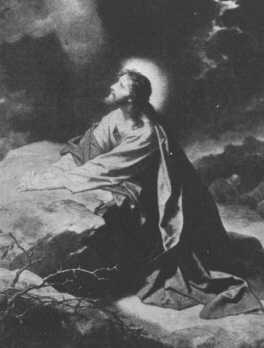
Christ Calls All Christians to Unity

BY ANJEANETTE ROBERTS – JULY 28, 2016

The other day, I heard a couple of my colleagues discussing the similarities and differences in the major Abrahamic religions’ views of God. How similar and dissimilar is the Christian God from the Muslim God or the Jewish God? One of my colleagues, pushing the dissimilarity issue, said that he wondered whether Presbyterians worship the same God as the Baptists, or the Assemblies of God, or the Episcopalians. I mischievously chimed in at that point, questioning whether any of us actually worship the same God. Do any of us have the same view or an exact understanding of God?

Understanding Precedes Unity

As he and I pushed the issue to its extreme, I was reminded of a course I took several years ago. It was a survey course (Elements of Christian Thought) that looked at Christians through the ages and how each of their unique viewpoints and life experiences have contributed to the understanding of Christian faith through subsequent ages and in various cultures.

A diversity of voices filled our readings and class discussions, including Athanasius (ca. 297–373), Augustine (354–430), the Cappadocian Fathers (fourth century), Cyril of Alexandria (ca. 376–444), Anselm of Canterbury (ca. 1033–1109), Martin Luther (1483–1546), John Calvin (1509–1564), Karl Barth (1886–1968), Rudolf Bultmann (1884–1976), Kallistos Ware (1934–), and Kathryn Tanner (1957–). Each claimed grounding, to some extent, in faith in Jesus Christ and the Christian Scriptures. And each expressed their Christian faith while seeking to understand how it fit within their experiences of reality and within their particular cultures.

Elements of Christian Thought not only challenged each student to understand how these historical figures had defined their faith but called for each of us to do the same. And it revealed the truth of our discussion: ultimately, we each have different views and experiences. So, how can we say we share a common Christian faith?

Unity in our faith is crucial. It is at the heart of Jesus’s high priestly prayer in John 17:20–23 (NLT):

I am praying not only for these disciples but also for all who will ever believe in me through their message. I pray that they will all be one, just as you and I are one—as you are in me, Father, and I am in you. And may they be in us so that the world will believe you sent me. I have given them the glory you gave me, so they may be one as we are one. I am in them and you are in me. May they experience such perfect unity that the world will know that you sent me and that you love them as much as you love me.

The centrality and critical importance of unity based in love is further highlighted in Jesus’s words in Matthew 22:37–40 and John 13:34–35, where he says that loving God and loving each other are the two greatest commandments.

Love Is Central to Unity

Jesus knows that love is central to unity and to our witness to the world. No doubt that same thought is at the heart of the quote often misattributed to Augustine: “In essentials, unity; in nonessentials, liberty; in all things, charity.”

This theme dates back to the earliest church writings and is often repeated throughout the New Testament (e.g., “love covers over a multitude of sins,” “Now these three remain: faith, hope, and love. But the greatest of these is love,” or “owe nothing to anyone—except for your obligation to love one another”). And in his letter to the Ephesians, Paul penned an especially powerful call to unity (Ephesians 4:3–6, NLT):

Make every effort to keep yourselves united in the Spirit, binding yourselves together with peace. For there is one body and one Spirit, just as you have been called to one glorious hope for the future. There is one Lord, one faith, one baptism, one God and Father of all, who is over all, in all, and living through all.

So Jesus puts unity in his prayer for those who would follow him, and Paul says we are to make every effort to keep united in the Spirit, rightly setting this endeavor in the context of humility, gentleness, and love. In light of these verses, how are we to respond to the disunity and acrimonious comments that are expressed between some Christians?

Love and Unity Require Effort and Humility

Some of the most conflict-ridden public dialogue among Christians transpires between those who hold various views of science and creation. The theistic evolution or evolutionary creationism camp is constantly in conflict with the young-earth creationists (YECs), who are, in turn, in conflict with them and the day-age/old-earth/progressive creationists (OECs). Theistic evolution proponents (TEs) believe that OECs don’t understand evolution, and TEs and OECs believe YECs don’t understand science or take it seriously enough. And then there are those who are less engaged in the sciences and prefer a more allegorical or framework approach to understanding scriptural references to the creation accounts. Each Christ-follower should ask, What does this conflict do for the witness of Christ in the world and to the call of Christians to seek truth, seek God, and make every effort to maintain unity? Such acerbic conflict is a major blemish on our Christian witness and one from which each of us should humbly seek to repent for our part.

Science is a quest for truth. Following Jesus is a commitment to seek and follow the Truth. God is the author of all creation and the arbiter of all that is true. He wants us to know him and be reconciled to him. For this, he has made great and costly provisions. He has chosen to reveal himself through creation (Romans 1:20), the Scriptures (1 Corinthians 2:10–16), and the Incarnation of Jesus (Colossians 1:15–23). As we seek truth in our world and our faith, we should do so with humility and with the hope that the God who wants to be known will harmonize the truths that we discover about his creation and his character. Whether we study nature via science or Scripture via reason and faith, we should all look to the author and perfecter of our faith and lay aside nonessential differences to maintain unity in our witness of Jesus Christ to a lost and broken world.

Therefore, though we each have different views and experiences, let us love one another and pursue truth, peace, and unity. Will you join me in praying for the unity of Christ’s followers, especially among those who work in the overlapping areas of science and faith?

Note: I wrote this blog before attending the Dabar Conference Creation Project at Trinity Evangelical Divinity School. The conference’s focus this year was “Reading Genesis in the Age of Science.” Following that meeting and the ASA annual meeting earlier this week, I am even more convinced of the deep need for and value of gracious dialogue among a diversity of Christian theologians, biblical scholars, and scientists seeking unity for the sake of the gospel to a watching world.

Resources

  • For more on unity and disunity in the church, read my colleague Kenneth Samples’s five-part article “Examining Christian Disunity” (part 1, part 2, part 3, part 4, part 5).

About Reasons to Believe

RTB’s mission is to spread the Christian Gospel by demonstrating that sound reason and scientific research—including the very latest discoveries—consistently support, rather than erode, confidence in the truth of the Bible and faith in the personal, transcendent God revealed in both Scripture and nature. Learn More »

Support Reasons to Believe

Your support helps more people find Christ through sharing how the latest scientific discoveries affirm our faith in the God of the Bible.

DONATE NOW


U.S. Mailing Address
818 S. Oak Park Rd.
Covina, CA 91724
  • P (855) 732-7667
  • P (626) 335-1480
  • Fax (626) 852-0178

Reasons to Believe logo

Posted in Uncategorized | Leave a comment

More Evidence for God as Dark Matter Confirmation Nears  

blog__inline--more-evidence-for-god-as-dark-matter-confirmation-nears-1

BY HUGH ROSS

     – JANUARY 22, 2018

A crucial component of the big bang creation model that the Bible uniquely predicted thousands of years ago1 is the existence of a lot of cold dark matter. Cold dark matter refers to the matter in the universe that is comprised of massive particles that either interact very weakly with light—that is, photons—or not at all. These particles contrast with baryonic matter, which is made up of protons, neutrons, and electrons that possess the property of strongly interacting with light.

Because of how strongly protons, neutrons, and electrons interact with light, any large concentration of these particles that is not collapsed into a black hole will continuously emit light. Stars, gaseous nebulae, and brown dwarfs are well-known examples. For cold dark matter particles, on the other hand, it does not matter how large a concentration one has, they will not continuously emit light.

In big bang cosmology, for the universe to possibly sustain physical life it must contain about 5–6 times as much cold dark matter as it does baryonic matter. However, because astronomers have not been able to “see” cold dark matter, some atheist scholars and nearly all young-earth creationists have claimed that the big bang creation model is in trouble,2albeit for very different theological motivations. As we will see in a few paragraphs, a breakthrough discovery promises to deliver evidence that should settle such questions for fair-minded people.

Gravitational Detections of Cold Dark Matter
Although astronomers have yet to see any light being emitted from cosmic cold dark matter, they have no doubt about its existence. They detect cold dark matter through its gravitational influences. For example, general relativity, which now ranks as the most exhaustively tested and best-proven principle or theory in all of physics,3 predicts that clumps of mass, whether it be baryonic or cold dark matter, will bend light. The larger the concentration of mass, the greater the degree of light bending.

Figure 1 below shows an image of a gravitational lens where the mass of a foreground giant red galaxy bent light from a much more distant blue galaxy almost directly behind the giant red galaxy in the same manner that an optical lens bends light. The measured degree of light bending falls far short from what would be generated by the measured amount of baryonic matter in the cluster of galaxies. The remainder of the bending, therefore, must come from matter in the cluster that does not interact at all, or hardly at all, with light.

blog__inline--more-evidence-for-god-as-dark-matter-confirmation-nears-1Figure 1: The Gravitational Lens LRG 3-757. Image credit: ESA/Hubble/NASA

Another way astronomers can detect the gravitational influence of cold dark matter is by observing the gravitational interactions of galaxies with one another inside a large cluster of galaxies. The observed gravitational interactions again fall far short of what would be expected if only baryonic matter existed. Figure 2 below shows a map of the distribution of cold dark matter in the galaxy cluster ACT-CL J0102-4915 that was determined from careful measurements of the dynamics (movements) of galaxies in the cluster with respect to each other.

blog__inline--more-evidence-for-god-as-dark-matter-confirmation-nears-2

Figure 2: Distribution of Cold Dark Matter in the Giant Galaxy Cluster ACT-CL J0102-4915 (El Gordo). The blue-colored overlay shows where the concentrations of cold dark matter exist in the galaxy cluster. Image credit: NASA/ESA/UC Riverside (J. Jee)

The method that produces the most accurate determination of the quantity of cold dark matter in the universe comes from maps of the radiation left over from the cosmic creation event coupled with multiple independent observational tools for measuring the spatial curvature (geometry) of the universe. The dynamics of galaxies and galaxy clusters, surveys of the structure of galaxies and galaxy clusters, and maps of the cosmic microwave background radiation (the radiation left over from the cosmic creation event) establish that the geometry of the universe is flat to within 0.05%4 and that the universe is comprised of 4.7% baryonic matter, 24.6% cold dark matter, and 70.7% dark energy.5

Signals from Cold Dark Matter Particles
Astronomers possess several other methods for detecting and measuring the quantities of cold dark matter that yield results consistent with the three described above. While the extent and the consistency of these measurements remove any reasonable doubt about the existence of cold dark matter and the degree to which it dominates baryonic matter, astronomers have yet to detect the signals that physicists expect would arise from the fundamental particles that comprise cold dark matter. However, thanks to results reported in a recent paper published in Physical Review D, astronomers may have made or may be on the verge of making such a discovery.

In the paper, a team of five astronomers led by Joseph Conlon announced the detection of a 3.5 kiloelectron-volt feature in the soft x-ray spectra of the Perseus Galaxy Cluster (featured image). This energy spike (emission line) is consistent with a dark matter origin. Conlon’s team detected the feature in the Perseus Galaxy Cluster in all three of the x-ray telescopes they used: Hitomi, XMM-Newton, and Chandra. They were able to achieve consistency among the measurements from all three telescopes with a model in which cold dark matter absorbs and then reemits the 3.5 kiloelectron-volt photons that were first emitted from the central active galactic nuclei by the largest galaxies in the Perseus Galaxy Cluster.

Before the Nobel Prize in physics can be awarded to Conlon and his team, they will need to confirm their discovery with measurements on other galaxy clusters and preferably individual galaxies. It also would be helpful if they could obtain detailed enough measurements that they could identify the cold dark matter particles responsible for absorption and reemission. Nonetheless, they have made a landmark discovery that should remove any residual doubts about the reality of cold dark matter and its theological implications that a Creator beyond space and time brought our universe into existence and exquisitely fashioned it to provide a home for physical life and human beings in particular. Thanks to powerful telescopes, the heavens are shouting the glory of God more loudly than ever before.

Endnotes
  1. Hugh Ross, “Big Bang—The Bible Taught It First!” Today’s New Reason to Believe (blog), Reasons to Believe, June 30, 2000, http://reasons.org/explore/publications/rtb-101/read/rtb-101/2000/06/30/big-bang-the-bible-taught-it-first.
  2. For example, John Hartnett, “Dark Matter and a Cosmological Constant in a Creationist Cosmology?” Journal of Creation 19 (April 2005): 82–87, https://creation.com/dark-matter-and-a-cosmological-constant-in-a-creationist-cosmology; Michael Oard and Jonathan Sarfati, “No Dark Matter Found in the Milky Way Galaxy,” Journal of Creation 13 (April 1999): 3–4, https://creation.com/no-dark-matter-found-in-the-milky-way-galaxy.
  3. For a review and an update see Hugh Ross, “General Relativity and Its Christian Implications Pass Yet More Tests,” Today’s New Reason to Believe (blog), Reasons to Believe, December 18, 2017, http://reasons.org/explore/blogs/todays-new-reason-to-believe/read/todays-new-reason-to-believe/2017/12/18/general-relativity-and-its-christian-implications-pass-yet-more-tests.
  4. Gary Hinshaw et al., “Nine-Year Wilkinson Microwave Anisotropy Probe (WMAP) Observations: Cosmological Parameter Results,” Astrophysical Journal Supplement Series 208 (September 20, 2013): id. 19, p. 1, doi:10.1088/0067-0049/208/2/19; P. A. R. Ade et al., Planck Collaboration, “Planck 2015 Results. XIII. Cosmological Parameters,” Astronomy & Astrophysics 594 (October 2016): id. A13, p. 31, doi:10.1051/0004-6361/201525830; Ariel G. Sánchez et al., “The Clustering of Galaxies in the Completed SDSS-III Baryon Oscillation Spectroscopic Survey: Cosmological Implications of the Configuration-Space Clustering Wedges,” Monthly Notices of the Royal Astronomical Society 464 (January 11, 2017): 1640–58, doi:10.1093/mnras/stw2443.
  5. I review the latest and most reliable measurements of the components of the universe in my new book, The Creator and the Cosmos, 4th ed. (Covina, CA: RTB Press, 2018): 51–52. The book will be released on March 1, 2018.
  6. Joseph P. Conlon et al., “Consistency of Hitomi, XMM-Newton, and Chandra 3.5 keV Data from Perseus,” Physical Review D 96 (December 19, 2017): id. 123009, doi:10.1103/PhysRevD.96.123009.

About Reasons to Believe

RTB’s mission is to spread the Christian Gospel by demonstrating that sound reason and scientific research—including the very latest discoveries—consistently support, rather than erode, confidence in the truth of the Bible and faith in the personal, transcendent God revealed in both Scripture and nature. Learn More »

Support Reasons to Believe

Your support helps more people find Christ through sharing how the latest scientific discoveries affirm our faith in the God of the Bible.

DONATE NOW


U.S. Mailing Address
818 S. Oak Park Rd.
Covina, CA 91724
  • P (855) 732-7667
  • P (626) 335-1480
  • Fax (626) 852-0178

Reasons to Believe logo

Posted in Uncategorized | Leave a comment

Answering Questions about Darwinism

BY ANJEANETTE ROBERTS – JANUARY 11, 2018

A few weeks ago I had the privilege of interacting with apologists from the RZIM (Ravi Zacharias International Ministries) Connect online community in a forum called “Ask RZIM.” The questions I encountered there are similar to ones I often think about and am asked when I’m out and about. I thought I’d share some of the questions and my responses here on Theorems & Theology.

Ted posted the following thoughts and questions:

Darwinism seems to me to be a ridiculous theory right from the get-go. How is it that Christians who are obviously very smart with PhDs in biology are at all sympathetic? I’ve read Behe, Meyer, Axe, Dawkins, Dembski, and Francis Collins, so that’s kind of my background knowledge. I’ve tried for years to understand what is so compelling, but I just can’t. What do people in the academy see that I don’t? Why does unguided evolution have such a stranglehold?

A Preface of Sorts

Hi, Ted. Thanks for this question. Here’s a preface to my answer: Part of my response below comes from a place of deep passion and sorrow related to topics that touch on the debates that rage over Darwinism in all its forms and the Christian faith. These debates kept me from joining any apologetic conversations or pursuits for decades. They kept me from joining the dialogue until I saw the humble, winsome approach employed by RZIM apologists, mirrored by RTB scholars, to address the questioner behind the question.

On to My Response

First things first. I think John Bloom, a physics professor at Biola, may have the best concise answer I’ve ever heard to this question. Bloom quotes Harvard geneticist Richard Lewontin in Bloom’s book entitled, The Natural Sciences: A Student’s Guide:

“We take the side of science in spite of the patent absurdity of some of its constructs, . . . in spite of the tolerance of the scientific community for unsubstantiated just-so stories, because we have a prior commitment, a commitment to materialism. It is not that the methods and institutions of science somehow compel us to accept a material explanation of the phenomenal world, but on the contrary, that we are forced by our a priori adherence to material causes to create an apparatus of investigation and a set of concepts that produce material explanations, no matter how counter-intuitive, no matter how mystifying to the uninitiated.”1

I think that’s spot on!

Lewontin is incredibly astute in pointing out the underlying philosophical commitment driving the paradigm. However, many who adopt and defend Darwinian and Neo-Darwinian evolution, and variations on naturalistic explanations (modern synthesis, extended evolutionary synthesis, neutral theory and common descent, etc.) for all of life’s diversity, complexity, and history may do so rather inconsistently and with very little philosophical self-awareness.

It is quite possible to hold one’s approach to science and one’s spirituality—or (rational) belief or (rational) faith or religion—independently. Evolutionary biologist Stephen Jay Gould referred to this as non-overlapping magisteria of science and religion—a view where each holds authority over different aspects of life and the kinds of questions we ask about life and reality.

Questioning the Paradigm

I honestly think most people just accept that evolution is a fact, and they have no good reason to question it. Very few have any motivation to step back and ask, is this really true? And does it matter if it is or isn’t? Very few of us seek coherence and correspondence within our worldview. We are muddles of cognitive dissonance and unexamined lives (and beliefs). Much of the resistance faced by people of faith in science dialogue is due to poor, hurried, dogmatic communication, assumptions about others’ worldview, and a failure to take scientific findings and biblical revelation seriously—let alone search for harmony between the two.

If we really believe God is the Author of Scripture and the Author or Creator of nature and that both (according to Scripture) reveal enough truth about God to serve as the basis of judgment of our response/rejection of God’s clear and ubiquitous revelation, then why do we choose one side or other in the conflict? Why do so many choose to ridicule science or faith as misguided or irrational?

Our approach, especially as Christ-followers, should be to humbly admit that we are seeking coherence and integration of God’s revelation in nature (through scientific discoveries and inquiries) and Scripture. We must offer a path away from conflict and derision of others and their views to invite open inquiry. When we adopt a demeanor of humility, of confidence in God’s desire to be known and choice of revelation, and of respect for others who are all made in the image of God, I believe true dialogue can happen. Then we can begin to openly and respectfully question the scientific data for various kinds of evolution and uncover where interpretation of the data is driven by philosophical commitments, and then dialogue about philosophical differences.

I hope my tone isn’t coming across as harsh in any way; it is not meant to be, and is not directed toward you or the question you’ve asked. My comments are a reflection of how passionately and sorrowfully I grieve over our inability to invite others to join us in humble pursuit of truth. I am weary and sorrowful over people who just talk past each other without caring for one another or about what may really be true. We need to be committed to lovingly, humbly pursuing truth while resting in the confidence that God will reveal truth—his truth—to all who seek it in such a way. But humility is an absolute necessity as we realize we may need to come to differing levels of belief revision.

I think the Darwinian paradigm lacks scientific rigor and is driven primarily by a philosophical commitment to naturalism. But I am willing to say that the scientific data may one day become more rigorous for various aspects of naturalistic explanations of life’s history, complexity, and diversity. Maybe one day, the data will convince me that evolutionary creationism is the place of deepest integration of scientific truth and biblical truth. Maybe. It won’t shatter my world. It won’t even upset me. And it will in no way diminish my utter awe of the power and majesty and brilliance and love of the Creator God revealed in Scripture.

Resources

I’ve written a few blogs that touch on some of these topics. Please explore further if you’re interested.

Endnotes
  1. John Bloom, The Natural Sciences: A Student’s Guide (Wheaton, IL: Crossway, 2015), 56.

About Reasons to Believe

RTB’s mission is to spread the Christian Gospel by demonstrating that sound reason and scientific research—including the very latest discoveries—consistently support, rather than erode, confidence in the truth of the Bible and faith in the personal, transcendent God revealed in both Scripture and nature. Learn More »

Support Reasons to Believe

Your support helps more people find Christ through sharing how the latest scientific discoveries affirm our faith in the God of the Bible.

DONATE NOW


U.S. Mailing Address
818 S. Oak Park Rd.
Covina, CA 91724
  • P (855) 732-7667
  • P (626) 335-1480
  • Fax (626) 852-0178

Reasons to Believe logo

Posted in Uncategorized | Leave a comment

Brain Synchronization Study Evinces the Image of God


BY FAZALE RANA – DECEMBER 13, 201

As I sit down at my computer to compose this post, the new Justice League movie has just hit the theaters. Even though it has received mixed reviews, I can’t wait to see this latest superhero flick. With several superheroes fighting side-by-side, it begs the question: “Who is the most powerful superhero in the DC universe?”

I’m not sure how you would respond, but in my opinion, it’s not Superman or Wonder Woman. Instead, it’s a superhero that didn’t appear in the Justice League movie (but he is a longtime member of the Justice League in the comic books): the Martian Manhunter.

Originally from Mars, J’onn J’onzz possesses superhuman strength and endurance, just like Superman. He can fly and shoot energy beams out of his eyes. But, he also has shapeshifting abilities and is a powerful telepath. It would be fun to see Superman and the Martian Manhunter tangle. My money would be on J’onn J’onzz because of his powerful telepathic abilities. As a telepath, he can read minds, control people’s thoughts and memories, create realistic illusions, and link minds together.

blog__inline--brain-synchronization-study

Image credit: Fazale Rana

Even though it is fun (and somewhat silly) to daydream about superhuman strength and telepathic abilities, recent work by Spanish neuroscientists from the Basque Center on Cognition, Brain, and Language indicates that mere mortals do indeed have an unusual ability that seems a bit like telepathy. When we engage in conversations with one another—even with strangers—the electrical activities of our brains synchronize.1 In part, this newfound ability may provide the neurological basis for the theory of mind and our capacity to form complex, hierarchical social relationships, properties uniquely displayed by human beings. In other words, this discovery provides more reasons to think that human beings are exceptional in a way that aligns with the biblical concept of the image of God.

Brain Synchronization

Most brain activity studies focus on individual subjects and their responses to single stimuli. For example, single-person studies have shown that oscillations in electrical activity in the brain couple with speech rhythms when the test subject is either listening or speaking. The Spanish neuroscientists wanted to go one step further. They wanted to learn what happens to brain activities when two people engage one another in a conversation.

To find out, they assembled 15 dyads (14 men and 16 women) consisting of strangers who were 20–30 years in age. They asked the members of each dyad to exchange opinions on sports, movies, music, and travel. While the strangers conversed, the researchers monitored electrical activities in the brains using EEG technology. As expected, they detected coupling of brain electrical activities with the speech rhythms in both speakers and listeners. But, to their surprise, they also detected pure brain entrainment in the electrical activities of the test subject, independent of the physical properties of the sound waves associated with speaking and listening. To put it another way, the brain activities of the two people in the conversation became synchronized, establishing a deep connection between their minds.

Brain Synchronization and the Image of God

The notion that human beings differ in degree, not kind, from other creatures has been a mainstay concept in anthropology and primatology for over 150 years. And it has been the primary reason why so many people have abandoned the belief that human beings bear God’s image. Yet, this stalwart view in anthropology is losing its mooring, with the concept of human exceptionalism taking its place. A growing minority of anthropologists and primatologists now believe that human beings really are exceptional. They contend that human beings do, indeed, differ in kind, not merely degree, from other creatures, including Neanderthals. Ironically, the scientists who argue for this updated perspective have developed evidence for human exceptionalism in their attempts to understand how the human mind evolved. But, instead of buttressing human evolution, these new insights marshal support for the biblical conception of humanity.

Anthropologists identify at least four interrelated qualities that make us exceptional: (1) symbolism, (2) open-ended generative capacity, (3) theory of mind, and (4) our capacity to form complex social networks.

As human beings, we effortlessly represent the world with discrete symbols. We denote abstract concepts with symbols. And our ability to represent the world symbolically has interesting consequences when coupled with our abilities to combine and recombine those symbols in a countless number of ways to create alternate possibilities. Our capacity for symbolism manifests in the form of language, art, music, and even body ornamentation. And we desire to communicate the scenarios we construct in our minds with other human beings.

But there is more to our interactions with other human beings than a desire to communicate. We want to link our minds together. And we can do this because we possess a theory of mind. In other words, we recognize that other people have minds just like ours, allowing us to understand what others are thinking and feeling. We also have the brain capacity to organize people we meet and know into hierarchical categories, allowing us to form and engage in complex social networks.

In effect, these qualities could be viewed as scientific descriptors of the image of God.

It is noteworthy that all four of these qualities are on full display in the Spanish neuroscientists’ study. The capacity to offer opinions on a wide range of topics and to communicate our ideas with language reflects our symbolism and our open-ended generative capacity. I find it intriguing that the oscillations of our brain’s electrical activity couples with the rhythmic patterns created by speech—suggesting our brains are hard-wired to support our desire to communicate with one another symbolically. I also find it intriguing that our brains become coupled at an even deeper level when we converse, consistent with our theory of mind and our capacity to enter into complex social relationships.

Even though many people in the scientific community promote a view of humanity that denigrates the image of God, common-day experience continually supports the notion that we are unique and exceptional as human beings. But, for me, I find it even more gratifying to learn that scientific investigations into our cognitive and behavioral capacities continue to affirm human exceptionalism and, with it, the image of God. Indeed, we are the crown of creation.

Resources to Dig Deeper

Endnotes
  1. Alejandro Pérez et al., “Brain-to-Brain Entrainment: EEG Interbrain Synchronization While Speaking and Listening,” Scientific Reports 7 (June 23, 2017): 4190, doi:10.1038/s41598-017-04464-4.

About Reasons to Believe

RTB’s mission is to spread the Christian Gospel by demonstrating that sound reason and scientific research—including the very latest discoveries—consistently support, rather than erode, confidence in the truth of the Bible and faith in the personal, transcendent God revealed in both Scripture and nature. Learn More »

Support Reasons to Believe

Your support helps more people find Christ through sharing how the latest scientific discoveries affirm our faith in the God of the Bible.

DONATE NOW


U.S. Mailing Address
818 S. Oak Park Rd.
Covina, CA 91724
  • P (855) 732-7667
  • P (626) 335-1480
  • Fax (626) 852-0178

Reasons to Believe logo

Posted in Uncategorized | Leave a comment

The Son Of God Is The Standard Model Of All That Exist.

By Will Myers

The scriptures following reveal from Christianity that science and technology are inclusive of the Son of God, Jesus:

Colossians 1:16-17 (NIV)

16 For in him all things were created: things in heaven and on earth, visible and invisible, whether thrones or powers or rulers or authorities; all things have been created through him and for him. 17 He is before all things, and in him, all things hold together.

Colossians 1:20 (NIV)

20 and through him to reconcile to himself all things, whether things on earth or things in heaven, by making peace through his blood, shed on the cross.

Christ Jesus is the fulfillment of God’s law and humankind’s laws that are worthy. Jesus has overcome all shortcomings endured by the humanity. Through Him, we become aware of our spiritual state by relating us to God, our Creator. Christ Jesus brought God’s Holy Spirit to the earth.

God gives perfect righteousness giving the perfect order to all things (Uspace). When it comes to the natural laws God has given an equation, UspaceVspace=Q. All scientific equations are based on this form. Mathematics is the language of the sciences.

The “Self” in science seeks to find the design that gives the desired results as established by God and created through His Son, Jesus, but the “Self” is atheistic or agnostic; God has created and took leave or don’t exist, things just happen over eons of time. The secular humanist believes that humans can work themselves into a utopia. The problem is that all of the “Selves” egos shall always collide leading to a devastating war proliferating hell; perfection shall always evade humans without the Holy Spirit of God.

In Christ Jesus, Son of God, are all things. God created all things through His perfect righteousness giving the perfect order to all things (Uspace). We represent this with the God Equation: Uspace times Vspace equal Q. The Vspace being the nexuses of all things. The “Q” is the things that ARE, the results of some nexuses or all nexuses as created by Uspace (a given design or pattern). This is God’s equation: UspaceVspace=Q representing God’s perfect order. The Potentiality exists in all minds.

Romans 1:20 (NIV)

20 For since the creation of the world God’s invisible qualities—his eternal power and divine nature—have been clearly seen, being understood from what has been made, so that people are without excuse.

We are blessed by now being in the time that we can have a personal relationship with God through His Son, Jesus. Religions are now becoming liquified unto a better personal understanding of our relationship with our Creator. This doesn’t mean that we abandon the church because it is the bride of Christ and we are commanded to continue to meet in the name of Jesus.

All of the activities of humans are to approach the realization of the saving power of the Son of God and accept Him to be the center and controller of your life. Christ Jesus was sent into the world at a time determined by God when humans had the ability to understand His Living Word. The natural laws are the foundation of creation. In the metaphysical equation Uspace times, Vspace = Q ( the thing that IS) is the basis for all equations of science and technology. God gave us in nature the perfect order; all endeavors of the sciences and technologies are in search of this perfect order as created by God.

Hebrew 1:1-2

[ God’s Final Word: His Son ] In the past God spoke to our ancestors through the prophets at many times and in various ways, but in these last days he has spoken to us by his Son, whom he appointed heir of all things, and through whom also he made the universe. 

Posted in Uncategorized | Leave a comment

ASCENSION TO THE PRESENCE OF GOD

jesus CHRIST  Inspiration

The Spirit is forever with love.

By Will Myers

 <
The humankind was created by God and placed in the universal cocoon to not only subsist but to develop the understanding of what God desires for us. Science and technology have developed to the degree that the platform to launch into the deep space of the second heaven to discover what God has for us is ready. What God has for us has always been and IS. All of the humankind activity is to convince themselves of what the Word of God has said in the first place and that is to possess God’s Holy Spirit Who gives the Life that satisfies all of the human desires. This is once again being in the presence of God.
This is our ascension scripture:

Matthew 6:33; “But seek first his kingdom and his righteousness, and all these things will be given to you as well.”

When God breathed life into the body and created a living soul God placed His Spirit into the man. The soul is grounded and the spirit of man needs God since the separation caused by the original sin by Adam. The Self led Adam to sin; ever since man has been on a Self journey that is separate from the presence of God with mankind being unable to achieve perfection as required by God.
 <
The soul of man is grounded in a state of perfect order as created by God. We have a metaphysical nature alone with a spiritual being which is who we really are. In Isaiah, we learn the message that God has established a solid law in nature which establishes His Kingdom.
Therefore thus saith the Lord God, Behold, I lay in Zion (In the essence) for a foundation a stone, a tried stone, a precious corner stone, a sure foundation: he that believeth shall not make haste.
 <
In Hebrews, we are told that our intellect is inspired by the Word of God through faith. Our precepts manifest from the inspired Word of God.
Through faith, we understand that the worlds were framed by the word of God so that things which are seen were not made of things which do appear.
 <
In Romans alone with Isaiah, we learn that the intellect can learn about our universal cocoon that God created and bring us closer to God with Christ Jesus being our model and the access to God’s Holy Spirit. in Isaiah, we find confirmation prior to the coming of the Christ.
Romans 1:20

20 For the invisible things of him from the creation of the world are clearly seen, being understood by the things that are made, even his eternal power and Godhead; so that they are without excuse:

Come now, and let us reason together, saith the Lord: though your sins be as scarlet, they shall be as white as snow; though they be red like crimson, they shall be as wool.
 <
 In the New Testament as presented by John that the Son Of God was sent by God to destroy the works of the devil, the source of all sin, and give us a new start.
He that committeth sin is of the devil; for the devil sinneth from the beginning. For this purpose, the Son of God was manifested, that he might destroy the works of the devil.
We know that we are separated from God due to sin. At any time in our technological development, we can accept the saving power of the Son Of God, Jesus.
The one who does what is sinful is of the devil because the devil has been sinning from the beginning. The reason the Son of God appeared was to destroy the devil’s work.
 <
Modern science is learning that God’s book of nature (Physics) is perfect and does not conflict with the Word of God, and can help mankind to understand the Word of God. It’s my belief that the second heaven is the Jesus, Son Of God Heaven. Each person can begin their ascent into the heavens with the Son Of God, Jesus, as their spiritual guide. You don’t have to close the door to your scientific intellect when you open the door to the Word of God.
I will give you the keys of the kingdom of heaven; whatever you bind on earth will be bound in heaven, and whatever you loose on earth will be loosed in heaven.”
<

9 “This, then, is how you should pray:

“‘Our Father in heaven,
hallowed be your name,
10 your kingdom come,
your will be done,
    on earth as it is in heaven.
11 Give us today our daily bread.
12 And forgive us our debts,
    as we also have forgiven our debtors.
13 And lead us not into temptation,[a]
    but deliver us from the evil one.[b]’

Posted in Uncategorized | Leave a comment

Five Ways Historic Christianity Relates Faith to Reason

BY KENNETH R. SAMPLES – SEPTEMBER 19, 201

Many people view faith and reason as being at odds with one another. For example, some differentiate faith from reason by asserting that faith merely involves hoping something is true, whereas reason involves affirming something to be true based upon justifying evidence. According to this model, faith is equivalent to wishful thinking and is thus incompatible with reason. But historic Christianity’s view of faith and reason is very different from this popular stereotypical definition.

In defining the relationship between faith and reason, historic Christianity draws upon both Scripture and sustained logical analysis. Here are five ways that historic Christianity relates faith to reason:

1. Faith’s Definition Involves Reason

In a biblical context, having faith (Greek: the verb, pisteúō, “believe”; the noun, pístis, “faith”) means confident trust in a credible source (God, Christ, or the truth). So the root word for faith in the New Testament is “trust,” but that confidence must be placed in a credible (reasonable and/or reliable) source. Thus, faith’s very definition includes a necessary rational element.

2. Faith Involves Knowledge

In Scripture, faith often involves knowledge. For example, saving faith by necessity includes knowledge, for having faith in Jesus Christ as Lord and Savior involves knowing certain historical facts about his life, death, and resurrection. So in historic Christianity, faith is connected to the rational knowing process.

3. Faith Is Compatible with Reason

The scholarly consensus of historic Christianity (reflected in such influential thinkers as Augustine, Anselm, and Aquinas) is that faith should seek understanding. Thus, Christians should be interested in the rational foundations of their faith. And in conjunction, the Christian apologetics enterprise works to show that there are good reasons (facts, evidence, arguments) to believe in the truth claims of Christianity.

4. Faith Can’t Be Fully Comprehended by Reason, but Faith Does No Damage to Reason

Christian believers, as finite creatures, cannot fully fathom (exhaustively understand) the divine mysteries of the Trinity and the Incarnation, but those doctrines can be defined in ways that avoid being logical contradictions. For example, the Triune God’s oneness (essence) is in a different respect from his threeness (personhood), thus avoiding the violation of the law of noncontradiction (a thing, A, cannot equal both A and non-A).

5. God’s Rational Mind Grounds Human Reason

God’s rational mind, evident in the intelligent created order (Greek: nómos, “law”; lógos, “logic”), makes knowledge, reason, and truth possible. And humankind being created in the image of God guarantees that humans have the capacities to reason and discover truth.

So be ready to share these five points the next time a skeptic says faith and reason are incompatible.

Reflections: Your Turn

Which of the five points made above is the most helpful to you in thinking through the relationship between faith and reason? Visit Reflections on WordPress to comment with your response.

Resources

Posted in Uncategorized | Leave a comment

DNA Replication Winds Up the Case for Intelligent Design

Source: DNA Replication Winds Up the Case for Intelligent Design

Posted in Uncategorized | Leave a comment

DNA Replication Winds Up the Case for Intelligent Design

One of my classmates and friends in high school was a kid we nicknamed “Radar.” He was a cool kid who had special needs. He was mentally challenged. He was also funny and as good-hearted as they come, never causing any real problems—other than playing hooky from school, for days on end. Radar hated going to school.

When he eventually showed up, he would be sent to the principal’s office to explain his unexcused absences to Mr. Reynolds. And each time, Radar would offer the same excuse: his grandmother died. But Mr. Reynolds didn’t buy it—for obvious reasons. It didn’t require much investigation on the principal’s part to know that Radar was lying.

Skeptics have something in common with my friend Radar. They use the same tired excuse when presented with compelling evidence for design from biochemistry. Inevitably, they dismiss the case for a Creator by pointing out all the “flawed” designs in biochemical systems. But this excuse never sticks. Upon further investigation, claimed instances of bad designs turn out to be elegant, in virtually every instance, as recent work by scientists from UC Davis illustrates.

These researchers accomplished an important scientific milestone by using single molecule techniques to observe the replication of a single molecule of DNA.1 Their unexpected insights have bearing on how we understand this key biochemical operation. The work also has important implications for the case for biochemical design.

For those familiar with DNA’s structure and replication process, you can skip the next two sections. But for those of you who are not, a little background information is necessary to appreciate the research team’s findings and their relevance to the creation-evolution debate.

DNA’s Structure

DNA consists of two molecular chains (called “polynucleotides”) aligned in an antiparallel fashion. (The two strands are arranged parallel to one another with the starting point of one strand of the polynucleotide duplex located next to the ending point of the other strand and vice versa.) The paired molecular chains twist around each other forming the well-known DNA double helix. The cell’s machinery generates the polynucleotide chains using four different nucleotides: adenosine, guanosine, cytidine, and thymidine, abbreviated as A, G, C, and T, respectively.

A special relationship exists between the nucleotide sequences of the two DNA strands. Biochemists say the DNA sequences of the two strands are complementary. When the DNA strands align, the adenine (A) side chains of one strand always pair with thymine (T) side chains from the other strand. Likewise, the guanine (G) side chains from one DNA strand always pair with cytosine (C) side chains from the other strand. Biochemists refer to these relationships as “base-pairing rules.” Consequently, if biochemists know the sequence of one DNA strand, they can readily determine the sequence of the other strand. Base-pairing plays a critical role in DNA replication.

Image 1: DNA’s Structure

DNA Replication

Biochemists refer to DNA replication as a “template-directed, semiconservative process.” By “template-directed,” biochemists mean that the nucleotide sequences of the “parent” DNA molecule function as a template, directing the assembly of the DNA strands of the two “daughter” molecules using the base-pairing rules. By “semiconservative,” biochemists mean that after replication, each daughter DNA molecule contains one newly formed DNA strand and one strand from the parent molecule.

Image 2: Semiconservative DNA Replication

Conceptually, template-directed, semiconservative DNA replication entails the separation of the parent DNA double helix into two single strands. By using the base-pairing rules, each strand serves as a template for the cell’s machinery to use when it forms a new DNA strand with a nucleotide sequence complementary to the parent strand. Because each strand of the parent DNA molecule directs the production of a new DNA strand, two daughter molecules result. Each one possesses an original strand from the parent molecule and a newly formed DNA strand produced by a template-directed synthetic process.

DNA replication begins at specific sites along the DNA double helix, called “replication origins.” Typically, prokaryotic cells have only a single origin of replication. More complex eukaryotic cells have multiple origins of replication.

The DNA double helix unwinds locally at the origin of replication to produce what biochemists call a “replication bubble.” During the course of replication, the bubble expands in both directions from the origin. Once the individual strands of the DNA double helix unwind and are exposed within the replication bubble, they are available to direct the production of the daughter strand. The site where the DNA double helix continuously unwinds is called the “replication fork.” Because DNA replication proceeds in both directions away from the origin, there are two replication forks within each bubble.

Image 3: DNA Replication Bubble

DNA replication can only proceed in a single direction, from the top of the DNA strand to the bottom. Because the strands that form the DNA double helix align in an antiparallel fashion with the top of one strand juxtaposed with the bottom of the other strand, only one strand at each replication fork has the proper orientation (bottom-to-top) to direct the assembly of a new strand, in the top-to-bottom direction. For this strand—referred to as the “leading strand”—DNA replication proceeds rapidly and continuously in the direction of the advancing replication fork.

DNA replication cannot proceed along the strand with the top-to-bottom orientation until the replication bubble has expanded enough to expose a sizable stretch of DNA. When this happens, DNA replication moves away from the advancing replication fork. DNA replication can only proceed a short distance for the top-to-bottom-oriented strand before the replication process has to stop and wait for more of the parent DNA strand to be exposed. When a sufficient length of the parent DNA template is exposed a second time, DNA replication can proceed again, but only briefly before it has to stop again and wait for more DNA to be exposed. The process of discontinuous DNA replication takes place repeatedly until the entire strand is replicated. Each time DNA replication starts and stops, a small fragment of DNA is produced.

Biochemists refer to these pieces of DNA (that will eventually compose the daughter strand) as “Okazaki fragments”—after the biochemist who discovered them. Biochemists call the strand produced discontinuously the “lagging strand” because DNA replication for this strand lags behind the more rapidly produced leading strand. One additional point: the leading strand at one replication fork is the lagging strand at the other replication fork since the replication forks at the two ends of the replication bubble advance in opposite directions.

An ensemble of proteins is needed to carry out DNA replication. Once the origin recognition complex (which consists of several different proteins) identifies the replication origin, a protein called “helicase” unwinds the DNA double helix to form the replication fork.

Image 4: DNA Replication Proteins

Once the replication fork is established and stabilized, DNA replication can begin. Before the newly formed daughter strands can be produced, a small RNA primer must be produced. The protein that synthesizes new DNA by reading the parent DNA template strand—DNA polymerase—can’t start production from scratch. It must be primed. A massive protein complex, called the “primosome,” which consists of over 15 different proteins, produces the RNA primer needed by DNA polymerase.

Once primed, DNA polymerase will continuously produce DNA along the leading strand. However, for the lagging strand, DNA polymerase can only generate DNA in spurts to produce Okazaki fragments. Each time DNA polymerase generates an Okazaki fragment, the primosome complex must produce a new RNA primer.

Once DNA replication is completed, the RNA primers are removed from the continuous DNA of the leading strand and from the Okazaki fragments that make up the lagging strand. A protein called a “3’-5’ exonuclease” removes the RNA primers. A different DNA polymerase fills in the gaps created by the removal of the RNA primers. Finally, a protein called a “ligase” connects all the Okazaki fragments together to form a continuous piece of DNA out of the lagging strand.

Are Leading and Lagging Strand Polymerases Coordinated?

Biochemists had long assumed that the activities of the leading and lagging strand DNA polymerase enzymes were coordinated. If not, then DNA replication of one strand would get too far ahead of the other, increasing the likelihood of mutations.

As it turns out, the research team from UC Davis discovered that the activities of the two polymerases are not coordinated. Instead, the leading and lagging strand DNA polymerase enzymes replicate DNA autonomously. To the researchers’ surprise, they learned that the leading strand DNA polymerase replicated DNA in bursts, suddenly stopping and starting. And when it did replicate DNA, the rate of production varied by a factor of ten. On the other hand, the researchers discovered that the rate of DNA replication on the lagging strand depended on the rate of RNA primer formation.

The researchers point out that if not for single molecule techniques—in which replication is characterized for individual DNA molecules—the autonomous behavior of leading and lagging strand DNA polymerases would not have been detected. Up to this point, biochemists have studied the replication process using a relatively large number of DNA molecules. These samples yield average replication rates for leading and lagging strand replication, giving the sense that replication of both strands is coordinated.

According to the researchers, this discovery is a “real paradigm shift, and undermines a great deal of what’s in the textbooks.”2 Because the DNA polymerase activity is not coordinated but autonomous, they conclude that the DNA replication process is a flawed design, driven by stochastic (random) events. Also, the lack of coordination between the leading and lagging strands means that leading strand replication can get ahead of the lagging strand, yielding long stretches of vulnerable single-stranded DNA.

Diminished Design or Displaced Design?

Even though this latest insight appears to undermine the elegance of the DNA replication process, other observations made by the UC Davis research team indicate that the evidence for design isn’t diminished, just displaced.

These investigators discovered that the activity of helicase—the enzyme that unwinds the double helix at the replication fork—somehow senses the activity of the DNA polymerase on the leading strand. When the DNA polymerase stalls, the activity of the helicase slows down by a factor of five until the DNA polymerase catches up. The researchers believe that another protein (called the “tau protein”) mediates the interaction between the helicase and DNA polymerase molecules. In other words, the interaction between DNA polymerase and the helicase compensates for the stochastic behavior of the leading strand polymerase, pointing to a well-designed process.

As already noted, the research team also learned that the rate of lagging strand replication depends on primer production. They determined that the rate of primer production exceeds the rate of DNA replication on the leading strand. This fortuitous coincidence ensures that as soon as enough of the bubble opens for lagging strand replication to continue, the primase can immediately lay down the RNA primer, restarting the process. It turns out that the rate of primer production is controlled by the primosome concentration in the cell, with primer production increasing as the number of primosome copies increase. The primosome concentration appears to be fine-tuned. If the concentration of this protein complex is too large, the replication process becomes “gummed up”; if too small, the disparity between leading and lagging strand replication becomes too great, exposing single-stranded DNA. Again, the fine-tuning of primosome concentration highlights the design of this cellular operation.

It is remarkable how two people can see things so differently. For scientists influenced by the evolutionary paradigm, the tendency is to dismiss evidence for design and, instead of seeing elegance, become conditioned to see flaws. Though DNA replication takes place in a haphazard manner, other features of the replication process appear to be engineered to compensate for the stochastic behavior of the DNA polymerases and, in the process, elevate the evidence for design.

And, that’s no lie.

Resources

Endnotes

  1. James E. Graham et al., “Independent and Stochastic Action of DNA Polymerases in the Replisome,” Cell 169 (June 2017): 1201–13, doi:10.1016/j.cell.2017.05.041.
  2. Bec Crew, “DNA Replication Has Been Filmed for the First Time, and It’s Not What We Expected,” ScienceAlert, June 19, 2017, https://sciencealert.com/dna-replication-has-been-filmed-for-the-first-time-and-it-s-stranger-than-we-thought.

Subjects: Biochemistry, Design, Fine-Tuning, Intelligent Design, Proteins

Posted in Uncategorized | Leave a comment

Whale Vocal Displays Make Beautiful Case for a Creator

There is the sea, vast and spacious,
teeming with creatures beyond number—
living things both large and small.
There the ships go to and fro,
and Leviathan, which you formed to frolic there.

—Psalm 104:25–26

A few weeks ago, I did something I always wanted to do. I listened to the uncut, live version of the Allman Brothers’ Mountain Jam from beginning to end. Thirty-four minutes in length, this song appears on The Allman Brothers’ live At Fillmore East album. Though The Allman Brothers are among my favorite groups, I have never had the time and motivation to listen to this song in its entirety. I like listening to jam bands, but a thirty-four-minute song . . . in any case, a cross-country flight finally afforded me the opportunity to give my undivided attention to this jam band masterpiece. What an incredible display of musicianship!

Humpback Whale Acoustical Displays

Rockers aren’t the only ones who can get a bit carried away when performing a song. Humpback whales are notorious for their jam-band-like acoustical displays. These creatures produce elaborate patterns of sounds that researchers dub songs. The whale songs can last for up to 30 minutes, and some whales will repeatedly perform the same song for up to 24 hours.

Humpback whale songs display a complex hierarchical organization. The most basic element of the song consists of a single sound, called a unit. These creatures combine units together to form phrases. In turn, they combine phrases to form themes. Finally, they combine themes to form a song, with each theme connected by transitional phrasing.

Researchers aren’t certain why humpback whales engage in these complex acoustical displays. Only the males sing. Perhaps their singing establishes dominance within the group. Most researchers think that the males sing to attract females. (Even for whales, the musicians get the girls.)

Humpback whales in the same area perform the same song. But, their songs continually evolve. Researchers refer to the complete transformation of one whale song into another as a revolution. As the songs evolve, each member of the group learns the new variant. When one group of humpback whales encounters another group, the two groups exchange songs. This exchange accelerates the song revolution. As a result of this encounter, members of both groups develop and learn a new song.

How Do Humpback Whales Learn Songs?

Researchers from the UK and Australia wanted to understand how humpback whales learn new songs.1 Their query is part of a bigger question: How do animals transmit culture—learned information and behaviors—to other members of the group and to the next generation?

To answer this question, the research team recorded 9,300 acoustical displays over the course of two complete song revolutions for the humpback whales of the South Pacific. Among these recordings, they discovered hybrid songs—vocal displays comprised of bits and pieces of both the old and the new songs. They concluded that these hybrids songs captured the transition from one song to the next.

These song hybrids consisted of phrases and themes from the old and new songs spliced together. The structure of hybrid songs indicated to the research team that humpback whales must learn songs in the same way that humans learn languages, by learning bits and piecing them together.

Rock on!

The Creator’s Artistry

Sometimes, as Christian apologists, we tend to think of God solely as an Engineer who creates with only one specific purpose or function in mind. But, the insights researchers have gained into the vocal displays of the humpback whales reminds me that the God I worship is also a Divine Artist—a God who creates for his enjoyment.

Scripture supports this idea. Psalm 104:25 states that God formed the leviathan (which in this passage seems to refer to whales) on day five to frolic in the vast, spacious seas. In other words, God created the great sea mammals for no other purpose than to play!

Artistry and engineering are not mutually exclusive. Engineers often design cars and buildings to be both functionally efficient and aesthetically pleasing. But sometimes, as humans, we create for no other reason than for our pleasure and for others to enjoy and be moved by our work.

Nature’s Beauty and God’s Existence

The humpback whale exemplifies the remarkable beauty of the natural world. Everywhere we look in nature—whether the night sky, the oceans, the rain forests, the deserts, even the microscopic world—we see a grandeur so great that we are often moved to our very core.

Watching a humpback whale breach or hearing a recording of its vocal displays is more than sufficient to produce in us that sense of awe and wonder. And yet, our wonder and amazement only grow as we study these creatures using sophisticated scientific techniques.

For Christians, nature’s beauty prompts us to worship the Creator. But it also points to the reality of God’s existence and supports the biblical view of humanity.

As philosopher Richard Swinburne argues, “If God creates a universe, as a good workman, he will create a beautiful universe. On the other hand, if the universe came into existence without being created by God, there is no reason to suppose that it would be a beautiful universe.”2 In other words, the beauty in the world around us signifies the Divine.

But, as human beings, why do we perceive beauty in the world? In response to this question, Swinburne asserts, “There is certainly no particular reason why, if the universe originated uncaused, psycho-physical laws…would bring about aesthetic sensibilities in humans.”3 But, if human beings are made in God’s image, as Scripture teaches, we should be able to discern and appreciate the universe’s beauty, made by our Creator to reveal his glory and majesty.

In short, the humpback whales’ acoustical displays—a jam band masterpiece—sing of the Creator’s existence and his artistry.

Resources

Endnotes

  1. Ellen C. Garland et al., “Song Hybridization Events during Revolutionary Song Change Provide Insights into Cultural Transmission in Humpback Whales,” Proceedings of the National Academy of Sciences USA 114 (July 25, 2017): 7822–29, doi:10.1073/pnas.1621072114.
  2. Richard Swinburne, The Existence of God, 2nd ed. (New York: Oxford University Press, 2004), 190–91.
  3. Swinburne, Existence of God, 190–91.

Subjects: Argument from Beauty, Philosophy

Posted in Uncategorized | Leave a comment