The Endosymbiont Hypothesis: Things Aren’t What They Seem to Be

BY FAZALE RANA – AUGUST 29, 2018

Sometimes, things just aren’t what they seem to be. For example, when it comes to the world of biology:

  • Fireflies are not flies; they are beetles
  • Prairie dogs are not dogs; they are rodents
  • Horned toads are not toads; they are lizards
  • Douglas firs are not firs; they are pines
  • Silkworms are not worms; they are caterpillars
  • Peanuts are not nuts; they are legumes
  • Koala bears are not bears; they are marsupials
  • Guinea pigs are not from Guinea and they are not pigs; they are rodents from South America
  • Banana trees are not trees; they are herbs
  • Cucumbers are not vegetables; they are fruit
  • Mexican jumping beans are not beans; they are seeds with a larva inside

And . . . mitochondria are not alphaproteobacteria. In fact, evolutionary biologists don’t know what they are—at least, if recent work by researchers from Uppsala University in Sweden is to be taken seriously.1

As silly as this list may be, evolutionary biologists are not amused by this latest insight about the identity of mitochondria. Uncertainty about the evolutionary origin of mitochondria removes from the table one of the most compelling pieces of evidence for the endosymbiont hypothesis.

A cornerstone idea within the modern evolutionary framework, biology textbooks often present the endosymbiont hypothesis as a well-evidenced, well-established evolutionary explanation for the origin of complex cells (eukaryotic cells). Yet, confusion and uncertainty surround this idea, as this latest discovery attests. To put it another way: when it comes to the evolutionary explanation for the origin of complex cells in biology textbooks, things aren’t what they seem.

The Endosymbiont Hypothesis

Most evolutionary biologists believe that the endosymbiont hypothesis is the best explanation for one of the key transitions in life’s history—namely, the origin of complex cells from bacteria and archaea. Building on the ideas of Russian botanist Konstantin Mereschkowski, Lynn Margulis (1938–2011) advanced the endosymbiont hypothesis to explain the origin of eukaryotic cells in the 1960s.

Since that time, Margulis’s ideas on the origin of complex cells have become an integral part of the evolutionary paradigm. Many life scientists find the evidence for this hypothesis compelling; consequently, they view it as providing broad support for an evolutionary explanation for the history and design of life.

According to this hypothesis, complex cells originated when symbiotic relationships formed among single-celled microbes after free-living bacterial and/or archaeal cells were engulfed by a “host” microbe. (Ingested cells that take up permanent residence within other cells are referred to as endosymbionts.)

blog__inline--the-endosymbiont-hypothesisThe Evolution of Eukaryotic Cells According to the Endosymbiont Hypothesis

Image source: Wikipedia

Presumably, organelles such as mitochondria were once endosymbionts. Evolutionary biologists believe that once taken inside the host cell, the endosymbionts took up permanent residence, with the endosymbiont growing and dividing inside the host. Over time, endosymbionts and hosts became mutually interdependent, with the endosymbionts providing a metabolic benefit for the host cell. The endosymbionts gradually evolved into organelles through a process referred to as genome reduction. This reduction resulted when genes from endosymbionts’ genomes were transferred into the genome of the host organism. Eventually, the host cell evolved machinery to produce proteins needed by the former endosymbiont and processes to transport those proteins into the organelle’s interior.

Evidence for the Endosymbiont Hypothesis

The morphological similarity between organelles and bacteria serve as one line of evidence for the endosymbiont hypothesis. For example, mitochondria are about the same size and shape as a typical bacterium and they have a double membrane structure like the gram-negative cells. These organelles also divide in a way that is reminiscent of bacterial cells.

Biochemical evidence also seems to support the endosymbiont hypothesis. Evolutionary biologists view the presence of the diminutive mitochondrial genome as a vestige of this organelle’s evolutionary history. Additionally, biologists also take the biochemical similarities between mitochondrial and bacterial genomes as further evidence for the evolutionary origin of these organelles.

The presence of the unique lipid cardiolipin in the mitochondrial inner membrane also serves as evidence for the endosymbiont hypothesis. Cardiolipin is an important lipid component of bacterial inner membranes. Yet, it is not found in the membranes of eukaryotic cells—except for the inner membranes of mitochondria. In fact, biochemists consider it a signature lipid for mitochondria and a vestige of this organelle’s evolutionary history.

But, as compelling as these observations may be, for many evolutionary biologists phylogenetic analysis provides the most convincing evidence for the endosymbiont hypothesis. Evolutionary trees built from the DNA sequences of mitochondria, bacteria, and archaea place these organelles among a group of microbes called alphaproteobacteria. And, for many (but not all) evolutionary trees, mitochondria cluster with the bacteria, Rickettsiales.For evolutionary biologists, these results mean that the endosymbionts that eventually became the first mitochondria were alphaproteobacteria. If mitochondria were notevolutionarily derived from alphaproteobacteria, why would the DNA sequences of these organelles group with these bacteria in evolutionary trees?

But . . . Mitochondria Are Not Alphaproteobacteria

Even though evolutionary biologists seem certain about the phylogenetic positioning of mitochondria among the alphaproteobacteria, there has been an ongoing dispute as to the precise positioning of mitochondria in evolutionary trees, specifically whether or not mitochondria group with Rickettsiales. Looking to bring an end to this dispute, the Uppsula University research team developed a more comprehensive data set to build their evolutionary trees, with the hope that they could more precisely locate mitochondria among alphaproteobacteria. The researchers point out that the alphaproteobacterial genomes used to construct evolutionary trees stem from microbes found in clinical and agricultural settings, which is a small sampling of the alphaproteobacteria found in nature. Researchers knew this was a limitation, but, up to this point, this was the only DNA sequence data available to them.

To avoid the bias that arises from this limited data set, the researchers screened databases of DNA sequences collected from the Pacific and Atlantic Oceans for undiscovered alphaproteobacteria. They uncovered twelve new groups of alphaproteobacteria. In turn, they included these new genome sequences along with DNA sequences from previously known alphaproteobacterial genomes to build a new set of evolutionary trees. To their surprise, their analysis indicates that mitochondria are not alphaproteobacteria.

Instead, it looks like mitochondria belong to a side branch that separated from the evolutionary tree before alphaproteobacteria emerged. Adding to their surprise, the research team was unable to identify any bacterial species alive today that would group with mitochondria.

To put it another way: the latest study indicates that evolutionary biologists have no candidate for the evolutionary ancestor of mitochondria.

Does the Endosymbiont Hypothesis Successfully Account for the Origin of Mitochondria?

Evolutionary biologists suggest that there’s compelling evidence for the endosymbiont hypothesis. But when researchers attempt to delineate the details of this presumed evolutionary transition, such as the identity of the original endosymbiont, it becomes readily apparent that biologists lack a genuine explanation for the origin of mitochondria and, in a broader context, the origin of eukaryotic cells.

As I have written previously, the problems with the endosymbiont hypothesis are not limited to the identity of the evolutionary ancestor of mitochondria. They are far more pervasive, confounding each evolutionary step that life scientists envision to be part of the emergence of complex cells. (For more examples, see the Resources section.)

When it comes to the endosymbiont hypothesis, things are not what they seem to be. If mitochondria are not alphaproteobacteria, and if evolutionary biologists have no candidate for their evolutionary ancestor, could it be possible that they are the handiwork of the Creator?

Resources

Endnotes
  1. Joran Martijn et al., “Deep Mitochondrial Origin Outside the Sampled Alphaproteobacteria,” Nature 557 (May 3, 2018): 101–5, doi:10.1038/s41586-018-0059-5.

About Reasons to Believe

RTB’s mission is to spread the Christian Gospel by demonstrating that sound reason and scientific research—including the very latest discoveries—consistently support, rather than erode, confidence in the truth of the Bible and faith in the personal, transcendent God revealed in both Scripture and nature. Learn More »

Support Reasons to Believe

Your support helps more people find Christ through sharing how the latest scientific discoveries affirm our faith in the God of the Bible.

DONATE NOW


U.S. Mailing Address
818 S. Oak Park Rd.
Covina, CA 91724
  • P (855) 732-7667
  • P (626) 335-1480
  • Fax (626) 852-0178

Reasons to Believe logo

Posted in Uncategorized | Leave a comment

Is Gut-Wrenching Space Travel Possible?

BY HUGH ROSS

    •  – OCTOBER 29, 2018

For obvious ethical reasons, the experiments were not performed on human beings—they were done on mice. Biologists have long recognized that the digestive tracts of mice are an excellent proxy for those of humans.

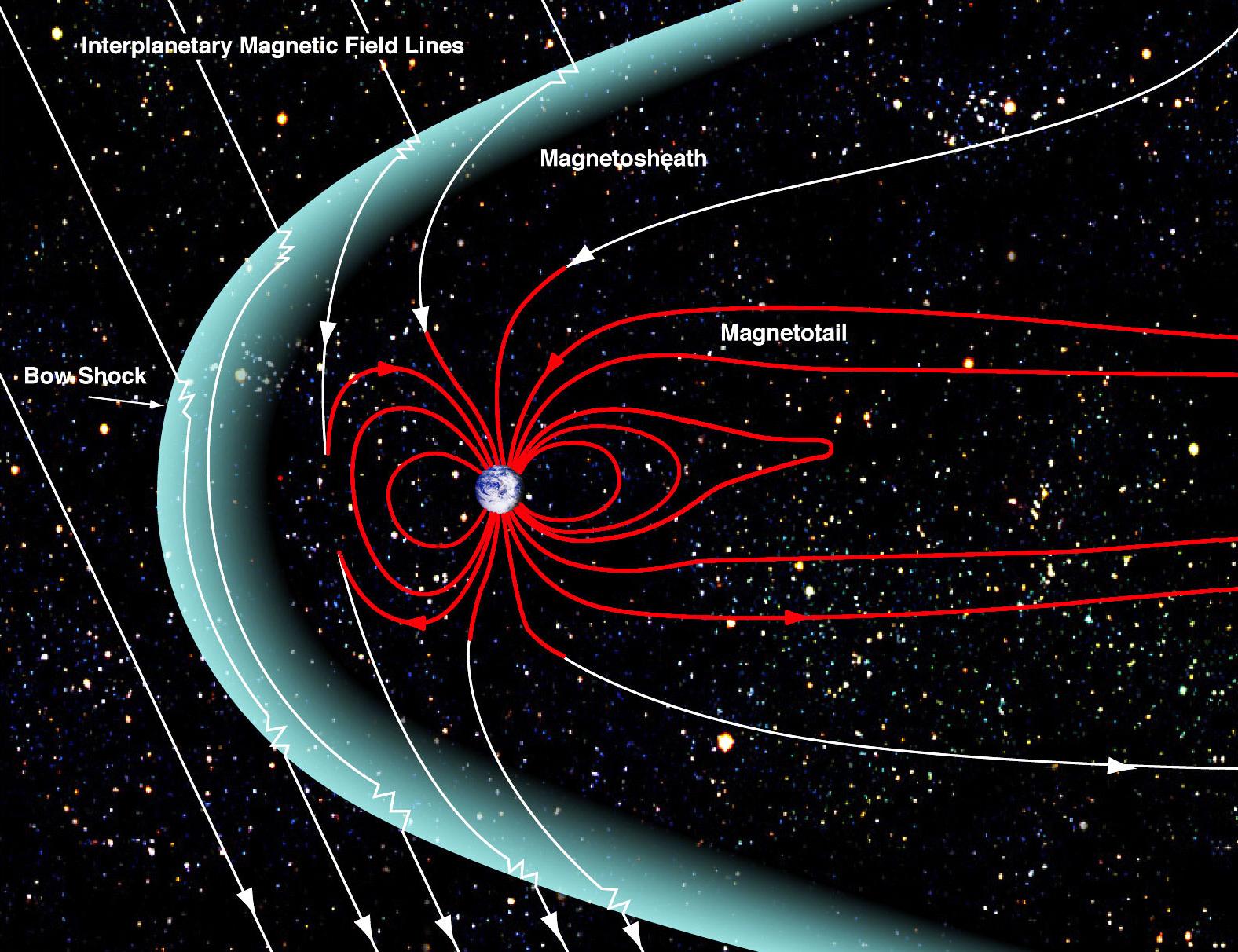
Four research scientists and medical doctors at Georgetown University in Washington, DC, led by postdoctoral fellow Santosh Kumar, performed experiments on mice that they designed to mirror the exposure to galactic cosmic radiation that astronauts would experience (e.g., on a space flight to Mars). Kumar’s team exposed laboratory mice to the equivalent of the heavy ion radiation that is known to exist beyond Earth’s magnetosphere (see figure 1).

blog__inline--is-gut-wrenching-space-travel-possible-1

Figure 1: Earth’s Magnetosphere. Serious exposure to heavy ion galactic cosmic radiation occurs in regions beyond the outer red lines emanating from Earth in the above figure. Image credit: NASA

About 99 percent of galactic cosmic radiation is comprised of single protons, electrons, and helium nuclei. There are nine times as many helium nuclei as there are electrons and ten times as many protons as there are helium nuclei. Ions heavier than helium nuclei—for example, carbon-12, oxygen-16, silicon-28, and iron-56 nuclei—make up just one percent of all galactic cosmic rays.

Even though heavy nuclei make up such a tiny percentage, they inflict more biological damage than all the other forms of galactic cosmic radiation. Another reason heavy nuclei cosmic radiation caught the attention of Kumar’s team is that there is no technology available, or even conceivable, to protect astronauts in a spacecraft from heavy ion radiation. Furthermore, scientists know that at least 30 percent of astronauts’ cells will be hit by heavy ions during a round-trip to Mars.1

Previous research done by the Georgetown University team had demonstrated that “exposure to heavy ion radiation induces persistent oxidative stress in mouse intestine.”2Another research study by the same team showed that heavy ion radiation induces intestinal malignant tumors in mice.3 The team’s goal in their present study was to determine (1) how heavy ion radiation modulates molecular events in the intestines that are associated with intestinal epithelial cell migration, and (2) the consequences of such modulation.

Epithelial cells both perform the primary functions in digestion and absorption of nutrients and form a barrier that prevents toxic chemicals and pathogens from entering into the rest of the body. The small intestine contains two regions: one housing flask-shaped structures known as crypts and the other housing finger-like protrusions known as villi.

Kumar’s team showed that even a low dose of iron-56 radiation relative to control and gamma rays persistently decreased epithelial cell migration along the crypt-villus axis.4 Any degradation in the coordinated, efficient migration of epithelial cells along the crypt-villus axis causes all the functions of the small intestine to be compromised. Such degradation also allows pathological processes to invade gastrointestinal tissues.

The experiments performed by Kumar’s team showed that in addition to degraded epithelial cell migration, heavy ion radiation increased intestinal cell proliferation with accompanying DNA damage, increased cell senescence without any noticeable increase in apoptosis, and compromised cell polarity, cell adhesion, and cell-extracellular matrix interactions.5 The team’s experiments showed that all these consequences persisted even one year after exposure to heavy ion radiation. Such consequences are known to induce inflammatory intestinal and bowel diseases and to generate malignant tumors.

In their paper the team drew the following conclusion, “When considered along with changes in barrier function and nutrient absorption factors as well as increased intestinal tumorigenesis, our in vivo data raise a serious concern for long-duration deep-space manned mission.”6 Their conclusion is understated. Astronauts on such missions would experience discomfort and loss of energy to a degree that would make it difficult, if not impossible, for them to perform their mission tasks. Furthermore, the likely inflammatory diseases and cancers could completely incapacitate and even kill them.

Much more significant conclusions can be drawn from the paper. First, humans should never venture outside of Earth’s magnetosphere for more than just a few days. The International Space Station orbits inside Earth’s magnetosphere. While a manned mission to the Moon entails humans spending some time outside Earth’s magnetosphere, that time can be limited to 1–3 days. Any mission beyond the Moon’s distance from Earth must be limited to machines.

For the past several billion years, Earth has possessed a strong, stable magnetic field—an outcome considered impossible for a planet as small as Earth. What made the impossible probable was that during its youth, Earth experienced a number of unique events that super-enriched its interior with exact abundances of certain heavy elements and radioisotopes. You can read about these events in my book, Improbable Planet.7 The most important conclusion to be drawn from the team’s study is that we should all thank God for the miraculous design of Earth’s interior that makes Earth’s magnetosphere possible.

Endnotes
  1. B. Curtis and J. R. Letaw, “Galactic Cosmic Rays and Cell-Hit Frequencies Outside the Magnetosphere,” Advances in Space Research9 (October 1989): 293–98, doi:10.1016/0273-1177(89)90452-3; Daniel Matthiä et al., “The Radiation Environment on the Surface of Mars—Summary of Model Calculations and Comparison to RAD Data,” Life Sciences in Space Research 14 (August 2017): 18–28, doi:10.1016/j.lssr.2017.06.003; Kanako Hayatsu et al., “HZE Particle and Neutron Dosages from Cosmic Rays on the Lunar Surface,” Journal of the Physical Society of Japan 78, Supplement A (2009): 149–52, doi:10.1143/JPSJS.78SA.149.
  2. Kamal Datta et al., “Exposure to Heavy Ion Radiation Induces Persistent Oxidative Stress in Mouse Intestine,” PLoS One7 (August 24, 2012): id. e42224, doi:10.1371/journal.pone.0042224.
  3. Shubhankar Suman et al., “Relative Biological Effectiveness of Energetic Heavy Ions for Intestinal Tumorigenesis Shows Male Preponderance and Radiation Type and Energy Dependence in APC1638N/+ Mice,” International Journal of Radiation Oncology*Biology*Physics”95 (May 1, 2016): 131–38, doi:10.1016/j.ijrobp.2015.10.057.
  4. Santosh Kumar et al., “Space Radiation Triggers Persistent Stress Response, Increases Senescent Signaling, and Decreases Cell Migration in Mouse Intestine,” Proceedings of the National Academy of Sciences USA. Published ahead of print, October 1, 2018. doi:10.1073/pnas.1807522115.
  5. Kumar et al., “Space Radiation.”
  6. Kumar et al., “Space Radiation.”
  7. Hugh Ross, Improbable Planet: How Earth Became Humanity’s Home (Grand Rapids, MI: Baker, 2016), chapters 2–7.

-end-

About Reasons to Believe

RTB’s mission is to spread the Christian Gospel by demonstrating that sound reason and scientific research—including the very latest discoveries—consistently support, rather than erode, confidence in the truth of the Bible and faith in the personal, transcendent God revealed in both Scripture and nature. Learn More »

Support Reasons to Believe

Your support helps more people find Christ through sharing how the latest scientific discoveries affirm our faith in the God of the Bible.

DONATE NOW


U.S. Mailing Address
818 S. Oak Park Rd.
Covina, CA 91724
  • P (855) 732-7667
  • P (626) 335-1480
  • Fax (626) 852-0178

Reasons to Believe logo

Posted in Uncategorized | Leave a comment

Scientific Discovery & God: Human Exceptionalism, Part 4

BY KENNETH R. SAMPLES – FEBRUARY 12, 2019

Some people think the advance of science continues to remove any reason for believing in God, but in reality scientific discovery over the last century has opened up vistas of knowledge that are best explained by the worldview of theism over atheistic naturalism. In the three previous parts of this series (see herehere, and here), I explained that what secular scientists thought they would discover concerning the universe, the solar system, and Earth were very different from what they actually uncovered. The universe’s extraordinary beginning, the solar system’s fine-tuning for life, and Earth’s distinctiveness as a hospitable home for intelligent life have all been surprising finds for a secular view.

In this final segment, I want to explain how human beings’ distinctiveness has also surprised scientists who embrace a purely naturalistic worldview.

The Human Exceptionalism Hypothesis

A consensus of today’s scientific community holds that modern human beings evolved naturalistically from apelike ancestors (known as common descent). But modern humans appear to possess qualities and characteristics that make them different not merely in degreefrom other primates (which seems to be what evolution would predict) but different in kind. This apparent difference in kind may be called the human exceptionalism hypothesis.

RTB scientists Fazale Rana and Hugh Ross summarize human exceptionalism in this way:

A wealth of scientific evidence shows that humans alone, as distinct from Neanderthals, Homo erectus, and other species, possess the capacity for symbolic recognition, for complex language, art, and music, and for spiritual and philosophical engagement. Humans alone manifest awareness of God, sin, moral judgment, and life beyond death. Humans alone demonstrate technological advancement, including the development of agriculture and civilization. New evidence shows that even during episodes of extreme environmental instability, humans were able to maintain small mixed farms (with multiple species of crops and livestock) and to manufacture flour and clothing.1

Imago Dei (Image of God)

From a Christian philosophical and theological perspective, humans show this difference in kind by possessing six qualities or endowments that the Bible grounds in their being made in God’s image (Genesis 1:26–27). Animals share some of these qualities in a limited degree, but humans differ profoundly from animals by being:2

  1. spiritual and religious;
  2. personal, self-conscious, and rational;
  3. deliberative and volitional;
  4. relational;
  5. immortal; and
  6. powerful (having dominion over nature).

The human exceptionalism hypothesis seems to comport well with a theistic, even biblical, perspective of the imago Dei, but seems unexpected and out of place from an atheistic, naturalistic perspective. So what would human beings look like if biblical theism were true? Apparently very much like they appear right now.

Thus, I would contend that for people who look to science to offer evidence that helps negate or affirm worldview claims, the verdict is in. Many atheists insist otherwise, but scientific discovery over the last century seems compatible with belief in a theistic God.

Reflections: Your Turn

In your opinion, what feature about human beings makes them the most different from animals? Visit Reflections on WordPress to comment with your response.

Resources

Endnotes
  1. Hugh Ross, “Five Best Scientific Evidences for the God of the Bible,” Today’s New Reason to Believe (blog), Reasons to Believe, June 4, 2018, http://www.reasons.org/explore/blogs/todays-new-reason-to-believe/read/todays-new-reason-to-believe/2018/06/04/five-best-scientific-evidences-for-the-god-of-the-bible.
  2. Kenneth Richard Samples, 7 Truths That Changed the World: Discovering Christianity’s Most Dangerous Ideas (Grand Rapids, MI: Baker, 2012), 168–69.

About Reasons to Believe

RTB’s mission is to spread the Christian Gospel by demonstrating that sound reason and scientific research—including the very latest discoveries—consistently support, rather than erode, confidence in the truth of the Bible and faith in the personal, transcendent God revealed in both Scripture and nature. Learn More »

Support Reasons to Believe

Your support helps more people find Christ through sharing how the latest scientific discoveries affirm our faith in the God of the Bible.

DONATE NOW


U.S. Mailing Address
818 S. Oak Park Rd.
Covina, CA 91724
  • P (855) 732-7667
  • P (626) 335-1480
  • Fax (626) 852-0178

Reasons to Believe logo

Posted in Uncategorized | Leave a comment

Rats’ Hide-and-Seek Game Affirms Biblical Creation

BY HUGH ROSS – SEPTEMBER 30, 2019

In many war movies that were released fifty to eighty years ago, an infantry lieutenant would challenge his platoon with the question, “Are we mice or are we men?” The platoon soldiers would shout back, “We are men! We are men!” The platoon would then charge into battle, suffering horrific casualties before ultimately winning a great victory. I do remember one spoof of such movies where the soldiers shouted, “We are mice! We are mice!” and then beat a hasty retreat.

Rodents share a lot more with humans than we realize, according to a research paper recently published in Science.1 The new research affirms Bible passages written more than three thousand years ago that teach that God designed certain bird and mammal species to form relationships with human beings and to serve and please us—each species in its own unique way.

Four neuroscientists at Humboldt University in Berlin headed by Annika Reinhold first noted that mammals can be trained to perform complex behaviors, tasks, and games by motivating the mammals with food treats. They developed a set of experiments to determine if mammals can be trained in an environment where the rewards are not food treats but instead social interactions with humans.

Hide-and-Seek Game Behavior
A characteristic of animal play behavior is that play occurs freely (there is no compulsion for the animals to play) and it provides no material profit. The predominant benefit to the animals is social interaction.

Reinhold’s team sought to establish if rats would play with humans and if the level of play would be more complex than if rats played with one another without human intervention. In their experiments, the team also desired to discover if the rats would play with humans when the only reward for playing would be additional social interaction with the humans. Finally, they wanted to find out if certain play activities were correlated with prefrontal cortex activity.

Reinhold and her colleagues set up the role-play game hide-and-seek with ten adolescent male rats. They tested whether the rats could play a two-player rat-and-human game.

In the “seek” part of the game the human would place a rat in a box and close the lid. Closing the lid of the start box signaled that the rat was the seeker. The human then hid in one of several locations and remotely opened the box. The rat then searched for the human. A close approach (less than 40 centimeters) to the human with a clear line of sight was scored as a “find.” After the rat found the human, the human would reward the rat with playful interaction before returning the rat to the box. Readers can watch a video clip of the seek part of the game here:

In the “hide” part of the game the human left the start box open and crouched motionlessly next to it. This circumstance cued the rat to hide. The human would wait 90 seconds and search for the rat. Upon finding the rat the human would reward the rat with playful interaction. Readers can watch a video clip of the hide part of the game here:

all ten rats learned the seek part of the game in less than two weeks. nine of the rats in the same time period learned to hide and switch roles. reinhold’s team observed that the rats kept track of past hiding locations and, hence, became more proficient with practice. the rats also quickly developed a preference for opaque and cardboard boxes over transparent ones.

surprisingly, most of the rats in the hide part of the game showed re-hide and runaway behaviors. evidently, the rats preferred prolonging the game over getting a quick social reward. readers can watch a video clip of the re-hide and runaway part of the game here:

The rats would vocalize when they found the human but remained silent when the human found them. This vocalization was not shaped by human conditioning since the rat vocalizations were inaudible to the humans.

The rats were strategic. “Seeking strategies included systematic searches, use of visual cues, and targeting of past hiding locations. Hiding strategies included preferences for opaque enclosures, being silent when hiding, and changing hiding locations.”2

Neural Correlations
In testing neural correlations Reinhold’s team did tetrode (electrophysiological) recordings of single neurons in the medial prefrontal cortex, a brain area associated with encoding social proximity. The recordings revealed “neuronal activity specific to phases and events of hide-and-seek.”3

These hide-and-seek experiments showed that rats are capable of decision-making, navigation, and role-playing. The tests also demonstrated that rats are highly motivated to socially engage humans and, when doing so, manifest intellectual and relational capabilities beyond what occurs in the wild where they have no contact with humans.

Biblical Affirmations
The researchers did not discuss philosophical inferences of their experiments beyond suggesting that the behaviors they observed may have evolutionary implications. Their results, however, do affirm several principles found in Genesis 1Exodus 21, and the book of Job 38–42.

The first biblical principle is that God created three different broad categories of life:

  1. life-forms that are purely physical;
  2. life-forms that are physical and soulish, meaning that they are endowed with mind, will, and emotions and the capability to form relationships with and to serve and please human beings;
  3. human beings who are physical, soulish, and spiritual and endowed with the capability of forming relationships with and serving and pleasing God.

A second biblical principle is that the intellectual and relational capabilities of individuals within the second and third categories of life are much enhanced when those individuals are strongly bonded to a higher being.

Thirdly, individuals within the second and third categories of life are happiest when they are strongly bonded to a higher being.

This hierarchy of relational bonds and fulfillment displays the activity of a Creator—One who enjoys not only creating, but also seeing his creatures enjoy each other.

Resource

Endnotes
  1. Annika Stefanie Reinhold et al., “Behavioral and Neural Correlates of Hide-and-Seek in Rats,” Science 365, no. 6458 (September 13, 2019): 1180–83, doi:10.1126/science.aax4705.
  2. Reinhold et al., “Behavioral and Neural Correlates,” 1182.
  3. Reinhold et al., “Behavioral and Neural Correlates,” 1183.

About Reasons to Believe

RTB’s mission is to spread the Christian Gospel by demonstrating that sound reason and scientific research—including the very latest discoveries—consistently support, rather than erode, confidence in the truth of the Bible and faith in the personal, transcendent God revealed in both Scripture and nature. Learn More »

Support Reasons to Believe

Your support helps more people find Christ through sharing how the latest scientific discoveries affirm our faith in the God of the Bible.

DONATE NOW


U.S. Mailing Address
818 S. Oak Park Rd.
Covina, CA 91724
  • P (855) 732-7667
  • P (626) 335-1480
  • Fax (626) 852-0178

Reasons to Believe logo

Posted in Uncategorized | Leave a comment

Conversation With God

By Will Myers

During ancient days before Jesus Christ in the Judaism, men of faith prayed from a distance from God. They didn’t feel worthy enough to talk personally with God Almighty.

Jesus, the Son of God, is worthy to talk with His Heavenly Father. If we reside within the Son of God then we become worthy to have conversation, a personal narative with God.

Now is the time to have a conversation with God in the name of Jesus Who makes us worthy to talk personally with God.

After this manner therefore pray ye: Our Father which art in heaven, Hallowed be thy name.
When personally talking to God Who is our Father in the name of His Son, Jesus, hear God speak, move our thoughts, and inspire thoughts in your mind while being in a peaceful state of mind.

Psalm 46:10

Be still, and know that I am God: I will be exalted among the heathen, I will be exalted in the earth.

There is peace beyond understanding

One must have faith. Testing God by throwing out a comment unto Him won’t works; it must be heart to heart in the faith.

One needs knowledge of the Word of God; for the devil shall defeat you due to your lack of knowledge of the Word of God. The world is a fraud in progress; for we live in a fallen world where bad things happen to good people. Ephesians ch 6:13-17 states:

13 Wherefore take unto you the whole armour of God, that ye may be able to withstand in the evil day, and having done all, to stand.

14 Stand therefore, having your loins girt about with truth, and having on the breastplate of righteousness;

15 And your feet shod with the preparation of the gospel of peace;

16 Above all, taking the shield of faith, wherewith ye shall be able to quench all the fiery darts of the wicked.

17 And take the helmet of salvation, and the sword of the Spirit, which is the word of God:

13 Wherefore take unto you the whole armour of God, that ye may be able to withstand in the evil day, and having done all, to stand.

14 Stand therefore, having your loins girt about with truth, and having on the breastplate of righteousness;

15 And your feet shod with the preparation of the gospel of peace;

16 Above all, taking the shield of faith, wherewith ye shall be able to quench all the fiery darts of the wicked.

17 And take the helmet of salvation, and the sword of the Spirit, which is the word of God:

 “13 Wherefore take unto you the whole armour of God, that ye may be able to withstand in the evil day, and having done all, to stand.

14 Stand therefore, having your loins girt about with truth, and having on the breastplate of righteousness;

15 And your feet shod with the preparation of the gospel of peace;

16 Above all, taking the shield of faith, wherewith ye shall be able to quench all the fiery darts of the wicked.

17 And take the helmet of salvation, and the sword of the Spirit, which is the word of God:”

If one has the faith and is victorious by taking above scriptures to heart than one shall gloriously continue in conversation with God Who created all.

Posted in Uncategorized | Leave a comment

Wasn’t the Flood Miraculous?

A few weeks ago, Kirby Hansen and I wrote an article addressing the scientific possibility of a global flood. A reader named Joe responded with this question:

Dear RTB:
Thank you again for another interesting article!
I do have one question however: Why not just accept a global flood as a miraculous occurrence? Dr. Zweerink only looks at the ‘scientific’ possibilities in this article. A possible ‘global’ flood could be understood as a miracle, along with the miracle of [the] creation of life, along with the events of the final judgment following the miracle of resurrection. Why restrict the global flood to the realm of what is ‘scientifically’ possible? Should the natural and supernatural be separated this way?

Regards,
Joe

Believe it or not, Joe’s question reminds me of a story about three men hitting the links for a fine round of golf. The first fellow, Jack, teed up his ball for a shot. The whoosh of his club sent the ball sailing over the wide water hazard and onto the front edge of the green where it rolled right into the cup. As the second fellow approached the tee, he remarked, “Nice swing, Mr. Nicklaus!” Without even a warm-up, the crack of the second club sent the ball directly toward the middle of the water hazard. Upon contacting the water’s surface, the ball bounced a couple of times before rolling to the shore, up the bank, across the green, and straight into the cup. Jack turned and said, “Well played, Jesus! Well played.” After placing his ball on the tee, the third fellow paused for some time, admiring the beautiful course. A quick swing of the club sent his ball arcing toward the deepest part of the water hazard. Just before striking the surface, a colorful rainbow trout leapt from the water, and the ball ricocheted off the fish’s tail into a large hole in a tree. A second later, a squirrel emerged from the hole, spitting the golf ball out of its mouth. The ball fell through the air, struck four different branches as it circled the tree, dropped onto the green, and rolled into the pin before landing in the bottom of the cup. Jesus turned around and proclaimed, “Excellent shot, Dad!”

Which of the three golf shots demonstrate God’s activity?

Most people would clearly identify Jesus’ shot as miraculous (golf balls rolling over water clearly defy the laws of physics). Many would also see God’s activity in the bizarre circumstances surrounding his Father’s shot, even though nothing about the shot defies the laws of physics.

But the easy-to-explain nature of Jack Nicklaus’ shot seems to remove any need for divine activity. Yet in a Christian worldview, the constancy of the laws of physics flows directly from the nature of God. Stated another way, without God continually upholding creation, it would simply tumble into nonexistence. But God so reliably sustains creation that we can talk about it being governed by constant laws of physics. This means that whenever science figures out how something works according to the laws of physics, we have a clearer picture of how God sustains creation.

In this context, Joe’s question basically asks, “Isn’t the flood a supernatural (beyond the laws of physics) event?” I wholeheartedly agree that the flood was miraculous and might have been unexplainable via the laws of physics, but there a few clues from the biblical text indicating that it’s legitimate to ask about the quantity of water involved.Genesis 7:11–12 describes some of the processes God utilized to bring about the flood. Similarly, Genesis 8 describes the rather natural-looking process of how the waters receded (aided by a divinely orchestrated wind). These passages indicate that the floodwaters originated from Earth and returned to the pre-flood locations afterwards. Consequently, it makes sense to assess the extent of the flood based on the amount of water Earth contains. God gave us the tools to make these measurements to help us understand, in some limited sense, how He affected the flood.

None of this in any way limits what God could have done. As a Christian and a scientist, my job is to study the Bible and to study creation in order to better understand who God is and how He has acted. In those studies I have found that where God intervenes beyond the laws of physics (e.g., the creation of the universeand the origin of humanity), the record of nature testifies to His involvement. I would expect the same principle to apply to the waters of the flood.

Dr. Jeff Zweerink

While many Christians and non-Christians see faith and science as in perpetual conflict, I find they integrate well. They operate by the same principles and are committed to discovering foundational truths. Read more about Dr. Jeff Zweerink.

Posted in Uncategorized | Leave a comment

Vaccine Safety and Loving Our Neighbors

In the wake of a recent outbreak of measles originating at Disneyland and spreading to more than 20 states, California state legislators have passed a bill implementing mandatory vaccination for students attending public schools. The grassroots uprising against this legislation surprises and disappoints me. This is a charged topic, but it seems that this reaction is primarily rooted in misinformation and a false sense of security that may also involve a failure to consider civic responsibilities. I share here my scientific perspective on vaccine safety and my Christian perspective—that vaccinations can be an apologetic demonstration of Christlike love for our neighbors.

Let me say now that I have no ties to pharmaceutical or vaccine companies. As a virologist, I have spent nearly 25 years teaching, studying, and researching viral pathogenesis (how viruses cause disease) and correlates of immunity (what aspects of the immune response are necessary for protection from viral infections). Much of my research involved vaccine proof-of-concept studies. Motivated by the love of God, and informed by years of study, I saw my research as a form of creation stewardship and as a way to love and serve others. I felt like my work was making a direct contribution to redeeming aspects of human disease and suffering.

I offer my perspectives from a passion for the well-being of others. Vaccination is a rich opportunity for our Christian witness based in the precept of loving others as ourselves, caring for the least of those among us, and considering others as more important than ourselves (Matthew 25:40; Philippians 2:3). On these grounds, my appeal echoes that offered by family physician Matthew Loftus in Christianity Today(May 2015).

Viruses Kill—Vaccines Save Lives

Successful US immunization campaigns have erased some diseases from day-to-day concerns—measles, polio, and rubella are no longer endemic, and incidences of mumps, chicken pox, hepatitis B, and whooping cough are greatly reduced. Decades of successful childhood immunizations have led many in society to no longer see their need for vaccines or their responsibility to act for the benefit of shared public health.

However, as recent measles outbreaks have demonstrated, we are not as protected and insulated as we think. Many viral-associated diseases are just a plane ride away. Measles is endemic in many other countries and is highly contagious. Globally,measles kills about 16 people every hour. Outbreaks occur in the US when individuals are infected abroad, return to the States, and come in contact with unvaccinated people. Continued widespread immunization is necessary to prevent such outbreaks and to protect those most vulnerable.

Evaluating Vaccine Safety

Vaccines administered in the US undergo rigorous evaluation. Long before licensure, research laboratories conduct proof-of-concept (preclinical) studies for potential vaccines. Relevant animal models are employed to demonstrate safety, immunogenicity, and efficacy. This multi-year process examines the extent and ability of potential vaccines to elicit an immune response and it examines the level of protection offered from subsequent challenges with the actual virus.

Once the best potential candidate is identified, production of the vaccine occurs under highly regulated manufacturing processes. Only then can prelicensure clinical trials begin, which are a multi-stage, highly regulated process that evaluates safety at every step in increasing populations. (See table.) If and when the vaccine successfully passes through clinical trials, panels of Food and Drug Administration (FDA) and non-FDA experts review all preclinical and clinical data prior to licensure. Even after licensure, safety evaluations continue through the nationwide Vaccine-Adverse Event Reporting System (VAERS) and, if warranted, in Phase 4 clinical trials. Many times the scientific community foresees potential side effects and may call for further scrutiny prior to licensure as is the case for current Dengue vaccine trials.1 (Dengue virusthreatens millions worldwide each year.)

The FDA has a specific division dedicated to oversight of vaccine manufacturing and development and pre-licensure clinical trials. If at any time before, during, or after licensure a vaccine demonstrates dangerous adverse side effects, the FDA can demand more studies, halt manufacturing and administration, or revoke licensure.

FDA/CBER Road to Vaccine Approval

Preclinical Studies and Manufacturing Candidate vaccines undergo extensive evaluation
for animal safety and immunogenicity and for Good Manufacturing Protocols (purity, sterility, stability, potency, reproducible lots, assay validation, quality control, assurance, etc.).
Phase 1 Clinical Trials Initial human studies evaluated for safety and immunogenicity in a small number of closely monitored volunteers.
Phase 2 Clinical Trials Dose-ranging studies evaluate safety and immunogenicity at various doses in dozens to several hundred volunteers.
Phase 3 Clinical Trials Evaluates disease prevention and safety in large and
diverse populations (usually 1,000s–10,000s).
Application for Licensure Internal FDA review and external FDA review: Data from all preclinical and clinical studies and manufacturing protocols reviewed by experts, including scientists, doctors, regulators, and consumer advocates.
Licensure
Continued Monitoring (Optional Phase 4) Even after licensure some vaccines may undergo Phase 4 clinical trials to collect more information under certain conditions or in certain populations. All vaccines undergo continued safety and manufacturing evaluations and reviews. Adverse events are reported via VAERS.

The FDA rigorously and continuously evaluates all components of licensed vaccines for purity, potency, and safety. Continued monitoring has helped suspend or halt production and use of poliovirus, rotavirus, and respiratory syncytial virus vaccines when adverse side effects were detected.

Refuting a Falsified Study

In 1998, British surgeon A. J. Wakefield published research on an extremely small number of individuals suffering from bowel disease and implied a link between vaccination and onset of autism. It was later discovered that Dr. Wakefield had falsified data and had a direct conflict of interest in discrediting the MMR vaccine. The journal Lancet retracted the article and Dr. Wakefield was banned from practicing medicine in the UK.2

More importantly, other researchers have never been able to corroborate his research findings. Numerous additional studies (from multiple countries and multiple research groups) have since documented vaccine safety in extremely large populations and have found no association of vaccination or thimerosal (a vaccine preservative) with autism or any other developmental disease. The data overwhelmingly supports the safety of vaccines. Even the national autism advocacy organization Autism Speaks indicates the safety and need for vaccination.

Real side effects (not autism) occur in a low percentage of those vaccinated. The side effects are very rare and, in many cases, pale in comparison to the risks associated with contracting the disease if unvaccinated. The risks for each vaccine should be discussed with your doctor or pediatrician.

Loving Our Neighbors

One of the amazing things about national vaccination campaigns is that you don’t have to reach every single individual. Based on epidemiological studies measles vaccine coverage of approximately 95 percent is sufficient to protect almost 100 percent of the population.3 As the Disneyland outbreak demonstrated, this “herd immunity” is critical in protecting those who are immunocompromised (due to age, illness, or treatments) and unable to receive or elicit a protective response to vaccination. I believe protecting the vulnerable is a critical part of our Christian witness.

For the sake of others, please consider immunizations. Consider vaccinations for your children’s well-being and safety. If you think your child is receiving too many immunizations at once, discuss it with your pediatrician. Please avoid spreading misinformation and unsubstantiated, falsified reports. Instead consider what impact you might have with your unbelieving neighbors if you shared with them the conviction that you vaccinate, despite uncertainties, for the sake of their children and the most vulnerable in society.


Anjeanette Roberts

Dr. Anjeanette (AJ) Roberts received her PhD in cell and molecular biology from the University of Pennsylvania in 1996, and currently serves as a Visiting Fellow with the Rivendell Institute at Yale University in New Haven, CT.

Guest Writer

For a listing of all of our guest writers, click here.

Notes

  1. Sri Rezeki Hadinegoro et al. “Efficacy and Long-Term Safety of a Dengue Vaccine in Regions of Endemic Disease,” New England Journal of Medicine 373 (September 2015): 1195–206, doi:10.1056/NEJMoa1506223; Luis Villar et al., “Efficacy of a Tetravalent Dengue Vaccine in Children in Latin America,” New England Journal of Medicine 372 (January 2015): 113–23, doi:10.1056/NEJMoa1411037; Cameron P. Simmons, “A Candidate Dengue Vaccine Walks a Tightrope,” New England Journal of Medicine 373 (September 2015): 1263–64, doi:10.1056/NEJMe1509442; Anna P. Durbin and Stephen S. Whitehead, “The Dengue Human Challenge Model: Has the Time Come to Accept This Challenge?,Journal of Infectious Diseases207 (March 2013): 697–99, doi:10.1093/infdis/jis749.
  2. See T. S. Sathyanarayana Rao and Chittaranjan Andrade, “The MMR Vaccine and Autism: Sensation, Refutation, Retraction, and Fraud,” Indian Journal of Psychiatry 53 (April–June 2011): 95–96; and Jeanne Whalen, “U.K. Bans Doctor Who Linked Autism to Vaccine,” Wall Street Journal, May 24, 2010,http://www.wsj.com/articles/SB10001424052748704113504575263994195318772
  3. “CDC: With Low Vaccine Rates, Some Areas Risk Losing Herd Immunity,” Advisory Board Company, published October 21, 2014, https://www.advisory.com/daily-briefing/2014/10/21/cdc-with-low-vaccine-rates-some-areas-risk-losing-herd-immunity.
Posted in Uncategorized | 1 Comment

What Does the Discovery of a Supermassive Black Hole Binary Mean for Creationism?

A team of 10 Chinese astronomers recently announced the first-ever discovery of a supermassive black hole binary.1 They found the binary in the galaxy NGC 5548 (see figure 1), a galaxy where more than 70 percent of its light comes from the nuclear core. Previous research teams had determined that a supermassive black hole with a mass 280 million times the sun’s mass resided in the nuclear core.2

Details on the First-Detected Supermassive Black Hole Binary

The team found a 14-year periodicity in the double-peaked profile of the hydrogen-beta spectral line and in the brightness of both the hydrogen-beta emission line and the optical continuum arising from the nuclear core. These periodicities imply that the “supermassive black hole” is really two black holes of roughly equal mass that orbit one another with a separation of 21.7 light-days or 350 billion miles. This separation is approximately 100 times the distance between Neptune and the sun.

Figure 1: Seyfert galaxy NGC 5548
Image credit: NASA/ESA Hubble Space Telescope

Further confirmation for a supermassive black hole binary residing in the galactic center of NGC 5548 comes from a very deep exposure image of NGC 5548. This image shows two long tidal tails, indicating that NGC 5548 is the product of two roughly equal mass galaxies that merged about 1 billion years ago. Each of the two galaxies that merged to become NGC 5548 would have contained a supermassive black hole at their respective galactic centers. A billion years is a reasonable time for the orbit of the two supermassive black holes around one another to decay to a distance of about 22 light-days.

NGC 5548 is 244 million light-years away from Earth. It is a little more than five times closer to us than the merger of two 30-solar-mass black holes discovered by the Laser Interferometer Gravitational-Wave Observatory (LIGO). NGC 5548’s proximity to Earth and the very high mass of its black hole binary make it an excellent target for detecting gravitational waves.

Eventually, the two supermassive black holes in NGC 5548’s center will merge. That merger will impact the LIGO instrument with gravitational waves billions of times stronger than those detected from the merger of the two 30-solar-mass black holes. However, it will probably be at least another million years before the merger of NGC 5548’s supermassive black holes occurs. Nevertheless, NGC 5548’s supermassive black holes are already close enough together to radiate detectable gravitational waves.

How Is the Creation Model Affected?

In their paper, the team calls for the search of additional supermassive black hole binaries. Additional supermassive black hole binaries will not only aid research on the properties of gravity and general relativity but also assist in testing cosmic creation models. The predominant big bang creation model predicts that galaxy merger events were common in the early history of the universe. While many images of galaxy merging events have been collected, a comprehensive catalog of the characteristics of supermassive black hole binaries in galaxies would yield truly definitive tests of the leading big bang creation models.

The recent discovery of gravitational waves emanating from the merger of two 30-solar-mass black holes (and the potential discovery of more medium-sized black hole merger events) has been significant in the defense of the biblically predicted big bang creation model. This discovery illuminates a core feature of the creation model by providing a much more detailed understanding of the universe’s firstborn stars and of the subsequent star formation history of the universe. However, presently operating gravity wave telescopes are reliant upon rare merger events (either two medium-sized black holes within a few billion light-years from Earth, or two small black holes or neutron stars in a nearby galaxy) to generate a signal strong enough to detect gravitational waves. Even then, the detectable gravitational signal lasts only a few seconds. But the discovery of a different kind of black hole binary—a supermassive black hole binary—promises to augment scientists’ ability to study gravitational waves.

With access to gravitational waves emanating from both medium-sized and supermassive black hole binaries, astronomers will be able explore new properties of gravity and general relativity. They will be able to gain a greater understanding of the universe’s star and galaxy formation history and, consequently, of the cosmic creation event and development of the universe. This deeper understanding may help remove some of the remaining doubts about the validity of the biblically predicted big bang creation model.3

Subjects: Origin of the Universe, Universe Design

Dr. Hugh Ross

Reasons to Believe emerged from my passion to research, develop, and proclaim the most powerful new reasons to believe in Christ as Creator, Lord, and Savior and to use those new reasons to reach people for Christ. Read more about Dr. Hugh Ross.

Endnotes

  1. Yan-Rong Li et al., “Spectroscopic Indication of a Centi-parsec Supermassive Black Hole Binary in the Galactic Center of NGC 5548,” Astrophysical Journal 822 (April 2016): id. 4, doi:10.3847/0004-637X/822/1/4.
  2. Jong-Hak Woo et al., “The Lick AGN Monitoring Project: The MBH-σ Relation for Reverberation-Mapped Active Galaxies,” Astrophysical Journal 716 (June 2010): 269–80, doi:10.1088/0004-637X/716/1/269; John Kormendy and Luis Ho, “Coevolution (or Not) of Supermassive Black Holes and Host Galaxies,” Annual Review of Astronomy and Astrophysics 51 (August 2013): 528–33, 545, doi:10.1146/annurev-astro-082708-101811.
  3. Hugh Ross, A Matter of Days, 2nd ed. (Covina, CA: RTB Press, 2015), 135–44; See Hugh Ross, “Big Bang—The Bible Taught It First!” Today’s New Reason to Believe (blog), Reasons to Believe, July 1, 2000, http://www.reasons.org/articles/big-bang—the-bible-taught-it-first.
Posted in Uncategorized | Leave a comment

Personal Relationship With God Thru The LORD

By Will Myers

As expressed in the Word of God, we are to listen to every word from the mouth of God and obey. How is this possible? There is the perfect will of God, Christ Jesus, and there is a permissive will of God, self righteousness. Humans live by the permissive will of God. It’s our grace period until we get it right. Jesus, our Comforter, brings the Words of God; God’s commandments, and tunes One into the moment by moment inspiration from God.

A person can pray to God in the name of Jesus, the Son of God, intimately. The most intimate communing with our Heavenly Father is speaking in tongues, our Heavenly Language while letting our soul being exposed to God. One who speaks in tongues has a privacy between their God and themself.

The transformation of our minds occurs when we seek God’s Kingdom and His righteousness. God is perfect in all that He does; therefore, as God have a perfect will God has perfect righteousness. Once again, humans who work to renew their minds pressing into the perfect will of God (Christ Jesus brings God’s Holy Spirit Who is God) are rewarded. God gives blessings for partial completion. If One continues to press toward the perfect law of liberty he shall receive from eternal life. Jesus the Son has fulfilled the law.

God’s Spirit of Truth, Holy Spirit Who is God, in the world speaks of His Son, Jesus, and tells of things to come. This is in part the works of God’s Holy Spirit that work in all things. The Spirit of the Law in all things is Jesus. The works of God is to make people believe in whom He has sent. God created Heaven and earth that speaks of His Son who is the King of God’s Kingdom in perfect righteousness.

Posted in Uncategorized | Leave a comment

Testing Quantum Gravity Models

Two weeks ago, I wrote about how recent observations of distant quasars and blazers at short wavelengths eliminated many of the quantum gravity models certain atheists appeal to in their attempts to escape a cosmic beginning and the implied cosmic Beginner.1 I noted that astronomers can make these constraints on quantum gravity speculations even more rigorous and limiting by measuring the image sharpness of quasars and blazers at greater distances and shorter wavelengths than achieved so far.

In the latest issue of the Astrophysical Journal a team of four astronomers proposed another ingenious observational tool2 for penetrating the state of the universe when, back about 13.8 billion years ago, it was smaller in diameter than 1.6 x 10⁻³⁵ meters (orders of magnitude smaller than the diameter of an electron). They explained how the discovery of pulsars orbiting supermassive black holes and subsequent measurements of the orbital features of such pulsar-black hole binaries could yield important information about quantum gravity physics.

A black hole is a massive body that is so highly compressed that the gravity of such a body will not permit anything to escape the body, not even light. A pulsar is a highly magnetized, fast-rotating neutron star (a solid ball of neutrons) that emits a highly collimated beam of electromagnetic radiation (see image). Pulsars are like lighthouses in that a fixed observer will see a pulse of light once per rotation period of the pulsar.

Image: Schematic Diagram of a Pulsar
The small blue sphere in the middle represents the neutron star. The curved lines indicate the pulsar’s magnetic field. The green vertical line shows the neutron star’s axis of rotation. The narrow blue cones show the electromagnetic emission beams.
Image credit: Roy Smits/Mysid

Pulsars rank as the most accurate natural clocks in the universe. Inside a black hole’s event horizon (the distance from the center of a black hole where gravity begins to become so powerful that no matter or energy, not even light, can escape) quantum gravity physics operates.

The team of four astronomers showed that measurements of the timing of the repetitive light pulses from a pulsar orbiting just outside the event horizon of a sufficiently massive black hole will allow astronomers to determine the degree and the manner in which information escapes from the black hole. In particular, the team showed that quantum fluctuations of the space-time geometry just outside a black hole’s event horizon will cause an increase in the measured root mean square deviation of the arrival times of pulsar pulses traveling from near the event horizon. Depending on the quantum gravity model and the mass of the black hole, the root mean square deviation can range from less than a microsecond to several minutes. Thus, such a determination will provide a powerful tool for testing competing quantum gravity models.

Astronomers have not yet detected a pulsar-black hole binary. However, the operational gravity wave telescope LIGO (Laser Interferometer Gravitational-Wave Observatory) and the planned and designed gravity wave telescope LISA (Laser Interferometer Space Antenna), and the scheduled radio telescope SKA (Square Kilometre Array), will soon likely discover at least a few pulsar-black hole binaries.

The opportunity to gain yet more knowledge of the physics of the quantum gravity era (the physics of the universe when it was less than 10-43 seconds old) has the potential of adding to the already impressive amount of evidence that the universe was created a finite period of time ago by a causal Agent that transcends matter, energy, space, and time. Such a causal Agent uniquely defines the God of the Bible.

Featured image: M87, a Supergiant Galaxy in the Virgo Cluster of Galaxies
In the nucleus of M87 resides a black hole that is 6.4 billion times more massive than the Sun. It is responsible for the blue jet emanating out from the right side of M97’s nucleus. You can watch a short video clip that zooms into M87’s black hole jet here.
Featured image credit: NASA/ESA/Hubble Space Telescope

Endnotes

  1. Hugh Ross, “Does Quantum Gravity Avoid the Need for a Cosmic Creator?” Today’s New Reason to Believe (blog), Reasons to Believe, March 6, 2017, http://www.reasons.org/blogs/todays-new-reason-to-believe/does-quantum-gravity-avoid-the-need-for-a-cosmic-creator.
  2. John Estes et al., “Shining Light on Quantum Gravity with Pulsar-Black Hole Binaries,” Astrophysical Journal 837 (March 2017): id. 87, doi:10.3847/1538-4357/aa610e.

Subjects: Cosmology, Laws of Physics, Origin of the Universe

Posted in Uncategorized | Leave a comment