As announced in the Daily Mail, the renowned Stephen Hawking died peacefully at his home on Wednesday. Since I work for an Christian organization that talks about science-faith issues, I thought quite a bit about what I would say if asked about his passing. Given that Hawking did not believe in God, could I give Stephen Hawking a eulogy—a speech that would praise him highly? Yes, I could.
I would commend Hawking for his indomitable spirit in light of a debilitating disease. His ALS diagnosis came during the prime years of college and graduate school. Although he apparently became depressed upon receiving the diagnosis, he worked through the depression and produced remarkable scientific results for the next five decades! When so many people seem to want the ability to opt out of life in difficult times, Hawking’s mindset lends a refreshing spirit:
Hawking’s passion for physics inspired many people to pursue careers in physics and astronomy, and probably other scientific disciplines as well. He provided seminal contributions to our understanding of space-time singularities, how black holes operate (particularly that they should radiate mass away over time), the early universe, the black hole information paradox, and many others.
No one undertakes research in physics with the intention of winning a prize. It is the joy of discovering something no one knew before.
Additionally, Hawking’s eloquence in communicating complex ideas enabled thousands, if not millions, to understand this spectacular universe better. He first published A Brief History of Time in 1988. The book addressed extremely technical topics like big bang cosmology, black holes, general relativity, and quantum mechanics, but at a nontechnical level. Over 20 years, this book sold more than 10 million copies!
Clearly, Hawking and I disagreed on the existence and character of God. He looked at the cosmos and concluded that God was unnecessary.
God is the name people give to the reason we are here. But I think that reason is the laws of physics rather than someone with whom one can have a personal relationship. An impersonal God.
I look at the universe and see God’s handiwork. Not having discussed the matter with Hawking, I cannot presume to know what caused the difference in our views, but I am saddened that Hawking never experienced the joy I personally have in knowing Jesus Christ as my Savior. Though he and I came to different conclusions as to the reason why we’re here, I’m genuinely grateful for Stephen Hawking’s contributions to science.
Since my earliest memories, science and the Christian faith have featured prominently in my life – but I struggled when my scientific studies seemed to collide with my early biblical training. My f… Read more about Jeff Zweerink.
This current blog series on Reflections is intended to encourage Christians to read more vigorously by providing a beginner’s guide to some of the Christian classics in such fields as theology, philosophy, and apologetics. Hopefully, a brief introduction to these important Christian texts will motivate today’s believers—as St. Augustine was called to in his dramatic conversion to Christianity—to “take up and read” (Latin: Tolle lege) these classic books.
In several of my speaking events, I remind my audiences that stars are like human beings: they are all unstable to some degree. Also, like humans, the most stable stars are those that are middle-aged.
Before joining Reasons to Believe, I worked for nearly a decade in research and development (R&D) for a Fortune 500 company. During my tenure, on several occasions I was assigned to work on a “resurrected” project—one that was mothballed years earlier for one reason or another but was then deemed worthy of another go-around by upper management.
While the idea of “customizing” babies through gene editing has been discussed in recent news—theory has now become fact. However groundbreaking this technique may be, many people are concerned. Is CRISPR-Cas9 gene editing the cure for what was once incurable? Or is this the doorway to tailor-made human beings? Anjeanette “AJ” Roberts joins Hal Roberts, host of Bridge City News, to discuss this important and controversial topic.
This interview is uncut and unedited as it originally aired on December 1, 2018 on Bridge City News. Opinions and third party advertisements in this recording were selected and placed by the original owners and do not necessarily reflect the beliefs of Reasons to Believe.
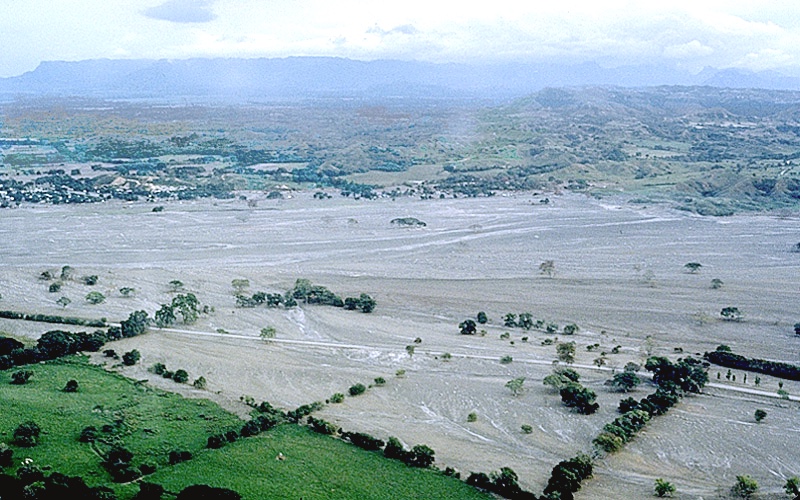
When we think about volcanoes, the images that typically come to mind are violent eruptions that devastate the surrounding landscapes and bring death or serious injury to anyone so unfortunate as to be in the vicinity. Figure 1, for example, shows the lava flows from the 1985 eruption of the Nevado del Ruiz volcano, which killed more than 23,000 people and destroyed the town of Armero, Colombia.
People are quick, however, to return to the regions near recent volcanic eruptions. The reason why is that the volcanic rocks and ash from eruptions contain stores of rich nutrients that yield bumper harvests of food crops.
This curse and blessing of volcanic eruptions raises an interesting question: wouldn’t it be great if volcanic eruptions were especially frequent when nobody lived near the volcanoes and especially infrequent when people were exploiting their rich soils for food? A recently published paper by five geologists shows that such a marvelous timing has indeed occurred, and it ranks as yet another fine-tuned feature of our planet that allows humans to enjoy sustained global high-technology civilization.
The paper published in Quaternary Science Reviews updates a hypothesis, based on evidence that volcanic activity in Iceland increased after the last glacial maximum, that deglaciation produces enhanced volcanic activity.1 The five geologists reanalyzed the four longest and most reliable tephra records.
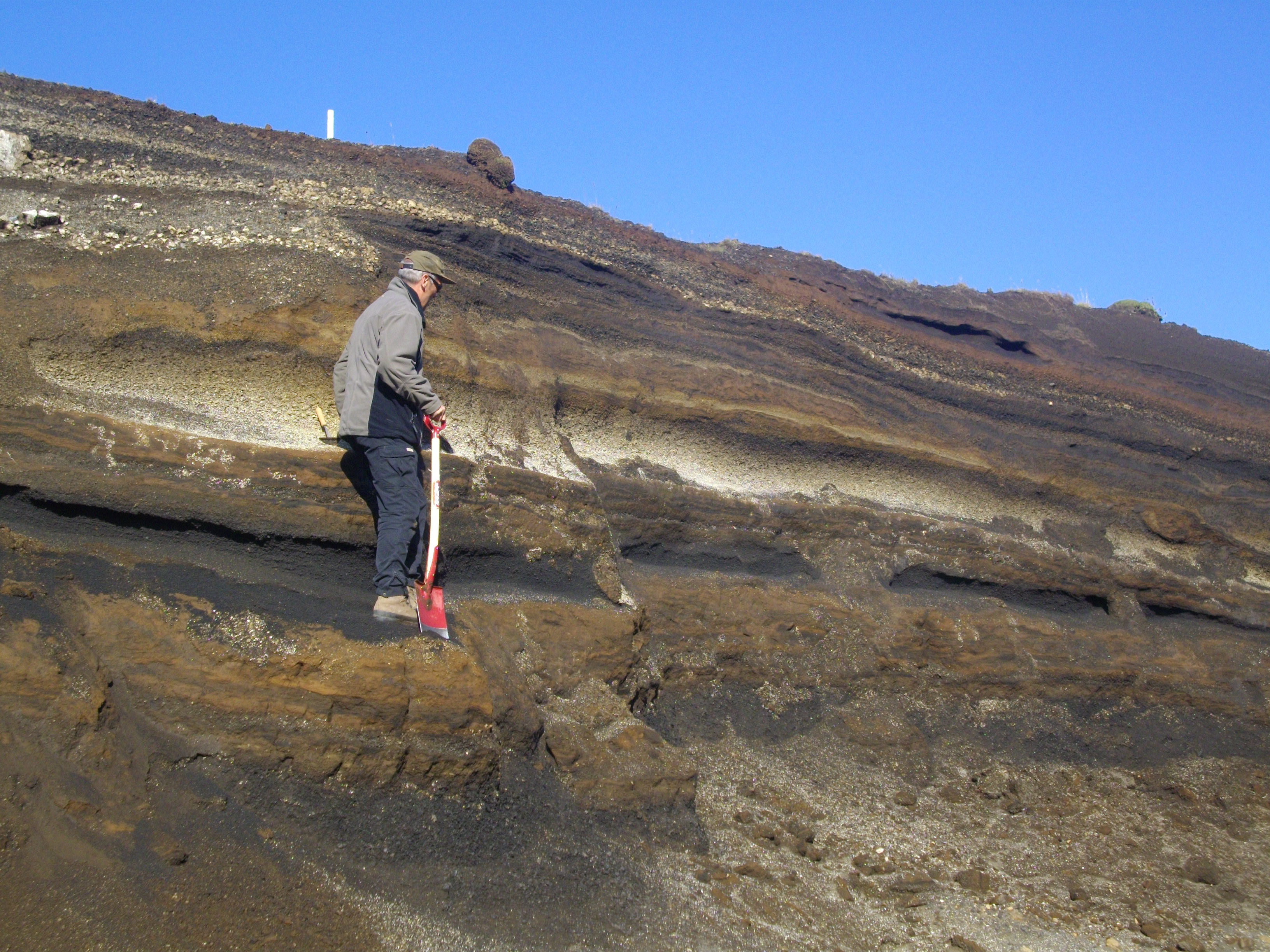
Tephra is fragmented material ejected by a volcanic eruption regardless of fragment size, composition, or how the fragmented material got to its location. Where the tephra is hot enough, it will fuse together into pyroclastic rock or tuff (volcanic ash compacted to form solid rock). Figure 2 shows tephra layers from multiple eruptions of the Hekla volcano.
The geological team investigated four tephra records that covered multiple glacial cycles. These four records were all linked with oxygen-18 measurements that accurately revealed both the recent historical records of sea level variations and variations in the global mean (average) temperature. Scientists obtained the four tephra records from different latitudes and different geotectonic settings.
All the tephra records exhibited the Milankovitch periodicities of precession (23,000 years), rotation axis tilt (41,000 years), and orbital eccentricity (approximately 100,000 years). I have written previously about Earth’s Milankovitch cycles here,2here,3 and here,4 and how they in large part explain the repeated episodes of glaciations and deglaciations that characterize the ice age cycle of the past 2.588 million years.
All the tephra records show that periods of increased volcanic eruption frequencies coincide with the dramatic deglaciations that occur at the glacial-interglacial transitions. Evidently, the release of the load of ice and snow on the continental landmasses ignites volcanic eruptions.
The long duration tephra records in this study, however, add up to just four. Thus, the five geologists call for “more precise tephra time series (preservation and age optimized) from different regions (glaciated versus non-glaciated) and geological settings (island arcs, continental arcs, intraplate)”5 … “to decipher the impact of these factors on a global perspective of how climate may control volcanism.”6
Enhanced volcanic eruptions at the beginning of an interglacial period imply that much of Earth’s continental landmasses and its lakes, rivers, and oceans receive a delivery of nutrients that allows microbes, vegetation, and animals to flourish. This fertilization event coincides with another fertilization event that I wrote about in Improbable Planet. I stated there that at the beginning of an interglacial “fine loess (wind-blown dust) from dried-out parts of the floodplains of glacial braided rivers carried layers of crucial nutrients onto the lowland plains below, making them richly fertile.”7
As I have explained in another blog,8 the interglacial we are experiencing right now is unique. It is the longest lasting interglacial and the only one where there has been an extended duration (9,500 years) of extreme climate stability. The current warm period has followed the most severe glacial period in the entire ice age cycle.
The severity and rapidity of the deglaciation from that glacial period resulted—at the time of the beginning of our interglacial period—in the greatest delivery of fine loess and other nutrients from volcanic eruptions. These especially intense and simultaneous fertilization events, to a large degree, explain why humans today are able to grow so much food on Earth’s plains and valleys and why we are able to harvest so much shellfish and other fish from Earth’s oceans, seas, lakes, and rivers.
These especially intense and simultaneous fertilization events give us more reasons to thank God for his supernatural blessings poured out on humanity. They also demonstrate that God planned in advance that billions of us would experience sufficiently high-technology civilization that makes possible the rapid spread of his message of redemption from human sin.
S. Kutterolf et al., “Milankovitch Frequencies in Tephra Records at Volcanic Arcs: The Relation of Kyr-Scale Cyclic Variations in Volcanism to Global Climate Changes.” Quaternary Science Reviews 204 (January 15, 2019): 1–16, doi:10.1016/j.quascirev.2018.11.004.
Reasons to Believe emerged from my passion to research, develop, and proclaim the most powerful new reasons to believe in Christ as Creator, Lord, and Savior and to use those new reasons to reach p… Read more about Hugh Ross.
In part 1 of this series, I discussed how scientific evidence demonstrates that the universe had a beginning and that such a notion best comports with the expectations of theism over atheistic naturalism. Yet that conspicuous beginning took secular scientists by complete surprise. In this article I will briefly discuss what the expectations of secular scientists concerning our solar system were, and what science has revealed. The results will also show which worldview— naturalism or theism—is preferred.
Last May I debated with Peter Atkins, Oxford University chemist and well-known atheist, on the Unbelievable? radio show and video podcast. Toward the end of the debate, moderator Justin Brierley asked each of us to name a possible scientific discovery that, if proven true beyond any reasonable doubt, would cause us to abandon the philosophical worldview we were advocating. You can watch the debate here.
October 31, 2017 marked the 500th anniversary of the start of the Protestant Reformation. Along with global recognition of its significance, the event also sparked renewed interest in the Reformers’ teachings and example, which are still relevant to us today. For example, Dr. Joel R. Beeke considers them in his article, “What Did the Reformers Believe about the Age of the Earth?” His central thesis is that the Reformers held a “literal” interpretation of Genesis that he equates with young-earth creationism; namely, that God created everything in six ordinary (24-hour) days less than 6,000 years ago. Is this accurate? If so, should this idea compel believers to adopt a similar view of the age of the earth?
What is one of the best ways to prepare for explaining and defending Christianity’s truth claims? I suggest that tapping into the wisdom of historic Christianity’s greatest thinkers is one such way.
As I pointed out in parts 1, 2, 3, 4, and 5 of this series, the term apologia sophia (Gk: ἀπολογία σοφία) transliterates the Greek word endings and roughly translates to “apologetics wisdom.” In this final installment, I hope to give more practical advice (even genuine wisdom) that you can use in your apologetic engagements.
One of my chief aims when I teach students either at Biola University (for a master’s in apologetics program) or in my role as an RTB scholar, is that students of apologetics appropriately ground their defense of the faith in the biblical and orthodox theology of historic Christianity. Apologetics needs to be tightly connected to theology. After all, throughout church history apologetics was viewed as a branch of theology.
Thus, I strongly recommend that students read classic apologetics works that have a strong theological emphasis. In part 5 of this series I listed and described three classic theologically oriented texts. Here are three more.
As the title conveys, Athanasius’s (ca. 296–373) book explains and defends the incarnation of Christ against heretical attacks. Athanasius affirms that the essence of Christianity is found Jesus’s claims to be God in human flesh (a single person with both a divine and a human nature). During Athanasius’s lifetime, the influential Arian heresy challenged the incarnation. Arius of Alexandria (ca. 256–336) taught that Christ (the Son) was not truly equal to the Father in nature; rather, he was a created being. In On the Incarnation, Athanasius argues for the truth of the incarnation and indirectly argues against the Arian heresy by insisting that only the God-man (God in human flesh) can save human beings.
Augustine wrote in excess of 5 million words over his scholarly career, which makes him the most prolific ancient author. TheCity of God (Latin: De civitate Dei), written intermittently between AD 413 and 427, is considered to be Augustine’s scholarly masterpiece. The City of God stands as Augustine’s monumental analysis of world-and-life-view. It is his longest (more than a thousand pages) and most comprehensive work, and some people believe it’s his most significant contribution to Western thought. In this book, Augustine laid new foundations in the fields of Christian apologetics and worldview and in the analysis of Christian history.
Cur Deus Homo is a work of philosophical theology in which St. Anselm (1033–1109) attempts to provide an explanation for possibly the greatest Christian mystery of all (as the Latin title asks): “Why the God-Man?” Anselm lays out a theological theory for why it was necessary for God to become man in Jesus Christ and for the Son of God to suffer. This idea becomes a rational defense of the necessity of the incarnation in light of the atonement. Anselm’s theological conclusion is that only the God-Man can make the necessary payment to restore God’s honor and humankind’s relationship with God. Because Jesus Christ is God, he has the dignity and glory to carry out the task, but he performs it in the nature of a human being. Thus, the incarnate Christ appeases God’s honor and justice.
Reading and studying these three classic books will definitely help apologists ground their apologetic efforts in the richness of historic Christian theology and Scripture. As the Word of God exhorts: “For he [Paul] vigorously refuted his Jewish opponents in public debate, proving from the Scriptures that Jesus was the Messiah” (Acts 18:28).
Reflections: Your Turn
Have you read the three Christian classics above? What other Christian classics have you read? Visit Reflections on WordPress to comment with your response.
I believe deeply that “all truth is God’s truth.” That historic affirmation means that when we discover and grasp truth in the world and in life we move closer to its divine Author. This approach r… Read more about Kenneth R. Samples.
On my Facebook and Twitter pages I have a weekly segment called #FridayPhilosophy, where I provide quotes from great philosophical thinkers. One philosopher I quote often is professor Ed L. Miller. Dr. Miller’s book Questions That Matter was the first philosophy textbook that I ever used in teaching philosophy and his writings significantly influenced my thinking on the subject.
In last week’s blog about Earth’s magnetic field1 I wrote about recent research by three Australian astronomers that demonstrated the possible existence of life on a planet critically depends on that planet possessing a strong enduring magnetic dipole moment. Now, Harvard University astronomer Manasvi Lingam has published a paper in which he has determined the degree to which variations in the strength of Earth’s magnetic field impact life on Earth. He also shows the degree to which variations in the magnetic field strength of ancient Mars and of planets beyond our solar system impact the habitability of these planets.2
In his book A Universe from Nothing, Lawrence Krauss makes no bones about his belief that science provides great contributions to our fundamental knowledge. By contrast, he views input from theology (and philosophy to some extent) as largely useless. Similarly, Stephen Hawking declares, “philosophy is dead,” in The Grand Design.1 Other scientists have publicly echoed these sentiments and probably many more do so privately. Will people view science as useless someday?
What does the discovery of a strange new planet mean? From any perspective, it may mean that the universe continues to surprise us with its variety. From a Christian perspective, it could support the idea that a creator-artist who enjoys making different things has left a signature for his work.
Scientists recently found another first-of-its-kind exoplanet orbiting a Sun-like star roughly 100 light-years away. The new extrasolar planet has been called unusual, joining other unusual examples such as:
Kepler 16(AB) b, a Jupiter-sized planet orbiting around a binary star,
NLTT 5306 b, the almost star-like planet 56 times more massive than Jupiter that orbits its star once every day-and-a-half, or maybe
The twosuper-earths orbiting the pulsar PSR 1257+12. Super-earths appear common among other stars yet are unlike anything in our solar system.
The recent discovery, dubbed HR 5183b, contains more than three times the mass of Jupiter, but its orbit brings it closer to its star than our asteroid belt and farther out than Neptune. And it takes somewhere around 75 years to orbit. Discoveries like this usually lead to a better understanding of how our solar system formed. Here’s how. that might be the case for HR 5183b.
An Elongated Orbit
As the diagrams below show, the orbit of HR 5183b resembles that of Halley’s comet far more than it does Jupiter. Its eccentricity has captured scientists’ interest. All the large planets in the solar system have an eccentricity much smaller than 0.1 (nearly circular orbits). HR 5183b has an eccentricity of 0.84 (highly elongated orbit).1 Thus far, all the known mechanisms for making Jupiter-sized planets at Jupiter-like distances tend to result in orbits with low eccentricity—like those seen in our solar system.
Figures: The Strange Orbit of HR 5183 b (left); credit: Caltech; Halley’s Comet animation (right); credit: Wikimedia Commons.
Size of Orbit
One remarkable feature of this planet relates to the size of its orbit. Normally, the detection of an exoplanet requires at least one full orbit to validate. Although HR 5183b takes somewhere between 45 and 100 years to complete an orbit, astronomers found the exoplanet with observations that started in 1997. HR 5183b spends most of its time far away from its host star, moving at relatively uniform speeds. As it approaches the star, it accelerates with a characteristic signature that a couple decades of observation revealed.
A Star Billions of Years Old
Most of the Jupiter-sized planets orbiting at Jupiter-like distances have been found using the direct detection method (although microlensing techniques find exoplanets in this range also). The direct detection, or imaging, method works best for distant planets around young stars because young planets tend to emit more visible and infrared light than older planets. The fact that HR 5183b orbits a star 7.7 billion years old adds to its unusual nature.
What We Can Learn
The authors of the paper announcing the discovery of HR 5183b suspect that this find represents the first detection of an unexplored class of exoplanets. As scientists seek to understand how this unusual class of exoplanet formed, they will gain better insight into the process necessary to form Earth-like planets. According to the paper, “With this discovery, we continue to uncover the astonishing diversity of planetary systems in our galaxy.”
And it indicates at least one more way that exoplanets differ from our solar system. The more researchers learn about extrasolar planets, the more our planetary system appears to be “unusual,” though not accidental, in its own right.
Endnotes
Sarah Blunt et al., “Radial Velocity Discovery of an Eccentric Jovian World Orbiting at 18 AU,” The Astronomical Journal. Published ahead of print August 26, 2019, arxiv.org/abs/1908.09925.
Since my earliest memories, science and the Christian faith have featured prominently in my life – but I struggled when my scientific studies seemed to collide with my early biblical training. My f… Read more about Jeff Zweerink.
Throughout my professional career as both a college professor and a Christian scholar I have been asked thousands of questions. However, whenever I’m asked about suicide it always strikes an emotional chord deep within me. A close member of my family died by suicide more than 40 years ago when I was just a teenager. My wife also lost a member of her family in the same tragic way.
If you ever watched Tim Allen on Tool Time, the handyman show within the television show Home Improvement, you saw a man who always expressed joy in using some tool or set of tools to fix or solve a problem. Allen (as Tim “The Toolman” Taylor) portrayed what is inherent in us all. All human beings find satisfaction and fulfillment when we successfully use a tool—or better yet, several tools—to fix or solve something that has stumped or vexed us. Research affirms that this fulfillment in humans and some animals appears to result from a Creator’s endowment.
It was the first time someone I knew died. I was in seventh grade. My classmate’s younger brother and two younger sisters perished in a fire that burned his family’s home to the ground. We lived in a small rural town in West Virginia at the time. Everyone knew each other and the impact of that tragedy reverberated throughout the community.
“Diamonds are a girl’s best friend.” So the song goes, but the processes that created these gems, namely earthquakes, have not generated such lyrics. Understandably, many people fear earthquakes and wish they would never happen.
This contrast—the love of diamonds but hatred of earthquakes—is actually a great irony. We humans can easily live without diamonds. We cannot, however, live without earthquakes.
The Vital Importance of Earthquakes (Tectonics)
Earthquakes are part of Earth’s plate tectonic activity. Earth’s crust is currently divided into about 8 major plates with surface areas greater than 40,000,000 square kilometers and 16 minor plates with surface areas greater than 1,000,000 square kilometers.1
These 24 plates float above Earth’s mantle. Thanks to Earth’s interior being super-endowed with uranium and thorium, the radioactive decay of this uranium and thorium heats up the mantle sufficiently to make it soft and viscous. Consequently, Earth’s tectonic plates bump into and slide against one another. Where deep water is present at a boundary between two plates, one plate can slip underneath another plate and be thrust into the mantle.
During Earth’s infancy, water covered the entirety of Earth’s surface and all Earth’s plates were made up of basalts (igneous rocks). Tectonic activity gave rise to plate subduction which resulted in some of the basalts being chemically transformed into silicates. Silicates are lighter than basalts and hence float above the basalts. Eventually, sufficient silicates formed for landmasses to begin appearing above the water’s surface.
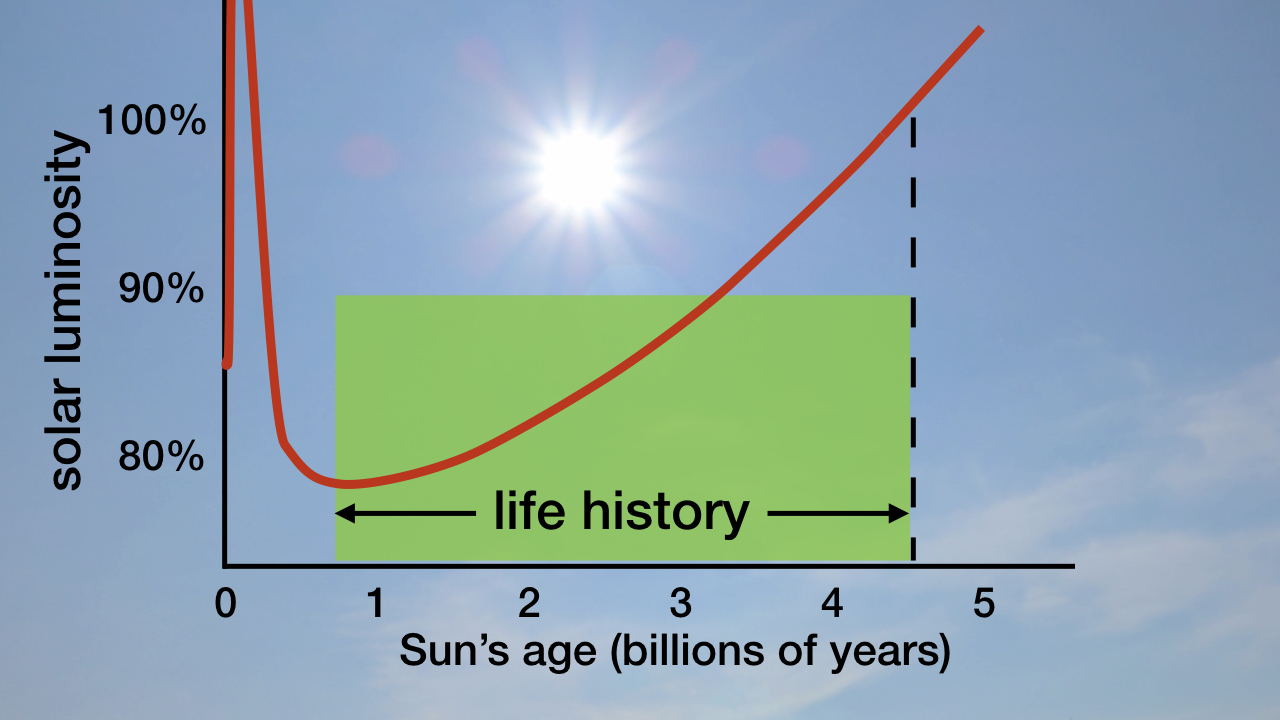
The combination of Earth’s water cycle and the exposure of silicates above sea level initiated the silicate-carbonate cycle. Rain falling on the exposed silicates acted as a catalyst to generate chemical reactions, including a net reaction where carbon dioxide is removed from the atmosphere to transform silicates into carbonates and sand. The gradual removal of carbon dioxide, a greenhouse gas, from the atmosphere means that as the Sun gets progressively brighter (see figure) Earth’s atmosphere progressively traps less of the Sun’s heat. This compensation for the Sun’s brightening has allowed Earth’s surface temperature to remain suitable for life for a long time period. To word it differently, without an operating silicate-carbonate cycle, life could not remain on our planet for long.
Figure: Sun’s Luminosity throughout Its History Image credit: Hugh Ross
The silicate-carbonate cycle delivers other crucial benefits. Nearly impenetrable silicate is converted into easily penetrable carbonates and sand. This conversion allows for advanced vegetation, plants in particular. The carbonates and sand also store water for the vegetation and plants. A benefit for humans is that industrially useless silicates are transformed into industrially valuable carbonates and sand. For example, carbonates and sand are the most important ingredients in concrete. Advanced civilization would be unimaginable without concrete, and concrete would not exist without an operating silicate-carbonate cycle.
Additional crucial benefits from plate tectonic activity include the distribution of life-critical nutrients to parts of the planet that otherwise would receive none, the recycling of those same nutrients throughout the planet’s surface environments, and the creation of extensive bedrock water storage systems2 on the continental landmasses. Plate tectonic activity also regulates how much ocean water gets subducted into the crust and mantle and how much is returned to Earth’s surface through geysers and volcanic eruptions.3 Without this finely tuned regulation of the quantities of water in the oceans, crust, and mantle, advanced life could not exist. Hence, earthquakes, though frightful in many respects, confer indispensable benefits to life.
Earthquakes and Diamonds
As the remains of once-living organisms are driven into Earth’s mantle through tectonic plate subduction, some of the carbon in that organic material becomes exposed to heat and pressure extreme enough to transform the carbon into diamonds. The rise of mantle plumes brings some of those diamonds into Earth’s crust. So, without plate tectonic activity, “girls” (women) would need to find other best friends and men would need to look elsewhere for engagement rings.
Diamonds can last for what seems forever, but plate tectonic activity will not. Earth’s tectonic activity is governed by heat flow from Earth’s interior. There are two major sources of this heat flow: radioactive heat from the decay of uranium and thorium isotopes and relic heat left over from the accretion of interplanetary dust and planetesimals that resulted in Earth’s formation. Both the radioactive heat and the relic heat have gradually subsided since the birth of Earth.
When Earth was young (during its first 750 million years), the high heat flow from Earth’s interior produced thick oceanic crust.4 At that time, water covered all of Earth’s surface. Hence, all of Earth’s crust was oceanic crust. Thick oceanic crust made subduction tectonics virtually impossible.
Today, heat flow from Earth’s interior is barely adequate to melt the upper mantle at plate boundaries so that one plate can subside (slide) underneath another. Within several million years from now, subduction tectonics will begin to decrease at an accelerating rate. In less than a billion years from now, all tectonic activity on Earth will cease.
Earth’s tectonic history can be seen as five periods, the first of which began with a 750-million-year era called the stagnant lid (hot stagnant lid regime). This was followed by 750 million years of intermittent subduction tectonics and then by 3 billion years of sustained tectonic activity. This third period effectively compensated for the Sun’s increasing luminosity while recycling nutrients for life and building up the biodeposits needed for global human civilization. The next period, our current one, has been marked by declining tectonic activity that soon will fail to compensate for the Sun’s increasing luminosity. The fifth and final period will feature a permanent stagnant lid (referred to as a cold stagnant lid regime).5
Civilization and Purpose
A 3-billion-year period of strong, sustained tectonic activity is remarkable. In my book, Improbable Planet, I explain why Earth is very likely alone in possessing such a long period of strong tectonic activity.6 That we are near the end of such a long period of sustained, strong tectonic activity implies that humans were purposely placed on Earth at the best possible time to build up a huge population. We also were placed here at the only possible time where we could exploit Earth’s vast biodeposits to launch and sustain global, high-technology civilization—and enjoy some jewels along the way. It is thanks to that civilization that we can fulfill one of the major purposes for why God created us. It allows humans to spread the message of God’s existence and character, of what troubles humans, and of how God promises to redeem those who place their trust in him.
Endnotes
Peter Bird, “An Updated Digital Model of Plate Boundaries,” Geochemistry, Geophysics, Geosystems 4, no. 3 (March 14, 2003): id. 1027, doi:10.1029/2001GC000252.
Norman H. Sleep, “Plate Tectonics and the Evolution of Climate,” Reviews of Geophysics 33, no. S1 (July 1995): 199–203, doi:10.1029/95RG00126.
Norman H. Sleep, “Non-Standard Subduction of Gabbroic Lithosphere into Gabbroic Mush Ocean,” American Geophysical Union, Fall Meeting 2006 (December 2006): abstract id. U14B-08.
Craig O’Neill et al., “A Window for Plate Tectonics in Terrestrial Planet Evolution,” Physics of the Earth and Planetary Interiors 255 (June 2016): 80–92, doi:10.1016/j.pepi.2016.04.002; Craig O’Neill, Simon Turner, and Tracy Rushmer, “The Inception of Plate Tectonics: A Record of Failure,” Philosophical Transactions of the Royal Society A 376, no. 2132 (November 2018): id. 20170414, doi:10.1098/rsta.2017.0414; W. G. Ernst, Norman H. Sleep, and Tatsuki Tsujimori, “Plate-Tectonic Evolution of the Earth: Bottom-Up and Top-Down Mantle Circulation,” Canadian Journal of Earth Sciences 53, no. 11 (November 2016): 1103–20, doi:10.1139/cjes-2015-0126; Jun Korenaga, “Initiation and Evolution of Plate Tectonics on Earth: Theories and Observations,” Annual Review of Earth and Planetary Sciences 41 (May 2013): 117–51, doi:10.1146/annurev-earth-050212-124208.
Reasons to Believe emerged from my passion to research, develop, and proclaim the most powerful new reasons to believe in Christ as Creator, Lord, and Savior and to use those new reasons to reach p… Read more about Hugh Ross.
We can all benefit from succinct, well-stated insights from people who have thought through theological ideas. I like to draw attention to these nuggets of wisdom on my Facebook and Twitter feeds in my weekly #ThursdayTheology segment. Today, we’ll consider several quotes from theologian John Jefferson Davis.
How important is reading in becoming an educated, wise, and thoughtful person? Many educators identify reading as the foundational discipline to all fields of study. For example, leading American educator E. D. Hirsch says, “We all know that reading is the most important academic skill.”1 Distinguished philosopher and educator Mortimer J. Adler summed it up as “reading is learning.”2
My colleague Fazale (Fuz) Rana has been full-time with me at Reasons to Believe (RTB) for the past 22 years. As a biochemist, he loves to speak and write about the complex designs in biological systems. The complex designs compel him to use words and terms with six or more syllables that nonscientists have little clue what they mean. Many of us at RTB tease Fuz that he must be a charismatic Christian because he speaks in an unknown language.
Biochemists are not alone in using vocabulary that few outside their discipline comprehend. It is happening more and more in my discipline of astrophysics. In titling this article about a major cosmological discovery, I found that there was no way to avoid using the term baryon acoustic oscillations. I know from experience that the term can be intimidating for non-astronomers. However, the term describes a relatively simple cosmological phenomenon, one that has profound significance for affirming the biblically predicted big bang creation model.1
Baryon Acoustic Oscillations Baryons is a catchall term for protons and neutrons. Baryons comprise 99.97% of all the ordinary matter (matter that strongly interacts with photons) in the universe. Hence, astronomers consider baryonic matter and ordinary matter as interchangeable terms.
Everyone familiar with modern entertainment devices knows that acoustic refers to sound. In big bang cosmology, propagation of sound waves in the early universe imprints density fluctuations on the universe’s ordinary matter. Astronomers refer to these fluctuations as baryon acoustic oscillations (BAOs).
In big bang cosmology, galaxies preferentially form in regions of high baryonic density. Therefore, astronomers can measure the universe’s BAOs by using galaxy surveys where they measure the positions and velocities of millions of galaxies. Through accurate determinations of the universe’s BAOs, astronomers can test the validity of the big bang creation model and determine the values of multiple cosmological features. Those features include the cosmic expansion rate, the age of the universe, the geometry of the universe, the nature of dark energy and dark matter (matter that does not interact or very weakly interacts with photons), and the sum of neutrino masses.
Previous Cosmological Implications For more than two decades, astronomers have been actively measuring the universe’s BAOs with the goal of unambiguously determining the origin and history of the universe. The Baryon Oscillation Spectroscopic Survey (BOSS), a subset of the Sloan Digital Sky Survey (SDSS) has two stated objectives: (1) to measure cosmological parameters to one-percent precision through measurements of 1.5 million or more luminous galaxies within the redshift range z = 0.2–0.7 and (2) to obtain measurements of 160,000+ quasars within the redshift range z = 0.8–3.5. These redshift ranges correspond to 2.47–6.43 billion light-years away (2.47–6.43 billion years ago) and 6.97–12.00 billion light-years away (6.97–12.00 billion years ago), respectively.
In 2015, the BOSS Collaboration published their analysis of the SDSS-III BOSS data release.2 Their analysis yielded a cosmic expansion rate (the Hubble constant) of 67.3 +/- 1.1 kilometers/second/megaparsec (1 megaparsec = 3.26156 million light-years). This cosmic expansion rate translates into an age for the universe = 14.53 +/- 0.24 billion years. They determined that matter comprised 30.1 +/- 0.8% of the universe and dark energy 72 +/- 3%. They measured the curvature of the universe to be -0.003 +/- 0.003 where 0.0 is a perfectly flat universe.
Using a later BOSS data release and a more sophisticated analysis, and assuming a ⋀CDM cosmic creation model (big bang creation model where the dominant component of the universe is dark energy, ⋀, and the next most dominant component is cold dark matter, CDM) astronomers Levon Pogosian, Gong-Bo Zhao, and Karsten Jedamzik found that the Hubble constant = 69.6 +/- 1.8 kilometers/second/megaparsec.3 Using the same data set and assuming that dark energy is governed by a single nonvarying constant, astronomers Rafael Nunes, Santosh Yadav, J. F. Jesus, and Armando Bernui determined that the Hubble constant = 69.23 +/- 0.50 kilometers/second/megaparsec.4
Cosmological Implications of the Latest BAO Data The recently released SDSS-IV extended BOSS includes measurements on 1,372,737 galaxies over the redshift range z = 0.2–0.75; 174,816 luminous red galaxies in the redshift range 0.6–1.0; 343,708; quasars in the redshift range 0.8–2.2; and 157,845 quasars that are free of broad absorption spectral lines in the redshift range 2.0–3.5. Analysis of data from the completed SDSS-IV extended BOSS yields the following cosmological results.5 Based on the BAO data alone, dark-energy-free cosmic models are ruled out. In combination with maps of the cosmic microwave background radiation (CMBR—the radiation left over from the cosmic creation event), the dark energy density is determined to 0.7% precision. The Hubble constant = 68.18 +/- 0.79 kilometers/second/megaparsec. The universe’s curvature = -0.0022 +/- 0.0022. The combination of the latest BAO data with the latest CMBR data yields a measure of the universe’s curvature = -0.0001 +/- 0.0018. The latter measure ranks as the best measurement to date of the universe’s geometry and provides strong evidence for a flat cosmic geometry.
The Hubble constant is one of the most, if not the most, basic cosmological parameters because it yields absolute determinations of the age of the universe and the universe’s energy content. The Hubble constant measurement of 68.18 +/- 0.79 kilometers/second/megaparsec is by far the most accurate measurement based on mid-range objects, that is, objects at look-back times midway between the earliest times in cosmic history and the latest times. Measurements based on maps of the CMBR reveal the cosmic expansion rate shortly after the universe’s beginning. Measurements based on local galaxies reveal the current cosmic expansion rate.
Based on the final Planck data release, the highest quality map of the CMBR, astronomers determined the Hubble constant = 67.36 +/- 0.54 kilometers/second/megaparsecs.6 Based on using the tip of the red giant branch stars to calibrate distances to type Ia supernovae in local galaxies, astronomers ascertained the Hubble constant = 69.8 +/- 0.8 kilometers/sec/megaparsec.7 Ignoring probable statistical and systematic errors, the three measurements imply that the cosmic expansion rate sped up by 0.82 kilometers/second/megaparsec (1.2%) during the first 5–7 billion years of cosmic history and by another 1.62 kilometers/second/megaparsec (2.3%) during the following 7–9 billion years (a total of 3.5%).
Astronomers expect some speed-up in the cosmic expansion rate because, as the space surface of the universe gets larger, dark energy becomes more effective in its capacity to accelerate the cosmic expansion rate. Meanwhile, as massive bodies in the universe spread apart as a result of cosmic expansion, gravity becomes progressively weaker in its capacity to slow down cosmic expansion. However, assuming that dark energy is governed by a nonvarying constant, the cosmological constant, the cosmic expansion rate should increase by no more than 1% over the entire history of the universe. (In next week’s post, I will explain how different astronomy research groups propose to close the remaining 2.5% gap.)
Theological Implications As the BOSS Collaboration repeatedly demonstrated in their published paper, their analysis of the SDSS-IV extended BOSS data made for an even stronger case for the ⋀CDM big bang model. Astronomers’ analysis of the recent SDSS-IV extended BOSS data release provides yet another example that the more we learn about the origin, history, and structure of the universe and the more accurately we measure the characteristic features of the universe, the more evidence we accumulate for the biblically predicted cosmic creation model.
Éric Aubourg et al., BOSS Collaboration, “Cosmological Implications of Baryon Acoustic Oscillation Measurements,” Physical Review D 92 (December 14, 2015): id. 123516, doi:10.1103/PhysRevD.92.123516.
Levon Pogosian, Gong-Bo Zhao, and Karsten Jedamzik, “Recombination-Independent Determination of the Sound Horizon and the Hubble Constant from BAO,” Astrophysical Journal Letters 904, no. 2 (December 2020): id. L17, doi:10.3847/2041-8213/abc6a8.
Rafael C. Nunes et al., “Cosmological Parameter Analysis Using Transversal BAO Data,” Monthly Notices of the Royal Astronomical Society 497, no. 2 (September 2020): 2133–2141, doi:10.1093/mnras/staa2036.
Shadab Alam et al., eBOSS Collaboration, “Completed SDSS-IV Extended Baryon Oscillation Spectroscopic Survey: Cosmological Implications from Two Decades of Spectroscopic Surveys at the Apache Point Observatory,” Physical Review D 103 (April 28, 2021): id. 083533, doi:10.1103/PhysRevD.103.083533.
N. Aghanim et al., Planck Collaboration, “Planck 2018 Results. VI. Cosmological Parameters,” Astronomy & Astrophysics 641 (September 2020): id. A6, doi:10.1051/0004-6361/201833910.
Wendy L. Freedman et al., “The Carnegie-Chicago Hubble Program. VIII. An Independent Determination of the Hubble Constant Based on the Tip of the Red Giant Branch,” Astrophysical Journal 882, no. 1 (September 1, 2019): id. 34, doi:10.3847/1538-4357/ab2f73.
Many eyes were trained toward the night skies with the recent, rare, super blue blood Moon. While such spectacular events in the solar system…Astronomy
Beginnings tell us a lot about children. A child’s “firsts” inform us about his or her personality, development, and adult future. For these reasons parents are attentive to when their children first take an unassisted step, speak a recognizable word, count to ten, recognize letters in the alphabet, read a book, or swim in a pool.
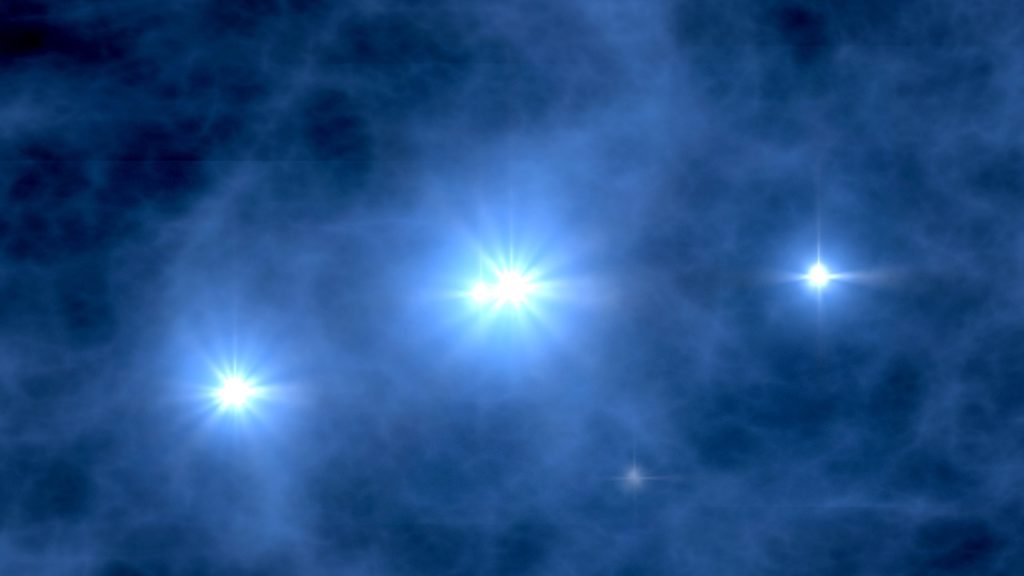
Similarly, the universe’s beginnings tell us a lot about how it got to its present state. One of the most important beginnings in the universe is what astronomers call the cosmic dawn, that early epoch in the universe when it first became bathed in starlight (see figure). Asking exactly when the cosmic dawn occurred makes for a crucial and sensitive test of cosmic creation models and the reliability of the Bible.
Figure: Artist’s Concept of the First Stars Being Born in the Universe Credit: NASA/WMAP Science Team
Previous Attempts to Date the Cosmic Dawn Astronomers’ analysis of maps of the universe’s residual radiation from its beginning, called the cosmic microwave background radiation (CMBR), yielded the first measures of the cosmic dawn. Analysis of the large-scale polarization in the Planck satellite map of the CMBR indicated that the universe’s first stars were massive stars in newly formed low-mass galaxies. These stars were birthed at redshift z = 7.7 (a galactic distance measurement), which is 670 million years after the cosmic creation event (CCE).1
Measurements of the 21-centimeter spectral absorption line of neutral hydrogen reveal that ultraviolet photons produced by early star formation occurred before redshift z = 9.6 (before 500 million years after the CCE).2 The 21-centimeter neutral hydrogen line measurements made by the Experiment to Detect the Global EoR Signature (EDGES) showed that the intergalactic medium may have been heated by starlight as early as z = 15 (260 million years after the CCE).3
A spectroscopic measurement of the Lyman-alpha and O III emission lines in the galaxy MACS1149-JD1 established its redshift at z = 9.1096 ± 0.0006.4 Infrared photometry of MACS1149-JD1 yielded an estimated age of 290 million years for its dominant stellar component, which is consistent with a cosmic dawn at z = 15.4 ± 2.3 (about 250 million years after the CCE).
New Measurement of the Cosmic Dawn Date A team of six astronomers led by Nicolas Laporte has endeavored to more accurately determine the cosmic dawn date by increasing the sample size of accurately measured galaxies beyond z = 9 from one to six.5 Laporte’s team used the European Very Large Telescope, the twin Keck Observatory telescopes, the Gemini South telescope and the Atacama Large Millimeter Array to more accurately measure distances to the six most distant galaxies currently known.
Laporte and his colleagues measured a redshift of z = 8.78 for the galaxy GN-z10-3 and z = 9.28 for the galaxy MACS0416-JD. For the galaxy GN-z9-1 they determined a likely lower redshift limit of z = 9. Together with the earlier measurement on MACS1149-JS1, Laporte’s team concluded that cosmic star formation must have been occurring before z = 10 (earlier than 480 million years after the CCE). Using the Hubble and Spitzer Space Telescopes, they made photometric measurements of the light emitted from GN-z10-3, GN-z9-1, and MACS0416-JD. These measurements showed that the stars in these galaxies were 150–250 million years old. Thus, Laporte’s team determined the most accurate measurement, so far, of the cosmic dawn date: 250–350 million years after the CCE.
Implications of the Cosmic Dawn Date Laporte’s team was most excited about what their measurements mean for the James Webb Space Telescope (JWST) that is scheduled to be launched next month. Their observations demonstrated that the JWST will be capable of directly witnessing the cosmic dawn and determining a date about ten times more precise than the one achieved by their team. That is, we can soon look forward to an even more accurately defined cosmic creation model. Here’s why.
The cosmic dawn date determined by Laporte and his colleagues is consistent with the standard big bang creation model. This model posits dark energy as the primary component of the universe, dark matter as the second most abundant component, and baryonic matter (composed of protons, neutrons, and electrons) as making up virtually all the remaining cosmic stuff. The standard big bang creation model is consistent with the four fundamental features of the universe that the Bible uniquely taught for thousands of years before astronomers had any clue that the universe indeed possessed these features.6 Thanks to the telescope power presently available to astronomers—and soon to be greatly enhanced—the unique power of the Bible to correctly predict future scientific discoveries has been spectacularly affirmed. This demonstration gives yet more weight to the conclusion that the Bible is the inspired, inerrant revelation from the One who created the universe.
Featured image: Universe’s History Showing the Cosmic Dawn When Stars First Formed Credit: National Science Foundation
Endnotes
N. Aghanim et al., Planck Collaboration, “Planck 2018 Results. VI. Cosmological Parameters,” Astronomy & Astrophysics 641 (September 2020): id. A6, doi:10.1051/0004-6361/201833910.
A. H. Patil et al., “Upper Limits on the 21 cm Epoch of Reionization Power Spectrum from One Night with LOFAR,” Astrophysical Journal 838, no. 1 (March 20, 2017): id. 65, doi:10.3847/1538-4357/aa63e7.
Judd D. Bowman et al., “An Absorption Profile Centred at 78 Megahertz in the Sky-Averaged Spectrum,” Nature 555, no. 7694 (March 1, 2018): 67–70, doi:10.1038/nature25792.
Takuya Hashimoto et al., “The Onset of Star Formation 250 Million Years after the Big Bang,” Nature 557, no. 7705 (May 17, 2018): 392–395, doi:10.1038/s41586-018-0117-z.
N. Laporte et al., “Probing Cosmic Dawn: Ages and Star Formation Histories of Candidate z ≥ 9 Galaxies,” Monthly Notices of the Royal Astronomical Society 505, no. 3 (August 2021): 3336–3346, doi:10.1093/mnras/stab1239.
Prayer—consistent, focused prayer—is a vital part of effective ministry. Sign up to be an RTB Prayer Partner below, then watch your inbox for our current prayer requests and related Scripture passages.Thank you for taking the time to bring these requests before the Lord!https://get.reasons.org/dear-reader/Astronomy
Some members of the creationist community have questioned astronomers’ explanation for the replenishment of short-period comets in our solar system.Astronomy
Last May I debated with Peter Atkins, Oxford University chemist and well-known atheist, on the Unbelievable? radio show and video podcast. Toward the end…Bible
Less than a two-hour drive from Reasons To Believe’s headquarters is an amusement park called Legoland, where one can gaze at amazingly complex structures…Chemistry
A team of 10 Chinese astronomers recently announced the first-ever discovery of a supermassive black hole binary.1 They found the binary in the galaxy NGC 5548 (see figure 1), a galaxy where more than 70 percent of its light comes from the nuclear core. Previous research teams had determined that a supermassive black hole with a mass 280 million times the sun’s mass resided in the nuclear core.2
Details on the First-Detected Supermassive Black Hole Binary
The team found a 14-year periodicity in the double-peaked profile of the hydrogen-beta spectral line and in the brightness of both the hydrogen-beta emission line and the optical continuum arising from the nuclear core. These periodicities imply that the “supermassive black hole” is really two black holes of roughly equal mass that orbit one another with a separation of 21.7 light-days or 350 billion miles. This separation is approximately 100 times the distance between Neptune and the sun.
Figure 1: Seyfert galaxy NGC 5548 Image credit: NASA/ESA Hubble Space Telescope
Further confirmation for a supermassive black hole binary residing in the galactic center of NGC 5548 comes from a very deep exposure image of NGC 5548. This image shows two long tidal tails, indicating that NGC 5548 is the product of two roughly equal mass galaxies that merged about 1 billion years ago. Each of the two galaxies that merged to become NGC 5548 would have contained a supermassive black hole at their respective galactic centers. A billion years is a reasonable time for the orbit of the two supermassive black holes around one another to decay to a distance of about 22 light-days.
NGC 5548 is 244 million light-years away from Earth. It is a little more than five times closer to us than the merger of two 30-solar-mass black holes discovered by the Laser Interferometer Gravitational-Wave Observatory (LIGO). NGC 5548’s proximity to Earth and the very high mass of its black hole binary make it an excellent target for detecting gravitational waves.
Eventually, the two supermassive black holes in NGC 5548’s center will merge. That merger will impact the LIGO instrument with gravitational waves billions of times stronger than those detected from the merger of the two 30-solar-mass black holes. However, it will probably be at least another million years before the merger of NGC 5548’s supermassive black holes occurs. Nevertheless, NGC 5548’s supermassive black holes are already close enough together to radiate detectable gravitational waves.
How Is the Creation Model Affected?
In their paper, the team calls for the search of additional supermassive black hole binaries. Additional supermassive black hole binaries will not only aid research on the properties of gravity and general relativity but also assist in testing cosmic creation models. The predominant big bang creation model predicts that galaxy merger events were common in the early history of the universe. While many images of galaxy merging events have been collected, a comprehensive catalog of the characteristics of supermassive black hole binaries in galaxies would yield truly definitive tests of the leading big bang creation models.
The recent discovery of gravitational waves emanating from the merger of two 30-solar-mass black holes (and the potential discovery of more medium-sized black hole merger events) has been significant in the defense of the biblically predicted big bang creation model. This discovery illuminates a core feature of the creation model by providing a much more detailed understanding of the universe’s firstborn stars and of the subsequent star formation history of the universe. However, presently operating gravity wave telescopes are reliant upon rare merger events (either two medium-sized black holes within a few billion light-years from Earth, or two small black holes or neutron stars in a nearby galaxy) to generate a signal strong enough to detect gravitational waves. Even then, the detectable gravitational signal lasts only a few seconds. But the discovery of a different kind of black hole binary—a supermassive black hole binary—promises to augment scientists’ ability to study gravitational waves.
With access to gravitational waves emanating from both medium-sized and supermassive black hole binaries, astronomers will be able explore new properties of gravity and general relativity. They will be able to gain a greater understanding of the universe’s star and galaxy formation history and, consequently, of the cosmic creation event and development of the universe. This deeper understanding may help remove some of the remaining doubts about the validity of the biblically predicted big bang creation model.3
Subjects: Origin of the Universe, Universe Design
Dr. Hugh Ross
Reasons to Believe emerged from my passion to research, develop, and proclaim the most powerful new reasons to believe in Christ as Creator, Lord, and Savior and to use those new reasons to reach people for Christ. Read more about Dr. Hugh Ross.
Endnotes
Yan-Rong Li et al., “Spectroscopic Indication of a Centi-parsec Supermassive Black Hole Binary in the Galactic Center of NGC 5548,” Astrophysical Journal 822 (April 2016): id. 4, doi:10.3847/0004-637X/822/1/4.
Jong-Hak Woo et al., “The Lick AGN Monitoring Project: The MBH-σ Relation for Reverberation-Mapped Active Galaxies,” Astrophysical Journal 716 (June 2010): 269–80, doi:10.1088/0004-637X/716/1/269; John Kormendy and Luis Ho, “Coevolution (or Not) of Supermassive Black Holes and Host Galaxies,” Annual Review of Astronomy and Astrophysics 51 (August 2013): 528–33, 545, doi:10.1146/annurev-astro-082708-101811.
Hugh Ross, A Matter of Days, 2nd ed. (Covina, CA: RTB Press, 2015), 135–44; See Hugh Ross, “Big Bang—The Bible Taught It First!” Today’s New Reason to Believe (blog), Reasons to Believe, July 1, 2000, http://www.reasons.org/articles/big-bang—the-bible-taught-it-first.
In 538 BC, the angel Gabriel gave Daniel a prophecy pinpointing when the Messiah would arrive. “Know and understand this,” Gabriel told him (Daniel 9:25). While Daniel may have understood it, somewhere along the way that insight has been lost. Old Testament scholars have long been debating the prophecy’s meaning, but one scholar, Harold Hoehner, had a particularly astounding interpretation.1
While in Babylon, Daniel read the Scriptures, learning that Jeremiah had foretold both the Babylonian captivity and the Israelites’ return to their homeland after 70 years. In response, Daniel confessed the sins of the nation in prayer, inciting the angel Gabriel to visit and deliver this message:
Know and understand this: From the time the word goes out to restore and rebuild Jerusalem until the Anointed One, the ruler, comes, there will be seven ‘sevens,’ and sixty-two ‘sevens.’ It will be rebuilt with streets and a trench, but in times of trouble. After the sixty-two ‘sevens,’ the Anointed One will be put to death and will have nothing. The people of the ruler who will come will destroy the city and the sanctuary. The end will come like a flood: War will continue until the end, and desolations have been decreed.2
Breaking Down the Daniel Prophecy
In taking a closer look at the Daniel passage, one thing is clear: it is about the Messiah. We see that the term “Messiah,” or “Anointed One,” is capitalized. It is also clear that a formula of sorts is provided to calculate when the Messiah will appear. The difficulties come in interpreting the formula. One such difficulty is determining the meaning of “weeks,” which is used in a number of translations. (NIV uses the term “sevens” instead of “weeks.”) In ancient Hebrew, “weeks” had a number of meanings, which scholars can determine by the context. The context in the Daniel passage shows that “weeks” means “seven units.” Using this definition, we can calculate when the Messiah will arrive: (7 x 7) + (62 x 7) = 49 + 434 = 483 years.
The prophecy further says that after the Messiah arrives, he will be “put to death and will have nothing.” The word “after” is very important. After the Messiah arrives, he will be put to death. Jesus’s crucifixion fulfills that prophecy.
We now know that the Messiah would arrive 483 years in the future. But does the prophecy specify a beginning date? The prophecy tells us: “From the time the word goes out to restore and rebuild Jerusalem.” So, who ordered this decree to restore Jerusalem, and when was it ordered? There are several possibilities, but the decree that best fits the evidence was made by the Persian king Artaxerxes to Nehemiah on March 5 of 444 BC (Nehemiah 2:1–8). (In this article, a number of biblical dates are used, all of which have been under debate by scholars for hundreds of years. Harold Hoehner makes a strong case for each of the dates. For those details, please refer to Hoehner’s book Chronological Aspects of the Life of Christ.)
Before we can make some calculations, we need to know how Daniel’s civilization counted time—by a solar year or a lunar year. A solar year has 365 days, 5 hours, 48 minutes, and 46 seconds, or 365.2422 days. A lunar year has exactly 360 days: 12 months of 30 days. [A lunar year has 12 rotation periods, or lunar months, which equal 354.367 Earth days (12 x 29.53059). However, ancient peoples rounded off the lunar month to 30 days. Thus, their lunar year would equal 360 days (30 days x 12).] Since the lunar year was commonly used in ancient biblical times, it makes the most sense to use the lunar year in calculations.
We must also decide how to define the arrival of the Messiah. Do we use Jesus’s birthdate, the date he began his ministry, the date of his crucifixion, or some other date? The date that many scholars have accepted as the time of the Messiah’s arrival is Jesus’s triumphal entry into Jerusalem. The reason for choosing this date is that this is when Jesus publicly declared that he was the Messiah. Before then, he told only select people, like his disciples, and he often reminded them to keep his identity secret. History chronologists have estimated that Jesus’s triumphal entry fell on Monday, March 30, AD 33.
Calculating Gabriel’s Formula
Now we’re ready to do some math to determine if Gabriel did in fact predict Jesus’s arrival. We’ll start by determining how many days are in 483 lunar years: 360 x 483 = 173,880 days. Next, we’ll convert those days back into solar years: 173,880 ÷ 365.2422 = 476.068 years. After converting the decimal part (0.068) to days (0.068 x 365.2422 = 24.8 days), the time prophesized for the Messiah to arrive comes out to be 476 years and 25 days.
Adding this number to March 5, 444 BC—the date on which the decree to rebuild Jerusalem was issued—brings us to March 30, AD 33, the very day of the triumphal entry of Jesus into Jerusalem. Is this match not remarkable? The remarkable accuracy of the predictions in the prophecy in Daniel [assuming the estimates are correctly interpreted and accurate] supports the truth of the prophecy, which in turn builds confidence in the authority and reliability of the Bible.
Don Olson
Don C. Olson earned a PhD in analytical chemistry from Purdue University in 1961 and currently works as CEO of Global FIA, Inc. in Fox Island, WA.
Subjects: Bible Codes, Historical Theology
Guest Writer
For a listing of all of our guest writers, click here.
Endnotes
For an excellent book on understanding this prophecy, see: Harold W. Hoehner, Chronological Aspects of the Life of Christ (Grand Rapids: Zondervan, 1977).
I am an "Intelligent Design" writer who has the Christian faith. Part of my background is that I have a degree in physics, and have been inducted into the National Physics Honor Society. Sigma Pi Sigma, for life. My interest has lead me into metaphysics, farther into Christianity. Optimum metaphysics becomes religion.











 Don Olson
 Will Myers


– VIEW – POST A COMMENT