The Flagellum’s Hook Connects to the Case for a Creator

BY FAZALE RANA – JANUARY 8, 2020

MORE

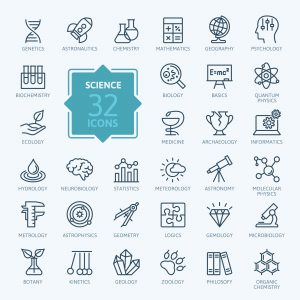
What would you say is the most readily recognizable scientific icon? Is it DNA, a telescope, or maybe a test tube?
blog__inline--the-flagellums-hook-connects-to-the-case-1

Figure 1: Scientific Icons. Image credit: Shutterstock

Marketing experts recognize the power of icons. When used well, icons prompt consumers to instantly identify a brand or product. They can also communicate a powerful message with a single glance.

Though many skeptics question if it’s science at all, the intelligent design movement has identified a powerful icon that communicates its message. Today, when most people see an image the bacterial flagellum they immediately think: Intelligent Design.

This massive protein complex powerfully communicates sophisticated engineering that could only come from an Intelligent Agent. And along these lines, it serves as a powerful piece of evidence for a Creator’s handiwork. Careful study of its molecular architecture and operation provides detailed evidence that an Intelligent Agent must be responsible for biochemical systems and, hence, the origin of life. And, as it turns out, the more we learn about the bacterial flagellum, the more evident it becomes that a Creator must have played a role in the origin and design of life—at least at the biochemical level—as new research from Japan illustrates.1

The Bacterial Flagellum

This massive protein complex looks like a whip extending from the bacterial cell surface. Some bacteria have only a single flagellum, others possess several flagella. Rotation of the flagellum(a) allows the bacterial cell to navigate its environment in response to various chemical signals.
blog__inline--the-flagellums-hook-connects-to-the-case-2

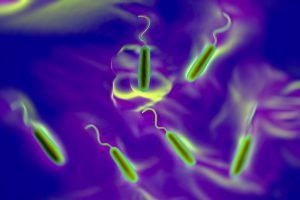
Figure 2: Typical Bacteria with Flagella. Image credit: Shutterstock

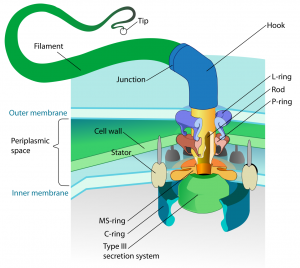
An ensemble of 30 to 40 different proteins makes up the typical bacterial flagellum. These proteins function in concert as a literal rotary motor. The flagellum’s components include a rotor, stator, drive shaft, bushing, universal joint, and propeller. It is essentially a molecular-sized electrical motor directly analogous to human-produced rotary motors. The rotation is powered by positively charged hydrogen ions flowing through the motor proteins embedded in the inner membrane.
blog__inline--the-flagellums-hook-connects-to-the-case-3

Figure 3: The Bacterial Flagellum. Image credit: Wikipedia

The Bacterial Flagellum and the Revitalized Watchmaker Argument

Typically, when intelligent design proponents/creationists use the bacterial flagellum to make the case for a Creator, they focus the argument on its irreducibly complex nature. I prefer a different tact. I like to emphasize the eerie similarity between rotary motors created by human designers and nature’ bacterial flagella.

The bacterial flagellum is just one of a large number of protein complexes with machine-like attributes. (I devote an entire chapter to biomolecular machines in my book The Cell’s Design.) Collectively, these biomolecular machines can be deployed to revitalize the Watchmaker argument.

Popularized by William Paley in the eighteenth century, this argument states that as a watch requires a watchmaker, so too, life requires a Creator. Following Paley’s line of reasoning, a machine is emblematic of systems produced by intelligent agents. Biomolecular machines display the same attributes as human-crafted machines. Therefore, if the work of intelligent agents is necessary to explain the genesis of machines, shouldn’t the same be true for biochemical systems?

Skeptics inspired by atheist philosopher David Hume have challenged this simple, yet powerful, analogy. They argue that the analogy would be compelling only if there is a high degree of similarity between the objects that form the analogy. Skeptics have long argued that biochemical systems and machines are too dissimilar to make the Watchmaker argument work.

However, the striking similarity between the machine parts of the bacterial flagellum and human-made machines cause this objection to evaporate. New work on flagella by Japanese investigators lends yet more support to the Watchmaker analogy.

New Insights into the Structure and Function of the Flagellum’s Universal Joint

The flagellum’s universal joint (sometimes referred to as the hook) transfers the torque generated by the motor to the propeller. The research team wanted to develop a deeper understanding of the relationship between the molecular structure of the hook and how the structural features influence its function as a universal joint.

Comprised of nearly 100 copies (monomers) of a protein called FlgE, the hook is a curved, tube-like structure with a hollow interior. FlgE monomers stack on top of each other to form a protofilament. Eleven protofilaments organize to form the hook’s tube, with the long axis of the protofilament aligning to form the long axis of the hook.

Each FlgE monomer consists of three domains, called D0, D1, and D2. The researchers discovered that when the FlgE monomers stack to form a protofilament, the D0, D1, and D2 domains of each of the monomers align along the length of the protofilament to form three distinct regions in the hook. These layers have been labeled the tube layer, the mesh layer, and the spring layer.

During the rotation of the flagellum, the protofilaments experience compression and extension. The movement of the domains, which changes their spatial arrangement relative to one another, mediates the compression and extension. These domain movements allow the hook to function as a universal joint that maintains a rigid tube shape against a twisting “force,” while concurrently transmitting torque from the motor to the flagellum’s filament as it bends along its axis.

Regardless of one’s worldview, it is hard not to marvel at the sophisticated and elegant design of the flagellum’s hook!

The Bacterial Flagellum and the Case for a Creator

If the Watchmaker argument holds validity, it seems reasonable to think that the more we learn about protein complexes, such as the bacterial flagellum, the more machine-like they should appear to be. This work by the Japanese biochemists bears out this assumption. The more we characterize biomolecular machines, the more reason we have to think that life stems from a Creator’s handiwork.

Dynamic properties of the hook assembly add to the Watchmaker argument (when applied to the bacterial flagellum). This structure is much more sophisticated and ingenious than the design of a typical universal joint crafted by human designers. This elegance and ingenuity of the hook are exactly the attributes I would expect if a Creator played a role in the origin and design of life.

Message received, loud and clear.

Resources

The Bacterial Flagellum and the Case for a Creator

Can Intelligent Design Be Part of the Scientific Construct?

Endnotes
  1. Takayuki Kato et al., “Structure of the Native Supercoiled Flagellar Hook as a Universal Joint,” Nature Communications 10 (2019): 5295, doi:10.1038/s4146.

About Reasons to Believe

RTB’s mission is to spread the Christian Gospel by demonstrating that sound reason and scientific research—including the very latest discoveries—consistently support, rather than erode, confidence in the truth of the Bible and faith in the personal, transcendent God revealed in both Scripture and nature. Learn More »

Support Reasons to Believe

Your support helps more people find Christ through sharing how the latest scientific discoveries affirm our faith in the God of the Bible.

DONATE NOW


U.S. Mailing Address
818 S. Oak Park Rd.
Covina, CA 91724
  • P (855) 732-7667
  • P (626) 335-1480
  • Fax (626) 852-0178

Reasons to Believe logo

Posted in Uncategorized | Leave a comment

Mental Health As Treated by the Government; A Move Toward Hyper-communism

THE DEFINITION OF MENTAL HEALTH IS ARBITRARY TO THE AVERAGE CITIZEN. “What is the nature of mental health” is being defined by special interest groups (SIG) who uses sensitive information about private citizens. In some venues if a worker has an injury the worker is treated physically and mentally. This sounds good but SIG is getting their hands on the minds of workers. If a worker goes to their doctor for a sleeping pill then it is also treated as a mental health problem. In this case the doctor or psychiatrist can hide the stress caused by SIG who has targeted the worker.

In order for the worker to get a sleeping pill he must be defined as being paranoia if said worker is in any manner targeted by SIG. If SIG was a good Entity it would not have to be extremely covert, hidden among norms in our society.

The snake organization SIG has been successfully pushing Christianity out of America. I am sure that SIG is reaching the phase of defining Christian as being mentally unhealthy, and furthermore, call for the burning of bibles in order to keep the youth mentally healthy. The time is near says the LORD.

MENTAL HEALTH IN A GENERAL SENSE IS BECOMING THE SUBJECTIVE VIEW OF SPECIAL INTEREST GROUPS (SIG) WHO COLLECT SENSITIVE INFO CONCERNING EACH PRIVATE CITIZEN (DOSSIERS) AND ORCHESTRATE ADVERSITIES INTO THE LIVES OF TARGETED PERSONS. The actions taken against an individual concerning the Covid19 virus is analogous to the action SIG would take against an individual citizen who SIG desires to mold the targeted persons to SIG’s desires for mental health compliance as SIG moves our nation toward hyper-communism whereas the SIG snake organization would virtually own the minds of the citizens while determining what is good mental health for the targeted persons or not good mental health as determined by SIG.

Christianity shall, in the near future, be determined to be bad mental health. This movement has already started. This is an international movement around the world. Hyper-communism is a worldwide goal. Candidates for the autocracy leader are being considered as SIG snakes work for this goal. The goal includes atheism and ,of course, they shall push against religion.

God’s answer to counter such movement is Luke 6:31; “And as ye would that men should do to you, do ye also to them likewise.”   (Hoping that this article is not censored by SIG interests.)

Posted in Uncategorized | Leave a comment

Human Dietary Flexibility Appears Designed

by Hugh RossJune 21, 2021

During one of my ministry trips to Hong Kong, several Chinese science professors took me to a famous restaurant for a traditional Chinese dinner. The two-meter-diameter lazy Susan was heaped with an enormous variety of foods of which the only items I recognized were the sea cucumbers. The professors told me they had proof that Eve was not Chinese. They asserted that if Eve were Chinese she would have eaten the serpent. They then informed me that I had just consumed the tail portion of a snake.

A new study shows that the Chinese are not alone in eating an extreme variety of foods. Human beings are the most widely distributed terrestrial mammal. The study shows the ability of humans to rapidly adapt to newly encountered environments and accelerate their population, civilization, and technology. That ability is due, in part, to their hyper-omnivory (highly varied diet) and prey-switching ability. No other species consumes such a wide variety of organisms in their diet.1 Humans are extremely opportunistic omnivores. We manifest an amazing ability to consume across multiple trophic levels from the base of the food web up to the apex predator.2

The Diet Study
A team of five research environmentalists led by Michael Bird conducted a global study on the history of the human diet.3 They accomplished this through 13,666 globally distributed analyses of ancient and modern human collagen and keratin samples. The keratin source came from the hair and nails of the individual humans. The collagen source was from either the bones or muscles.

The environmentalists first demonstrated that the carbon-13 to carbon-12 and nitrogen-15 to nitrogen-14 isotope ratios in a human individual’s collagen and keratin are excellent proxies for the diet being consumed by the individual. Their analyses revealed a much broader diet prior to industrialized agriculture. In particular, they observed that “the isotope dietary breadth of modern humans is highly compressed when compared to populations predating the development in 1910 of modern industrial fertilizer by the Haber-Bosch method.”4

The Haber-Bosch process permits the industrial production of near limitless amounts of fertilizer from atmospheric nitrogen anywhere in the world. Global use of such industrial fertilizer now exceeds 100 million tonnes (110 million US tons) per year.5 This fertilizer, combined with widespread irrigation, has greatly increased both the efficiency and volume of food production for human use. It has also made possible the intense cultivation of wheat, rice, millet, corn, soybean, and sugar well outside their natural realms and for their shipment across the world. However, with the exception of the few humans still living in isolated stone-age technology tribes, it has also dramatically shrunk the diversity of foods humans consume.

Diet Study Implications
The diet study reveals unique design features in human beings. It adds to the evidence that humans were designed to thrive in both low- and high-technology environments.

Humans, Neanderthals, Denisovans, and the Homo floresiensis species were all living during the last ice age. Of these, only humans survived the ice age and multiplied into a large population. During the last ice age, atmospheric carbon dioxide levels fell to 180 parts per million.6 At that level, the production of sugars, starches, fats, and proteins via photosynthesis becomes seriously impaired. Humans survived and even thrived because they had the specialized anatomical features that allowed them to be, by far, the most efficient hunter-gatherers. Humans are the only species that has ever existed on Earth that can gather and hunt the full spectrum of foodstuffs with relative safety. As Genesis 1:26 declares, God made humans so that they can rule over all Earth’s creatures.

The human digestive tract complements the anatomical features that permitted efficient gathering and hunting. It is designed to process a broad spectrum of foodstuffs without inhibiting mobility and high-productivity work. Thanks to unique designs in the human brain, arms, and hands, immediately after their creation humans were able to control fire and manufacture grinding tools and hearths that made possible the roasting and boiling of foods and the production of bakery products.7 Such technologies greatly expanded the range of foodstuffs that humans could consume and lowered the amount of time and labor humans needed to sustain their caloric and nutritional needs.

The march of human civilization has been one of progressively lowering the time and labor needed to produce food requirements. Today, in the United States only about one percent of the labor force is engaged in producing raw foodstuffs. This food production efficiency sets free nearly the whole labor force to engage in science, engineering, technology, medicine, education, art, music, and recreation. This transfer of labor has made possible the technological revolution of the past hundred years. With this revolution has come a much more specialized diet. Amazingly, the human body is designed to thrive on both a hyper-omnivorous and a modestly omnivorous diet. This design allows humans to expend energy to contemplate far more than mere survival, but purpose as well.

Endnotes

  1. Stefani A. Crabtree, Douglas W. Bird, and Rebecca Bliege Bird, “Subsistence Transitions and the Simplification of Ecological Networks in the Western Desert of Australia,” Human Ecology 47 (April 2019): 165–177, doi:10.1007/s10745-019-0053-z; Jennifer A. Dunne et al., “The Roles and Impacts of Human Hunter-Gatherers in North Pacific Marine Food Webs,” Scientific Reports 6 (February 17, 2016): id. 21179, doi:10.1038/srep21179.
  2. Stefani A. Crabtree, Jennifer A. Dunne, and Spencer A. Wood, “Ecological Networks and Archeology,” Antiquity 95, no. 381 (April 30, 2021): 812–825, doi:10.15184/aqy.2021.38; Dunne et al., “Roles and Impacts.” 
  3. Michael I. Bird et al., “A Global Carbon and Nitrogen Isotope Perspective on Modern and Ancient Human Diet,” Proceedings of the National Academy of Sciences USA 118, no. 19 (May 11, 2021): id. 2024642118, doi:10.1073/pnas.2024642118.
  4. Bird et al., “A Global Carbon and Nitrogen Isotope Perspective,” 1.
  5. Chaoqun Lu and Hanqin Tian, “Global Nitrogen and Phosphorus Fertilizer Use for Agriculture Production in the Past Half Century: Shifted Hotspots and Nutrient Imbalance,” Earth System Science Data 9, no. 1 (March 2, 2017): 181–192, doi:10.5194/essd-9-181-2017.
  6. Jochen Schmitt et al., “Carbon Isotope Constraints on the Deglacial CO2 Rise from Ice Cores,” Science 336, no. 6082 (May 11, 2012): 711–714, doi:10.1126/science.1217161; J. R. Petit et al., “Climate and Atmospheric History of the Past 420,000 Years from the Vostok Ice Core, Antarctica,” Nature 399 (June 3, 1999): 433, doi:10.1038/20859.
  7. Hugh Ross, “Confirmation That Early Humans Were Making Bread,” Today’s New Reason to Believe (August 27, 2018). 

Design

SOCIALICON
Default publications post thumbnail
Bacteria Help Prepare Earth For Life

Sulfate-reducing bacteria are among the oldest life forms on Earth. They are dominant in the geologic record from 3.9 to 2.9 billion years ago,…Evolution

Kidney Stones- Evidence for Divine Design

“It’s the closest that a man will ever come to experiencing the pain of childbirth,” the attending nurse proclaimed with a noticeable glee in…Biochemistry

Addressing Skeptical Challenges, Part 1

Social media and the internet allow ample opportunities to discuss the truth claims of historic Christianity. A while ago I interacted with a skeptic…Design

Support Our Mission

Your support helps more people find Christ through sharing how the latest scientific discoveries affirm our faith in the God of the Bible.Donate Now


facebooktwitteryoutube

Posted in Uncategorized | Leave a comment

How Can Christians Disagree over Adam and Eve?

BY ANJEANETTE ROBERTS – DECEMBER 19, 2019

RTB is committed to the goal of showing exemplary character when Christians disagree with one another. We aim to do so respectfully and humbly as we pursue and help others pursue truth. Such respect and humility become especially important when we disagree on topics of importance such as how to reconcile scientific data and biblical accounts of human origins.

You may wonder how people who are committed to seeking the truth can often interpret the data so differently. The reality is that disagreement is not just an issue in science and theology but in all areas of human reasoning and worldview formation. It’s known as the underdetermination of a theory.1 People who readily acknowledge this underdetermination often qualify their acknowledgment by adding that although this is true, science (or observational or empirical data of any kind) can rule out certain theories as inconsistent with the data. Obviously this addendum is also true.

Yet, the underdetermination of theories also means that there are (and always will be) theories in obvious conflict that are, nevertheless, empirical equivalents. This means that they account for the empirical data equally but differently. Still some theories may require more ad hoc (unevidenced) assumptions or additions to fit the same data into one or more possible theories.

Applying Respectful Dialogue in Light of the Underdetermination of Theories

I recently appeared on The Language of God (LoG), a podcast produced by BioLogos and hosted by philosopher James (Jim) Stump.2 Stump interviewed several people about the topic of Adam and Eve and the scientific data supporting or challenging their existence, their relationship to our current human populations, and the dating of any possible historical progenitor pair.3 Stump did an excellent job of asking pertinent scientific and theological questions.

In an episode entitled “Adam and Eve” Stump and Deborah (Deb) Haarsma, president of BioLogos, discuss complex topics touching on science and Scripture and what each is telling us about Adam and Eve and human origins. Interspersed in their discussion are comments from the guests Stump interviewed earlier.

Together, Stump and Haarsma highlight the biggest theological issues that arise from perceived and real tensions at the interface of mainstream science and traditional biblical views. These issues include biblical authority itself, as well as accounting for the universality of human sinfulness and the image of God in humanity.

Stump acknowledges a range of perspectives on issues of how best to understand Adam and Eve in the biblical account of creation found in Genesis. He promises not to provide a definitive answer to such complex questions, but rather ways to think about the issues that help maintain a commitment to the truthfulness of God’s revelations in Scripture and in the natural world (via science). I commend him on his approach and success in clearly articulating various views.

As Stump introduces the possible ways to reconcile the biblical data with the scientific data, he offers three varying views of Adam and Eve. These are the three most prominent among possible views for considering who Adam and Eve were, and they serve as topics in the 3-chapter podcast.

  • Chapter 1: Sole progenitor pair
  • Chapter 2: Representative pair
  • Chapter 3: Nonhistorical figures (some would say archetypical or literary)

I was pleased to participate and share my views with Stump for production of this LoG podcast. Although my views are rightly reflected, I was a bit disappointed when I listened to the podcast. Let me share why.

Sole Progenitor Pair at an Intermediate Date

In the LoG episode, three distinct ideas are conflated: (1) the sole-progenitor model of human origins, (2) “traditional” understanding of human origins, and (3) a young-earth creationist (YEC) model of human origins. This conflation obscures the fact that RTB has a tenable model of human origins which affirms traditional commitments, such as sole-progenitorship.

For brevity’s sake, I will refer to three ways to describe the dating of the sole progenitor pair: recent (less than 10-12 kya [thousand years ago]), intermediate (50-200 kya), and ancient (>450 kya). Stump and Haarsma acknowledge that the sole progenitor pair has some alternate possible datings (not just a couple constrained to YEC recent interpretations). But it is unfortunate that RTB’s sole progenitor model—with an intermediate dating for Adam and Eve—is not presented well, especially when three of the five guests might find an intermediate dating for the sole progenitor pair model much more tenable than the impression the podcast leaves.

The hosts seem to reject correlation of the data with dates (for a sole progenitor pair) younger than about 10 kya and older than about 300 kya based on general observations related to:

  • Recent dating of widespread agricultural signs in the archeological record leads to rejection of dating in line with an intermediate or ancient view.
  • Multiple allele frequency or allele frequency spectrum data (a measurement of population diversity based on comparing similar sites within human chromosomes)4 indicates that dates younger than 500 kya should be rejected. And according to BioLogos participant Dennis Venema, biologist at Trinity Western University, scientific analysis can’t tell us anything reliable about human origins at or beyond that 500 ky point.
  • Fossil records of anatomically modern human remains, dating back 200–300 kya, indicate that more recent dating should be rejected (<10 ky).
  • Claims that modern human behaviors such as use of fire date back to very early dates (circa 500 kya) lead to rejection of an early or intermediate dating.

Stump admits the complexity of the discussion, and I readily acknowledge that the BioLogos hosts cannot address all the details.

Nevertheless, the RTB model can account for all the points raised above, perhaps with some modifications to underlying assumptions. Yet the hosts do not consider the RTB model in their analysis. They present the data in support of an evolutionary interpretation of human origins, calling for a very ancient sole progenitor pair or a very recent (perhaps non-historical) Adam and Eve—neglecting and/or rejecting RTB’s model with an intermediate dating (50–200 kya) for a sole progenitor pair. We are in the process of addressing points of tension between the RTB model and mainstream science. Yet the RTB sole progenitor pair model successfully fits the scientific data and the biblical data within this intermediate range, and acknowledging this would have brought clarity to the general listener.

Interpreting Human Population Genetics

Venema addresses the genetic data, which Haarsma seems to indicate is what persuaded her not to hold an intermediate date for Adam and Eve. Unfortunately, I think the data and interpretation presented to listeners are filled with inaccuracies. Through multiple conversations over the past two years with computational biologist and founder of Peaceful Science, S. Joshua Swamidass, it has become clear to me that the perspective shared in this podcast is scientifically unsubstantiated.

Recently, in a lecture presented to the RTB scholar community, Swamidass, a Christian who affirms evolutionary science, graciously explained how the evidence against RTB’s position has been overstated. In his presentation, Swamidass explains how some of the arguments against RTB’s model have included misrepresentations of population genetics that cannot be found in the peer-review literature. For example, it was often reported that population genetics estimates of ancestral population size are the minimum population size, rather than the average population size.

However, by modeling population diversity and dynamics (with many evolutionary, mainstream scientific assumptions considered), it is possibly consistent with the evidence that our ancestral population dipped to as low as 10–20 individuals at 200 kya, and possibly to a single couple near 500 kya (or even more recently if other data is incorporated into the modeling, such as interbreeding with other hominids).

The podcast hosts don’t address these caveats and, along with Venema, repeat the unsubstantiated claim that the human population never dipped below thousands in the previous 500 ky. They agree a bottleneck less than thousands can be definitely ruled out. I think they brush aside the intermediate dating of a sole progenitor pair too quickly and without a fair representation of the data.

Disappointed but Looking Forward to Further Dialogue

To summarize, I think the hosts dismissed RTB’s intermediate sole progenitor pair position without adequate representation of the data or our model. Of course, the time constraints would not permit detailed analysis of RTB’s model nor was this the focus of the podcast. We acknowledge that some assessments of genetic data and their significance to the RTB model are works in progress. We are always ready to acknowledge when our model needs revision, and we expect some adjustments may be necessary in light of accumulating genetic data and subsequent computational analyses. We are working with Peaceful Science to examine these possibilities and refine our model as needed.

As an RTB scholar I was looking for an acknowledgement that we have an empirically equivalent model that dates a sole progenitor pair to an intermediate date, and that correlates much of the scientific and biblical data within this range. It would have given the listener a clearer understanding of options in this category. I hope the hosts will take a closer look at Who Was Adam?, the genetic data, and Swamidass’s presentation, and revise their future commentaries.

Yet despite my disappointment, I was treated with graciousness and respect on this podcast and have always been throughout my history with RTB in interactions with our colleagues at BioLogos. Certainly, none of us knows the details of God’s creation perfectly. I hope I always remember to treat others’ positions fairly and to give people the benefit of the doubt, especially when we find ourselves honestly interpreting the same data differently.

Like those at BioLogos and Peaceful Science, we at RTB are committed to continuing the conversation with respect and humility, as we engage in the intellectual exchange of possible interpretations and pursuit of the truth. As iron sharpens iron so one person sharpens another. We are looking forward to continuing the dialogue at an upcoming workshop at RTB (January 2020). And I’m looking forward to writing future blogs that share these dialogues and aspects of the RTB human origins model as they continue to develop.

Endnotes
  1. Kyle Stanford, “Underdetermination of Scientific Theory,” The Stanford Encyclopedia of Philosophy (winter 2017 edition), Edward N. Zalta (ed.), https://plato.stanford.edu/archives/win2017/entries/scientific-underdetermination/.
  2. In additional episodes of the Language of God you may listen and watch two discussions featuring BioLogos scientists and RTB scientists: Deb Haarsma and Hugh Ross and Darrel Falk and Fuz Rana.
  3. BioLogos, “Adam and Eve,” on the Language of God podcast, November 7, 2019, https://biologos.org/podcast-episodes/adam-eve.
  4. See “Estimating TMR4A” for explanations and calculations affecting population bottleneck sizes and dates.

About Reasons to Believe

RTB’s mission is to spread the Christian Gospel by demonstrating that sound reason and scientific research—including the very latest discoveries—consistently support, rather than erode, confidence in the truth of the Bible and faith in the personal, transcendent God revealed in both Scripture and nature. Learn More »

Support Reasons to Believe

Your support helps more people find Christ through sharing how the latest scientific discoveries affirm our faith in the God of the Bible.

DONATE NOW


U.S. Mailing Address
818 S. Oak Park Rd.
Covina, CA 91724
  • P (855) 732-7667
  • P (626) 335-1480
  • Fax (626) 852-0178
Posted in Uncategorized | Leave a comment

Evolutionary Story Tells the Tale of Creation

BY FAZALE RANA – DECEMBER 4, 2019

In high school I was a bit of a troublemaker. It wasn’t out of the ordinary for me to be summoned to Mr. Reynolds’ office—the school’s vice principal—for some misdeed or other. After a few office visits, I quickly learned the value of a good story. If convincing enough, I could defray the accusations leveled against me. All I had to do was create plausible deniability.

Story Telling in the Evolutionary Paradigm

Storytelling isn’t just the purview of a mischievous kid facing the music in the principal’s office, it is part of the construct of science.

Recent work by a team of scientific investigators from the University of Florida (UF) highlights the central role that storytelling plays in evolutionary biology.1 In fact, it is not uncommon for evolutionary biologists to weave grand narratives that offer plausible evolutionary stories for the emergence of biological or behavioral traits. And, though these accounts seem scientific, they are often unverifiable scientific explanations.

Inspired by Rudyard Kipling’s (1865–1936) book of children’s origin stories, the late evolutionary biologist Stephen Jay Gould (1941–2002) referred to these evolutionary tales as just-so stories. To be fair, others have been critical of Gould’s cynical view of evolutionary accounts, arguing that, in reality, just-so stories in evolutionary biology are actually hypotheses about evolutionary transformations. But still, more often than not, these “hypotheses” appear to be little more than convenient fictions.

An Evolutionary Just-So Story of Moths and Bats

The traditional evolutionary account of ultrasonic sound detection in nocturnal moths serves as a case in point. Moths (and butterflies) belong to one of the most important groups of insects: lepidoptera. This group consists of about 160,000 species, with nocturnal moths comprising over 75 percent of the group.

Moths play a key role in ecosystems. For example, they serve as one of the primary food sources for bats. Bats use echolocation to help them locate moths at night. Bats emit ultrasonic cries that bounce off the moths and reflect back to the bats, giving these predators the pinpoint location of the moths, even during flight.

Many nocturnal moth species have defenses that help them escape predation by bats. One defense is ears (located in different areas of their bodies) that detect ultrasonic sounds. This capability allows the moths to hear the bats coming and get out of their way.

For nearly a half century, evolutionary biologists explained moths’ ability to hear ultrasonic sounds as the outworking of an “evolutionary arms race” between echolocating bats and nocturnal moths. Presumably, bats evolved the ability to echolocate, allowing them to detect and prey upon moths at night by plucking them out of the air in mid-flight. In response, some groups of moths evolved ears that allowed them to detect the ultrasonic screeches emitted by bats, helping them to avoid detection.

blog__inline--evolutionary-story-tells-the-tale-of-creation

Figure: Flying Pipistrelle bat. Image credit: Shutterstock

For 50 years, biologists have studied the relationship between echolocating bats and nocturnal moths with the assumption that this explanation is true. (I doubt Mr. Reynolds ever assumed my stories were true.) In fact, evolutionary accounts like this one provide evidence for the idea of coevolution. Advanced by Paul Ehrlich and Peter Raven in 1964, this evolutionary model maintains that ecosystems are shaped by species that affect one another’s evolution.

If the UF team’s work is to be believed, then it turns out that the story recounting the evolutionary arms race between nocturnal moths and echolocating bats is fictional. As team member Jesse Barber, a researcher who has studied bats and moths, complains, “Most of the introductions I’ve written in my papers [describing the coevolution of bats and moths] are wrong.”2

An Evolutionary Study on the Origin of Moths and Butterflies

To reach this conclusion, the UF team generated the most robust evolutionary tree (phylogeny) for lepidopterans to date. They also developed an understanding of the timing of events in lepidopteran natural history. They were motivated to take on this challenge because of the ecological importance of moths and butterflies. As noted, these insects play a central role in terrestrial ecosystems all over the world and coevolutionary models provide the chief explanations for their place in these ecosystems. But, as the UF researchers note, “These hypotheses have not been rigorously tested, because a robust lepidopteran phylogeny and timing of evolutionary novelties are lacking.”3

To remedy this problem, the researchers built a lepidopteran evolutionary tree from a data set of DNA sequences that collectively specified 2,100 protein-coding genes from 186 lepidopteran species. These species represented all the major divisions within this biological group. Then, they dated the evolutionary timing of key events in lepidopteran natural history from the fossil record.

Based on their analysis, the research team concluded that the first lepidopteran appeared around 300 million years ago. This creature fed on nonvascular plants. Around 240 million years ago, lepidopterans with tubelike proboscises (long, sucking mouthpiece) appeared, allowing these insects to extract nectar from flowering plants.

These results cohere with the coevolutionary model that the first lepidopterans fed internally on plants and, later, externally, as they evolved the ability to access nectar from plants. Flowering plants appear around 260 million years ago, which is about the time that the tubelike proboscis appears in lepidopterans.

But perhaps the most important and stunning finding from their study stems from the appearance of hearing organs in moths. It looks as if these organs arose independently 9 separate times—around 80 to 90 million years ago—well before bats began to echolocate. (The earliest known bat from the fossil record with the capacity to echolocate is around 45 to 50 million years old.)

The UF investigators uncovered another surprising result related to the appearance of butterflies. They discovered that butterflies became diurnal (active in the daytime) around 98 million years ago. According to the traditional evolutionary story, butterflies (which are diurnal) evolved from nocturnal moths when they transitioned to daytime activities to escape predation of echolocating bats, which feed at night. But as with the origin of hearing organs in moths, the transition from nocturnal to diurnal behavior occurred well before the first appearance of echolocating bats and seems to have occurred independently at least two separate times.

It Just Isn’t So

The UF evolutionary biologists’ study demonstrates that the coevolutionary models for the origin of hearing organs in moths and diurnal behavior of butterflies—dominant for over a half century in evolutionary thought—are nothing more than just-so stories. They appear to make sense on the surface but are no closer to the truth than the tales I would weave in Mr. Reynolds’ office.

In light of this discovery, the research team posits two new evolutionary models for the origin of these two traits, respectively. Now scientists think that the evolutionary emergence of hearing organs in moths may have provided these insects the capacity for auditory surveillance of their environment. Their capacity to hear may have helped them detect the low-frequency sounds of flapping bird wings, for example, and avoid predation. Presumably, these same hearing organs later evolved to detect the high-frequency cries of bats. As for the evolutionary origin of diurnal behavior characteristic of butterflies, researchers now speculate that butterflies became diurnal to take advantage of flowers that bloom in the daytime.

Again, on the surface, these explanations seem plausible. But one has to wonder if these models, like their predecessors, are little more than just-so stories. In fact, this study raises a general concern: How much confidence can we place in any evolutionary account? Could it be that other evolutionary accounts are, in reality, good stories, but in the end will turn out to be just as fanciful as the stories written by Rudyard Kipling?

In and of itself, recognizing that many evolutionary models could just be stories doesn’t provide sufficient warrant for skepticism about the evolutionary paradigm. But it does give pause for thought. Plus, two insights from this study raise real concerns about the capacity of evolutionary processes to account for life’s history and diversity:

  1. The discovery that ultrasonic hearing in moths arose independently nine separate times
  2. The discovery that diurnal behavior in butterflies appeared independently in at least two separate instances

Convergence

Evolutionary biologists use the term convergence to refer to the independent origin of identical or nearly identical biological and behavioral traits in organisms that cluster into unrelated groups.

Convergence isn’t a rare phenomenon or limited to the independent origin of hearing organs in moths and diurnal behavior in butterflies. Instead, it is a widespread occurrence in biology, as evolutionary biologists Simon Conway Morris and George McGhee document in their respective books Life’s Solution and Convergent Evolution. It appears as if the evolutionary process routinely arrives at the same outcome, time and time again.4 In fact, biologists observe these repeated outcomes at the ecological, organismal, biochemical, and genetic levels.

From my perspective, the widespread occurrence of convergent evolution is a feature of biology that evolutionary theory can’t explain. I see the widespread occurrence of convergence as a failed scientific prediction of the evolutionary paradigm.

Convergence Should Be Rare, Not Widespread

In effect, chance governs biological and biochemical evolution at its most fundamental level. Evolutionary pathways consist of a historical sequence of chance genetic changes operated on by natural selection, which, too, consists of chance components. The consequences are profound. If evolutionary events could be repeated, the outcome would be dramatically different every time. The inability of evolutionary processes to retrace the same path makes it highly unlikely that the same biological and biochemical designs should appear repeatedly throughout nature.5

In support of this view, consider a 2002 landmark study carried out by two Canadian investigators who simulated macroevolutionary processes using autonomously replicating computer programs. In their study, the computer programs operated like digital organisms.6 The programs could be placed into different “ecosystems” and, because they replicate autonomously, they could evolve. By monitoring the long-term evolution of these digital organisms, the two researchers determined that evolutionary outcomes are historically contingent and unpredictable. Every time they placed the same digital organism in the same environment, it evolved along a unique trajectory.

In other words, given the historically contingent nature of the evolutionary mechanisms, we would expect convergence to be rare in the biological realm. Yet, biologists continue to uncover example after example of convergent features—some of which are quite astounding.

Bat Echolocation and Convergence

Biologists have discovered one such example of convergence in the origin of echolocating bats. Echolocation appears to have arisen two times independently: once in microbats and once in Rhinolophidae, a superfamily of megabats.7 Prior to this discovery, reported in 2000, biologists classified Rhinolophidae as a microbat based on their capability to echolocate. But DNA evidence indicates that this superfamily has greater affinity to megabats than to microbats. This result means that echolocation must have originated separately in the microbats and Rhinolophidae. Researchers have also shown that the same genetic and biochemical changes occurred in microbats and megabats to create their echolocating ability. These changes appear to have taken place in the gene prestin and in its protein-product, prestin.8

In other words, we observe two outcomes: (1) the traditional evolutionary accounts for coevolution among echolocating bats, nocturnal moths, and diurnal butterflies turned out to be just-so stories, and (2) the convergence observed in these three groups stands as independent and separate instances of failed predictions of the evolutionary paradigm.

Convergence and the Case for Creation

If the widespread occurrence of convergence can’t be explained through evolutionary theory, then how can it be explained?

It is not unusual for architects and engineers to redeploy the same design features, sometimes in objects, devices, or systems that are completely unrelated to one another. So, instead of viewing convergent features as having emerged through repeated evolutionary outcomes, we could understand them as reflecting the work of a divine mind. From this perspective, the repeated origins of biological features equate to the repeated creations by an intelligent Agent who employs a common set of solutions to address a common set of problems facing unrelated organisms.

Now that’s a story even Mr. Reynolds might believe.

Resources

Convergence of Echolocation

The Historical Contingency of the Evolutionary Process

Endnotes
  1. Akito Y. Kawahara et al., “Phylogenomics Reveals the Evolutionary Timing and Pattern of Butterflies and Moths,” Proceedings of the National Academy of Sciences, USA 116, no. 45 (November 5, 2019): 22657–63, doi:10.1073/pnas.1907847116.
  2. Ed Yong, “A Textbook Evolutionary Story about Moths and Bats Is Wrong,” The Atlantic (October 21, 2019), https://www.theatlantic.com/science/archive/2019/10/textbook-evolutionary-story-wrong/600295/.
  3. Kawahara et al., “Phylogenomics.”
  4. Simon Conway Morris, Life’s Solution: Inevitable Humans in a Lonely Universe (New York: Cambridge University Press, 2003); George McGhee, Convergent Evolution: Limited Forms Most Beautiful (Cambridge, MA: MIT Press, 2011).
  5. Stephen Jay Gould, Wonderful Life: The Burgess Shale and the Nature of History (New York: W. W. Norton & Company, 1990).
  6. Gabriel Yedid and Graham Bell, “Macroevolution Simulated with Autonomously Replicating Computer Programs,” Nature 420 (December 19, 2002): 810–12, doi:10.1038/nature01151.
  7. Emma C. Teeling et al., “Molecular Evidence Regarding the Origin of Echolocation and Flight in Bats,” Nature 403 (January 13, 2000): 188–92, doi:10.1038/35003188.
  8. Gang Li et al., “The Hearing Gene Prestin Reunites Echolocating Bats,” Proceedings of the National Academy of Sciences, USA 105, no. 37 (September 16, 2008): 13959–64, doi:10.1073/pnas.0802097105.

About Reasons to Believe

RTB’s mission is to spread the Christian Gospel by demonstrating that sound reason and scientific research—including the very latest discoveries—consistently support, rather than erode, confidence in the truth of the Bible and faith in the personal, transcendent God revealed in both Scripture and nature. Learn More »

Support Reasons to Believe

Your support helps more people find Christ through sharing how the latest scientific discoveries affirm our faith in the God of the Bible.

DONATE NOW


U.S. Mailing Address
818 S. Oak Park Rd.
Covina, CA 91724
  • P (855) 732-7667
  • P (626) 335-1480
  • Fax (626) 852-0178
Posted in Uncategorized | Leave a comment

Historical Reflections on the Pandemic

BY KENNETH R. SAMPLES – MARCH 31, 2020

Few things in life get your attention like the subject of infectious disease. And this is especially true of pandemics (“all people” threatened by illness). It is, of course, natural to experience fear and concern during extraordinary times like this. There is great alarm about the illness and death caused by the coronavirus both in our country and worldwide. And there is also genuine anxiety about how society’s response to this health crisis (sheltering in or lockdown) will affect the world’s economy.

In light of this serious challenge that the world is now facing I offer two reflections that I hope will inspire and encourage you. Both of them are important lessons drawn from history.

  1. Many Christians in church history faced similar health crises with courage and acts of selfless service.

Plagues in ancient Rome, the Middles Ages and Reformation, and in the modern world have caused similar health calamities. Yet often without the advantages of modern science and medicine many Christians acted bravely by loving their neighbor. They cared for the sick and dying even while jeopardizing their own health. Christians established makeshift hospitals, provided hospice care, and set up almshouses to help the sick and suffering. These selfless humanitarian efforts testified to the Christian faith’s deep ethical commitment to valuing human lives. At times it also led to the expansion of Christianity because people took notice of how these believers loved others unconditionally.

May these examples from church history motivate us today to acts of service for others. For example, without endangering anyone’s health we could consider donating blood, checking in (by calling) on the welfare of seniors, and volunteering to go shopping for people who need assistance. We can also seek to help those who are working on the frontlines of healthcare. This crisis can be an opportunity for us to serve others.

2. Good things can come out of times of sheltering in or being locked down because of disease.

The famous scientist Isaac Newton (1643-1727) faced the ominous “Black Death” during his lifetime. This forced him into strict quarantine. Yet he used his downtime prudently in his pursuit of scientific studies. Consider this quote about Newton from History.com:

“In 1665, following an outbreak of the bubonic plague in England, Cambridge University closed its doors, forcing Newton to return home to Woolsthorpe Manor. While sitting in the garden there one day, he saw an apple fall from a tree, providing him with the inspiration to eventually formulate his law of universal gravitation. Newton later relayed the apple story to William Stukeley, who included it in a book, ‘Memoir of Sir Isaac Newton’s Life,’ published in 1752.”

Sheltering in can be challenging and it is made more difficult with the uncertainties surrounding the dreaded coronavirus. But we can follow Newton’s example and seek to use our time prudently and keep our minds focused on things we can control. We can spend more time with family and trust that God will bring good things out of extremely trying times (Romans 8:28).

According to the Christian worldview, God is in sovereign control of what ultimately happens in the world. May this confidence in the Lord’s majesty motivate us in the pursuit of the theological virtues of faith, hope, and love.

May God grant you rest and peace in the midst of this pandemic storm.

Reflections: Your Turn What are your thoughts during this challenging time? Visit Reflections on WordPress to comment with your response.

About Reasons to Believe

RTB’s mission is to spread the Christian Gospel by demonstrating that sound reason and scientific research—including the very latest discoveries—consistently support, rather than erode, confidence in the truth of the Bible and faith in the personal, transcendent God revealed in both Scripture and nature. Learn More »

Support Reasons to Believe

Your support helps more people find Christ through sharing how the latest scientific discoveries affirm our faith in the God of the Bible.

DONATE NOW


U.S. Mailing Address
818 S. Oak Park Rd.
Covina, CA 91724
  • P (855) 732-7667
  • P (626) 335-1480
  • Fax (626) 852-0178

Reasons to Believe logo

Posted in Uncategorized | Leave a comment

The Day Earth Burped and How It Saved Humanity

BY HUGH ROSS – DECEMBER 23, 2019

Have you ever been embarrassed by burping in a public setting? I have. I remember a time I was speaking before an audience of a thousand-plus people and my message was also being live-streamed to the internet when I let out a loud burp into the microphone. My gaffe got the audience laughing and made them more comfortable listening to a science nerd talk about scientific evidences for the Christian faith.

Just like some good came out of my embarrassing burp, likewise a whole lot of good came from a massive burp that erupted from Earth’s interior billions of years ago. Without that burp there would be no civilization, no human race, and no advanced life of any kind.

To be sure, Earth’s interior has been releasing gas continuously throughout its history. Earth’s ongoing plate tectonic activity guarantees such a steady release of gas. A new set of measurements, however, reveals that a huge eruption of volatiles (gases) from Earth’s mantle led, in large part, to the transition from the Archaean Eon (4.56–2.45 billion years ago) to the Proterozoic Eon (2.45–0.543 billion years ago). This transition brought about the Great Oxidation Event, without which advanced life would never have been possible on Earth.

A team of four geochemists and geophysicists led by Bernard Marty at the Centre de Recherches Pétrographiques et Géochimiques (CRPG) in France published their analysis of flux measurements of volatiles from Earth’s mantle.1 Marty’s team first established that mantle degassing increases the amount of the inert gas isotope, xenon-129. That is, there is a direct correlation between the amount of xenon-129 released into the atmosphere and the amounts of carbon dioxide, water, nitrogen, methane, and halogen gases that are simultaneously released into the atmosphere.

Measurements by Marty’s team showed that during the Archaean Eon, xenon-129 in Earth’s atmosphere was depleted relative to the modern atmospheric composition. In the words of Marty’s team, this depletion “would require the degassing rate of Earth at the end of the Archaean to be at least one order of magnitude [at least a factor of ten times] higher than today.”2

Source of the High Degassing Rates
Marty’s team demonstrated that the intense degassing at the end of the Archaean Eon cannot be explained by any conceivable plate tectonic activity. Rather, the degassing must have arisen from a relatively brief burst of intense mantle convection activity that generated several extensive “mush ocean events.”

Mush oceans refer to liquid crystal mushes (magma suspended in a liquid phase) that existed within certain regions of the oceanic crust. Previously, researchers had shown that during long periods of sluggish plate tectonics, such as what typified the Archaean Eon, mush ocean events can occur.3

Marty’s team explained how these melt inclusions in oceanic crust occur. Mantle convection would need to melt the mantle just below Earth’s crust. A buildup of heat in the mantle generated by the radioactive decay of the superabundance of uranium and thorium that existed at that time in Earth’s core would explain the needed mantle convection.

Mush ocean events would have increased the overturn rate of cooled material in the crust and the asthenosphere (the thin layer just below the crust where the crust begins to melt into the mantle). This overturning caused the much-enhanced degassing. The increased overturning, however, also resulted in high rates of heat loss and, thus, rapid cooling of the upper mantle and crust. Hence, the mush oceans, increased overturning, and much-enhanced degassing were sustained for, at most, only 300 million years.

The high degassing rate of xenon-129 that Marty’s team determined to occur at the end of the Archaean Eon would have been accompanied by equally high degassing rates of water, carbon dioxide, nitrogen, and sulfur dioxide. The degassing flux of carbon dioxide and sulfur dioxide, for example, would have been 17–170 times higher than the present rates.4

Source of Sulfur Dioxide Emission
The high flux of sulfur dioxide into the atmosphere came from the mush ocean events that gave rise to an explosive growth of continental landmasses. I wrote about the isotope evidence for this explosive growth of continents in a previous blog.5 The same isotope evidence revealed that the explosive growth occurred between 2.45 and 2.33 billion years ago—a key time in Earth’s history, as we’ll see below.

Part of this continental growth included the Matachewan Large Igneous Province (LIP), a large continental flood basalt formation. Remains of the Matachewan LIP cover nearly all of Ontario, Manitoba, continental Nunavut, Wyoming, and North Dakota and large fractions of Quebec, Montana, Minnesota, Finland, Sweden, and northwestern Russia.

The Matachewan LIP was a region of intense volcanic eruptions. Unlike volcanoes that erupt below the ocean surface, volcanic eruptions on continents emit enormous quantities of sulfur dioxide. Dating measurements on the Matachewan LIP flood basalts yield the date for the start of the intense volcanic eruptions of 2,452.5±6.2 million years ago.6 This date is indistinguishable from the date of 2,450±10 million years ago for the start of the Great Oxidation Event.7

High Degassing Rates Outcomes
During this period of volcanic eruptions, the release of huge quantities of sulfur dioxide (SO2) into the atmosphere would have reacted with water vapor (H2O) to produce large amounts of sulfuric acid (H2SO4):

4SO2 + 4H2O → H2S + 3H2SO4

Dissolution of this sulfuric acid into the oceans beginning 2,450 million years ago would have been metabolized by sulfate-reducing bacteria to produce pyrite (FeS2). Here is the relevant chemical reaction:

6Fe2O3 + 48Ca2+ + 48HCO3 + 24SO42- → 12FeS2 + 48CaCO3 + 24H2O + 45O2

Therefore, for every 32 moles of sulfur dioxide released into the atmosphere by continental volcanic eruptions up to 45 moles of molecular oxygen may be produced by sulfate-reducing bacteria in the oceans. (One mole = 6.02214076 x 10²³, the number of atoms in 12 grams of carbon.)

Two British geochemists, Jake Ciborowski and Andrew Kerr, calculated that, at a minimum, the Matachewan LIP by itself pumped 2.47 quadrillion kilograms of oxygen into the atmosphere.8 This amount of oxygen was sufficient to raise the atmospheric oxygen level from 0.0001 percent previous to 2.45 billion years ago to greater than 0.23 percent after 2.45 billion years ago.

The Matachewan LIP is the first massive igneous event that occurs after the emergence of continents. This event brought about a major shift in volcanic gas chemistry. The resultant atmospheric oxygen stopped the mass-independent fractionation of sulfur and initiated the oxygenation of Earth’s atmosphere. These results led to Earth’s transition from being able to support only the most primitive of microbes to being able to support a wide diversity of advanced life-forms.

The release of huge quantities of carbon dioxide into the atmosphere also played a crucial role. The dramatic rise in atmospheric oxygen brought methanogenesis to a near halt. Methanogens (methane-producing bacteria) can barely survive even trace levels of oxygen. Consequently, the atmospheric oxygen rise caused a sharp drop in atmospheric methane, a powerful greenhouse gas. The high degassing rate of carbon dioxide, another greenhouse gas, that occurred at the end of the Archaean Eon largely compensated for the loss of atmospheric methane.

As it was, the abrupt rise of atmospheric oxygen brought about by the Matachewan LIP event led to several long glaciation events. Thanks to the input of extra carbon dioxide into the atmosphere, these glaciation events never caused Earth to become a permanent snowball (completely covered with a thick layer of ice and snow) that snuffed out life. Thanks to the extra carbon dioxide not being overwhelmingly abundant, the glaciation events were sufficiently severe to lay down some of Earth’s richest metal ore deposits9—deposits that proved crucial in the launch of human global civilization.

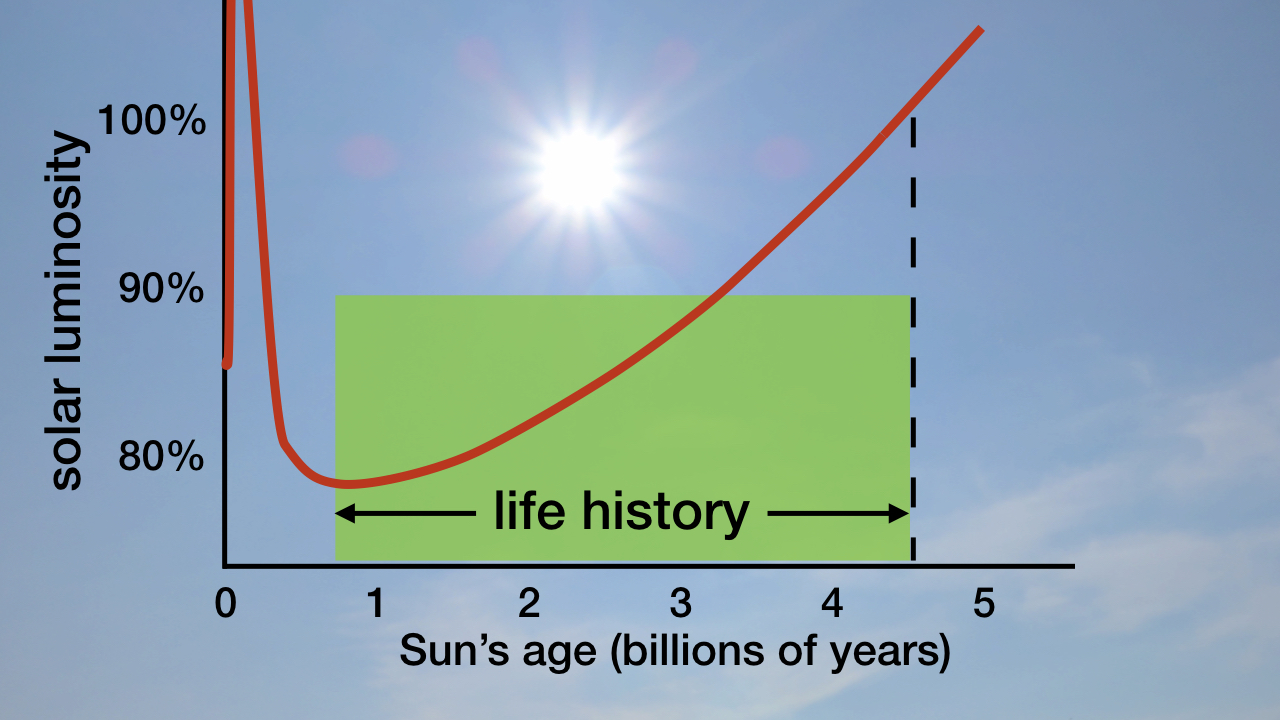
Earth’s big burp not only occurred at a just-right location but also at a just-right time. The Sun’s luminosity is not constant. As its nuclear furnace continues to fuse hydrogen into helium, the Sun becomes progressively brighter. The figure below shows how the Sun brightens throughout the history of life on Earth.

blog__inline--the-day-earth-burped

Figure: Sun’s Luminosity throughout Its History
Image credit: Hugh Ross

If Earth’s big burp had occurred any earlier, the resultant cooling would have led to a permanent snowball and the end of all life. If Earth’s big burp had occurred any later, there would not have been adequate time between the burp and the moment when the Sun would be too bright for advanced life to exist. This precise timing was needed for biodeposits (such as fossil fuels) to be built up and for the necessary chemical transformations of Earth’s surface environment to occur in order to support global human civilization.

Earth’s series of just-right events accompanying the big burp provides yet more evidence for the supernatural, super-intelligent handiwork of God for the specific benefit of life, of human beings, and human civilization.


Featured image: Banded iron rock formations like this one in Karijini National Park, Western Australia, will form under the oxygen-poor conditions that characterized the time just before and after the Great Oxidation Event.
Image credit: Graeme Churchard, Creative Commons Attribution


Endnotes
  1. Bernard Marty et al., “Geochemical Evidence for High Volatile Fluxes from the Mantle at the End of the Archaean,” Nature 575 (November 21, 2019): 485–88, doi:10.1038/s41586-019-1745-7.
  2. Marty et al., “Geochemical Evidence,” 485.
  3. Chris W. Sinton et al., “Near-Primary Melt Inclusions in Anorthite Phenocrysts from the Galapagos Platform,” Earth and Planetary Science Letters 119, no. 4 (October 1993): 527–37, doi:10.1016/0012-821X(93)90060-M; Norman H. Sleep, “Non-Standard Subduction of Gabbroic Lithosphere into Gabbroic Mush Ocean,” American Geophysical Union, Fall Meeting 2006 (December 2006): abstract id. U14B-08; J. Korenga, “Thermal Evolution with a Hydrating Mantle and the Initiation of Plate Tectonics in the Early Earth,” Journal of Geophysical Research: Solid Earth 116, no. B12 (December 2011): id. B12403, doi:10.1029/2011JB008410.
  4. Marty et al., 488.
  5. Hugh Ross, “Rapid Landmass Emergence Affirms Creation Day 3,” Today’s New Reason to Believe (blog), June 11, 2018, https://www.reasons.org/explore/blogs/todays-new-reason-to-believe/read/todays-new-reason-to-believe/2018/06/11/rapid-landmass-emergence-affirms-creation-day-3.
  6. Kirsty Y. Ketchum et al., “Age, Petrogenesis and Tectonic Setting of the Thessalon Volcanic Rocks, Huronian Supergroup, Canada,” Precambrian Research 233 (August 2013): 144–72, doi:10.1016/j.precamres.2013.04.009.
  7. Michael G. Babechuk et al., “Pervasively Anoxic Surface Conditions at the Onset of the Great Oxidation Event: New Multi-Proxy Constraints from the Cooper Lake Paleosol,” Precambrian Research 323 (April 2019): 126–63, doi:10.1016/j.precamres.2018.12.029; Lee R. Kump, “The Rise of Atmospheric Oxygen,” Nature 451 (January 16, 2008): 277–78, doi:10.1038/nature06587; A. Bekker et al., “Dating the Rise of Atmospheric Oxygen,” Nature 427 (January 8, 2004): 117–20, doi:10.1038/nature02260.
  8. T. Jake R. Ciborowski and Andrew C. Kerr, “Did Mantle Plume Magmatism Help Trigger the Great Oxidation Event?” Lithos 246–247 (March 2016): 128–33, doi:10.1016/j.lithos.2015.12.017.
  9. Virginie Harcouët et al., “Geological and Thermal Conditions Before the Major Palaeoproterozoic Gold-Mineralization Event at Ashanti, Ghana, As Inferred from Improved Thermal Modeling,” Precambrian Research 154, nos. 1–2 (March 25, 2007): 71–87, doi:10.1016/j.precamres.2006.11.014; V. Harcouët et al., “Pre-Mineralization Thermal Evolution of the Palaeoproterozoic Gold-Rich Ashanti Belt, Ghana,” Geological Society, London, Special Publications 248 (January 2005): 103–18, doi:10.1144/GSL.SP.2005.01.06; David I. Groves and Frank P. Bierlein, “Geodynamic Settings of Mineral Deposit Systems,” Journal of the Geological Society, 164 (January 2007): 19–30, doi:10.1144/0016-76492006-065.

About Reasons to Believe

RTB’s mission is to spread the Christian Gospel by demonstrating that sound reason and scientific research—including the very latest discoveries—consistently support, rather than erode, confidence in the truth of the Bible and faith in the personal, transcendent God revealed in both Scripture and nature. Learn More »

Support Reasons to Believe

Your support helps more people find Christ through sharing how the latest scientific discoveries affirm our faith in the God of the Bible.

DONATE NOW


U.S. Mailing Address
818 S. Oak Park Rd.
Covina, CA 91724
  • P (855) 732-7667
  • P (626) 335-1480
  • Fax (626) 852-0178
Posted in Uncategorized | Leave a comment

No Joke: New Pseudogene Function Smiles on the Case for Creation

BY FAZALE RANA – APRIL 1, 2020

Time to confess. I now consider myself an evolutionary creationist. I have no choice. The evidence for biological evolution is so overwhelming…

…Just kidding! April Fool’s!

I am still an old-earth creationist. Even though the evolutionary paradigm is the prevailing framework in biology, I am skeptical about facets of it. I am more convinced than ever that a creation model approach is the best way to view life’s origin, design, and history. It’s not to say that there isn’t evidence for common descent; there is. Still, even with this evidence, I prefer old-earth creationism for three reasons.

  • First, a creation model approach can readily accommodate the evidence for common descent within a design framework.
  • Second, the evolutionary paradigm struggles to adequately explain many of the key transitions in life’s history.
  • Third, the impression of design in biology is overwhelming—and it’s becoming more so every day.

And that is no joke.

Take the human genome as an example. When it comes to understanding its structure and function, we are in our infancy. As we grow in our knowledge and insight, it becomes increasingly apparent that the structural and functional features of the human genome (and the genomes of other organisms) display more elegance and sophistication than most life scientists could have ever imagined—at least, those operating within the evolutionary framework. On the other hand, the elegance and sophistication of genomes is expected for creationists and intelligent design advocates. To put it simply, the more we learn about the human genome, the more it appears to be the product of a Mind.

In fact, the advances in genomics over the last decade have forced life scientists to radically alter their views of genome biology. When the human genome was first sequenced in 2000, biologists considered most of the sequence elements to be nonfunctional, useless DNA. Now biologists recognize that virtually every class of these so-called junk DNA sequences serve key functional roles.

If most of the DNA sequence elements in the human genome were truly junk, then I’d agree that it makes sense to view them as evolutionary leftovers, especially because these junk DNA sequences appear in corresponding locations of the human and primate genomes. It is for these reasons that biologists have traditionally interpreted these shared sequences as the most convincing evidence for common descent.

However, now that we have learned that these sequences are functional, I think it is reasonable to regard them as the handiwork of a Creator, intentionally designed to contribute to the genome’s biology. In this framework, the shared DNA sequences in the human and primate genomes reflect common design, not common descent.

Still, many biologists reject the common design interpretation, while continuing to express confidence in the evolutionary model. Their certainty reflects a commitment to methodological naturalism, but there is another reason for their confidence. They argue that the human genome (and the genomes of other organisms) display other architectural and operational features that the evolutionary framework explains best—and, in their view, these features tip the scales toward the evolutionary interpretation.

Yet, researchers continue to make discoveries about junk DNA that counterbalance the evidence for common descent, including these structural and functional features. Recent insights into pseudogene biology nicely illustrate this trend.

Pseudogenes

Most life scientists view pseudogenes as the remnants of once-functional genes. Along these lines, biologists have identified three categories of pseudogenes (unitary, duplicated, and processed) and proposed three distinct mechanisms to explain the origin of each class. These mechanisms produce distinguishing features that allow investigators to identify certain DNA sequences as pseudogenes. However, a pre-commitment to the evolutionary paradigm can influence many biologists to declare too quickly that pseudogenes are nonfunctional based on their sequence characteristics.1

blog__inline--no-joke-new-pseudogene-function-smiles
The Mechanisms of Pseudogene Formation. Image credit: Wikipedia.

As the old adage goes: theories guide, experiments decide. There is an accumulation of experimental data which indicates that pseudogenes from all three classes have utility.

A number of research teams have demonstrated that the cell’s machinery transcribes processed pseudogenes and, in turn, these transcripts are translated into proteins. Both duplicated and unitary pseudogenes are also transcribed. However, except for a few rare cases, these transcripts are not translated into proteins. Most of duplicated and unitary pseudogene transcripts serve a regulatory role, described by the competitive endogenous RNA hypothesis.

In other words, the experimental support for pseudogene function seemingly hinges on the transcription of these sequences. That leads to the question: What about pseudogene sequences located in genomes that aren’t transcribed? A number of pseudogenic sequences in genomes seemingly sit dormant. They aren’t transcribed and, presumably, have no utility whatsoever.

For many life scientists, this supports the evolutionary account for pseudogene origins, making it the preferred explanation over any model that posits the intentional design of pseudogene sequences. After all, why would a Creator introduce mutationally damaged genes that serve no function? Isn’t it better to explain the presence of functional processed pseudogenes as the result of neofunctionalization, whereby evolutionary mechanisms co-opt processed pseudogenes and use them as the raw material to evolve DNA sequence elements into new genes?

Or, perhaps, is it better to view the transcripts of regulatory unitary and duplicated pseudogenes as the functional remnants of the original genes whose transcripts played a role in regulatory networks with other RNA transcripts? Even though these pseudogenes no longer direct protein production, they can still take part in the regulatory networks comprised of RNA transcripts.

Are Untranscribed Pseudogenes Really Untranscribed?

Again, remember that support for the evolutionary interpretation of pseudogenes rests on the belief that some pseudogenes are not transcribed. What happens to this support if these DNA sequences are transcribed, meaning we simply haven’t detected or identified their transcripts experimentally?

As a case in point, in a piece for Nature Reviews, a team of collaborators from Australia argue that failure to detect pseudogene transcripts experimentally does not confirm the absence of a transcription.2 For example, the transcripts for a pseudogene transcribed at a low level may fall below the experimental detection limit. This particular pseudogene would appear inactive to researchers when, in fact, the opposite is the case. Additionally, pseudogene expression may be tissue-specific or may take place at certain points in the growth and development process. If the assay doesn’t take these possibilities into account, then failure to detect pseudogene transcripts could just mean that the experimental protocol is flawed.

The similarity of the DNA sequences of pseudogenes and their corresponding “sister” genes causes another complication. It can be hard to experimentally distinguish between a pseudogene and its “intact” sister gene. This limitation means that, in some instances, pseudogene transcripts may be misidentified as the transcripts of the “intact” gene. Again, this can lead researchers to conclude mistakenly that the pseudogene isn’t transcribed.

Are Untranscribed Pseudogenes Really Nonfunctional?

These very real experimental challenges notwithstanding, there are pseudogenes that indeed are not transcribed, but it would be wrong to conclude that they have no role in gene regulation. For example, a large team of international collaborators demonstrated that a pseudogene sequence contributes to the specific three-dimensional architecture of chromosomes. By doing so, this sequence exerts influence over gene expression, albeit indirectly.3

Another research team determined that a different pseudogene plays a role in maintaining chromosomal stability. In laboratory experiments, they discovered that deleting the DNA region that harbors this pseudogene increases chromosomal recombination events that result in the deletion of pieces of DNA. This deletion is catastrophic and leads to DiGeorge/velocardiofacial syndrome.4

To be clear, these two studies focused on single pseudogenes. We need to be careful about extrapolating the results to all untranscribed pseudogenes. Nevertheless, at minimum, these findings open up the possibility that other untranscribed pseudogene sequences function in the same way. If past history is anything to go by when it comes to junk DNA, these two discoveries are most likely harbingers of what is to come. Simply put, we continue to uncover unexpected function for pseudogenes (and other classes of junk DNA).

Common Design or Common Descent?

Not that long ago, shared nonfunctional, junk DNA sequences in the human and primate genomes were taken as prima facia evidence for our shared evolutionary history with the great apes. There was no way to genuinely respond to the challenge junk DNA posed to creation models, other than to express the belief that we would one day discover function for junk DNA sequences.

Subsequently, discoveries have fulfilled a key scientific prediction made by creationists and intelligent design proponents alike. These initial discoveries involved single, isolated pseudogenes. Later studies demonstrated that pseudogene function is pervasive, leading to new scientific ideas such as the competitive endogenous RNA hypothesis, that connect the sequence similarity of pseudogenes and “intact” genes to pseudogene function. Researchers are beginning to identify functional roles for untranscribed pseudogenes. I predict that it is only a matter of time before biologists concede that the utility of untranscribed pseudogenes is pervasive and commonplace.

The creation model interpretation of shared junk DNA sequences becomes stronger and stronger with each step forward, which leads me to ask, When are life scientists going to stop fooling around and give a creation model approach a seat at the biology table?

Resources

Endnotes
  1. Seth W. Cheetham, Geoffrey J. Faulkner, and Marcel E. Dinger, “Overcoming Challenges and Dogmas to Understand the Functions of Pseudogenes,” Nature Reviews Genetics 21 (December 17, 2019): 191–201, doi:10.1038/s41576-019-0196-1.
  2. Cheetham et al., 191–201.
  3. Peng Huang, et al., “Comparative Analysis of Three-Dimensional Chromosomal Architecture Identifies a Novel Fetal Hemoglobin Regulatory Element,” Genes and Development 31, no. 16 (August 15, 2017): 1704–13, doi: 10.1101/gad.303461.117.
  4. Laia Vergés et al., “An Exploratory Study of Predisposing Genetic Factors for DiGeorge/Velocardiofacial Syndrome,” Scientific Reports 7 (January 6, 2017): id. 40031, doi: 10.1038/srep40031.

About Reasons to Believe

RTB’s mission is to spread the Christian Gospel by demonstrating that sound reason and scientific research—including the very latest discoveries—consistently support, rather than erode, confidence in the truth of the Bible and faith in the personal, transcendent God revealed in both Scripture and nature. Learn More »

Support Reasons to Believe

Your support helps more people find Christ through sharing how the latest scientific discoveries affirm our faith in the God of the Bible.

DONATE NOW


U.S. Mailing Address
818 S. Oak Park Rd.
Covina, CA 91724
  • P (855) 732-7667
  • P (626) 335-1480
  • Fax (626) 852-0178

Reasons to Believe logo

Posted in Uncategorized | Leave a comment

Is the Ex Nihilo Doctrine of Creation Unique to Christianity?

BY HUGH ROSS – JANUARY 8, 2021MORESHARE12

Question of the week: What do you make of assertions by skeptics that there are several religions and mythologies that include in their doctrines an ex nihilo creation event and that Christianity is not unique?

My answer: Creatio ex nihilo is Latin for “creation out of nothing.” It refers to the belief that space, time, matter, and energy are not eternal but were created by a supernatural act of God.

It is the kind of ex nihilo creation event that sets the Bible apart from nonbiblical holy books. In the eastern religions and in ancient mid- and near-eastern, African, European, and American creation myths God, Gods, or creative forces create the universe within space and time that eternally exists. The Bible teaches that space and time did not exist until God created the universe.1

Where the Bible also stands unique is in its description of God and in how God fashions the universe, Earth, and Earth’s life after the cosmic creation event. The Bible describes God as a triune Being: one essence and three persons. Only Christianity among the world’s religions asserts the doctrine of the Trinity. As I wrote in a blog several years ago,2 science only makes sense if God is triune. Furthermore, only the Bible among the world’s foundational religious books accurately and consistently predicts future scientific discoveries.

Resources

Endnotes
  1. I provide a review of the relevant biblical texts in The Creator and the Cosmos, 4th ed. (Covina, CA: RTB Press, 2018), 25–26, https://shop.reasons.org/category/format/books/the-creator-and-the-cosmos-fourth-edition.
  2. Hugh Ross, “How To Persuade a Skeptic Than God Must Be Triune,” Today’s New Reason to Believe (blog) July 13, 2016, https://www.reasons.org/explore/blogs/todays-new-reason-to-believe/read/todays-new-reason-to-believe/2016/07/13/how-to-persuade-a-skeptic-that-god-must-be-triune.

Category
Tags

SHARE12

1 COMMENT – VIEW – POST A COMMENT

Hugh Ross

THE AUTHORHugh Ross

BIO

Reasons to Believe emerged from my passion to research, develop, and proclaim the most powerful new reasons to believe in Christ as Creator, Lord, and Savior and to use those new reasons to reach p… Read more about Hugh Ross.

STILL CURIOUS? LEARN MORE…

Does God Have Limits?

Question of the week:Does God have limits and, if he does, does that mean he is not infinitely powerful?

Continue Reading »

Scientifically, How Do We Know God Is a Personal Being?

Question of the week: I understand that the fine-tuning evidence for God’s existence is overwhelming. But, how do we know that this God is a personal Being. I know it myself from the indwelling of the Holy Spirit, but how do I explain it to a skeptic?

Continue Reading »

Reasons To Believe’s Statement about Ravi Zacharias

What has transpired at Ravi Zacharias International Ministries (RZIM) alerts all Christians and Christian organizations to the imperative of transparency and accountability

Continue Reading »https://player.vimeo.com/video/104664126

More Education Opportunities »

NOW THAT YOU’VE DISCOVERED REASONS TO BELIEVE

Get the latest delivered directly to you by subscribing to the RTB Weekly Digest.

About Reasons to Believe

RTB’s mission is to spread the Christian Gospel by demonstrating that sound reason and scientific research—including the very latest discoveries—consistently support, rather than erode, confidence in the truth of the Bible and faith in the personal, transcendent God revealed in both Scripture and nature. Learn More »

Support Reasons to Believe

Your support helps more people find Christ through sharing how the latest scientific discoveries affirm our faith in the God of the Bible.DONATE NOW


U.S. Mailing Address
818 S. Oak Park Rd.
Covina, CA 91724

  • P (855) 732-7667
  • P (626) 335-1480
  • Fax (626) 852-0178
  • © Reasons to Believe
Reasons to Believe logo

Reasons to Believe is a nonprofit organization designated as tax-exempt under Section 501(c)3 by the Internal Revenue Service. Donations are tax-deductible to the full extent of the law. Our tax ID is #33-0168048. All Transactions on our Web site are safe and secure.

Copyright 2020. Reasons to Believe. All rights reserved. Use of this website constitutes acceptance of our Privacy Policy.

Posted in Uncategorized | Leave a comment

New US Government UFO Report: A Christian Perspective

by GUEST WRITERMark ClarkAugust 12, 2021

For the first time since Project Blue Book in 1969, the US Government has issued a new report on UFOs. On June 25, 2021, the Office of the Director of National Intelligence released its preliminary assessment on recent Unidentified Aerial Phenomena (UAP)1—the new term for UFOs. Did the report reveal anything extraordinary?

The Report and Its Findings

The Pentagon established the Unidentified Aerial Phenomena Task Force (UAPTF) in response to congressional interest in the highly publicized cockpit videos by US Navy pilots of strange aerial phenomena during several operations in 2014 and 2015. The UAPTF analyzed these phenomena, among others, and reported its findings on 144 incidents over the course of 17 years from 2004 to 2021.

The main findings of this study will likely fail to satisfy the two primary groups advocating for the government investigation: those who believe UFOs and extraterrestrial beings (ET) have been visiting us, and those who believe these incidents involve a foreign power that threatens US national security. The report explains that intelligence analysts could not confirm with any degree of confidence that ET or a foreign power, namely Russia or China, is behind this recent spate of sightings.

In fact, the analysts had confidence to classify only one event that was the result of a deflating balloon. Whereas Project Blue Book assessed some 12,618 sightings and provided specific explanations for all but 701 of them (about 94.4%), this study provides explanations for only less than 1%.

The Report’s Shortcomings

The data set of 144 reports suffers from several problems. The first is uneven human reporting procedures. The US Navy adopted uniform procedures for reporting only in 2019, and the US Air Force adopted them only in November 2020. Of these incidents, 80 include observations by pilots and from multiple sensors, including radar and infrared, but the report indicates these sensors were designed for military missions and are ill-suited to fully capture UAP. Wide variability in the reporting and the very limited data set do not allow for a detailed trend or pattern analysis.

Further, the assessment indicates there may be an observer bias in the reporting. All 144 reports were from US government personnel, primarily US Navy pilots, and clustered around military testing and training ranges.

The UAPTF study indicates all UAP fall within one of five broad categories: “airborne clutter, natural atmospheric phenomena, USG [US government] or industry developmental programs, foreign adversary systems, and a catchall ‘other’ bin.” Though unstated in the study, these five categories are the remaining likely explanations intelligence analysts considered in their assessment after discarding all other hypotheses they deemed far less likely, including alien aircraft.

The analysis makes several recommendations for improving upon this preliminary assessment in the future. These recommendations include a request to standardize the reporting across all USG, including the Air Force and the Federal Aviation Administration; expand the collection of UAP cluster areas when US forces are not present in order to provide a “standard” of UAP activity and limit collection bias; and request additional funding for research to further study the topics laid out in the report.

Unlikely vs. Likely Explanations

If only one of the 144 can be classified with any degree of confidence, what other explanations are there? The assessment doesn’t completely rule out many explanations, but suggests it found no evidence that Russia or China was behind UAP. There are a few reasons supporting this notion.

First of all, Russia’s budget is a fraction of the US military budget, and China’s military jet engines are fraught with problems.2 Further, both nations would likely conduct classified and advanced research in regions away from the prying eyes of US intelligence and US military training areas with the most advanced sensors in the world.

The assessment also says it could not confirm one way or another that some of the phenomena were advanced US military or aerospace research activities. But it seems unlikely that the Office of the Director of National Intelligence would release a study on highly classified programs (called Special Access Programs) even if such programs were confirmed. SAPs are compartmented programs known only to a very limited number of people.

The two most likely explanations remain if the previous pattern persists (more than 94% with natural explanations). First, these phenomena may have natural explanations. They may come from advanced research in either drone technology or electronic warfare.3 As the report indicates, the skies are becoming increasingly cluttered with drones and other aircraft, making military training more and more difficult. This could be creating an environment where previously unobserved or rarely seen anomalies are quickly attributed to UFOs or ET instead of being examined in the context of drone technology. Or they could be a yet unidentified natural phenomena, which Hugh Ross, Kenneth Samples and I detail in our book, Lights in the Sky and Little Green Men.4

Second, the phenomena may be supernatural, as we document in our book. We have argued that the small number of residual UFO (RUFO) phenomena that cannot be explained otherwise may be demonic activity that appears to people who have opened doors to the occult.5

Cultural and Theological Impact

This new intelligence report has generated even more interest in UFO phenomena among US citizens. A very recent Pew Research Center survey indicates that 65% of Americans believe that intelligent life exists on other planets, with younger adults (76%) more likely to believe this than those 50 years old and older (57%).

More dramatically, a recent American Worldview Inventory indicates that millennials are more likely to consult their horoscopes than their Bibles for spiritual guidance, further opening doors to the occult. Since we all may know someone who holds interest in UFOs and ET, it remains important for Christians to provide a rational explanation for UAP and to offer a spiritually healthy alternative to belief in ET.

The key takeaways from this assessment are the following:

  1. The report provides no concrete answers to UAP.
  2. The most likely explanations are drone technology or advanced military research, or
  3. The phenomena may include a very small percentage (less than 5%) of RUFOs, which have a rational Christian explanation.

We should continue to prepare ourselves to “always be ready” to provide an answer for the hope that is in us (I Peter 3:15), especially as more and more people pursue spiritual interests apart from biblical Christianity.

Endnotes

  1. Office of the Director of National Intelligence, Preliminary Assessment: Unidentified Aerial Phenomena, June 25, 2021; https://www.dni.gov/files/ODNI/documents/assessments/Prelimary-Assessment-UAP-20210625.pdf.
  2. Brett Forrest, “UFO Report Says ‘Unidentified Aerial Phenomena’ Defy Worldly Explanation,” Wall Street Journal, June 25, 2021.
  3. Julian Borger, “Why the Pentagon UFO Report Is Deeply Troubling for US Security Experts,” The Guardian, June 25, 2021; Tim McMillan, “Area 51 Veteran and CIA Electronic Warfare Pioneer Weigh in on Navy UFO Encounters,” The War Zone (blog), The Drive, November 25, 2019.
  4. Hugh Ross, Kenneth Samples, and Mark T. Clark, Lights in the Sky and Little Green Men (Colorado Springs, CO: NavPress, 2002).
  5. Mark T. Clark, “Responding to UFOs in the News,” Voices (blog), June 25, 2019.

Become a Reasons to Believe Prayer Partner Today!

Prayer—consistent, focused prayer—is a vital part of effective ministry. Sign up to be an RTB Prayer Partner below, then watch your inbox for our current prayer requests and related Scripture passages.Thank you for taking the time to bring these requests before the Lord!https://get.reasons.org/dear-reader/Extraterrestrials & UFOs

SOCIALICON
Fast Radio Bursts: ET Is Not Calling Home

On December 27, I counted more than a dozen web articles announcing that radio signals from deep space could be from intelligent aliens. These…Extraterrestrials & UFOs

Logically Questioning Strange Ideas and Controversial Theories

As a Christian scholar and logic instructor, I often get asked about my thoughts on strange phenomena, controversial theories, and alternative conspiratorial explanations.Worldviews

Cowboys & Aliens & Worldviews

Last week’s Take Two discussed “A Match Made in Heaven”—the happy union of apologetics and evangelism. This week, I dare to suggest another happy…Worldviews

Support Our Mission

Your support helps more people find Christ through sharing how the latest scientific discoveries affirm our faith in the God of the Bible.Donate Now


facebooktwitteryoutube

Posted in Uncategorized | Leave a comment