Is the “Hand of God” Evident in Life’s Origin?

BY HUGH ROSS – MARCH 2, 2020

How did life on Earth begin? Does an experimenter’s intervention reveal the “hand” that made life?

Fuz Rana and I attended the 2002 International Society for the Study of the Origin of Life (ISSOL) Conference held June 30–July 5 in Oaxaca, Mexico. There we heard the atheist/agnostic chemist Robert Shapiro publicly comment on the laboratory simulation of one of the more complex chemical reactions known to be critical for any origin-of-life model. Shapiro complemented the scientific team for their brilliant lecture and amazing achievement, but pointed out how much intelligent intervention and design were needed to produce their outcome. He added that if his peers could not produce chemical outcomes known to be vital for any conceivable origin-of-life model without far less experimenter interference then they simply were proving that the origin of life required an intelligent designer. Fuz and I heard a whole row of origin-of-life chemists behind us loudly whisper, “Heaven forbid.”

Sixteen years later chemist Clemens Richert published an article in Nature Communications in which he more fully articulated Shapiro’s point.1 He began by explaining that the reputed goal of experimental biochemists doing origin-of-life research is “to re-enact what may have happened when life arose from inanimate material.”2 Richert pointed out, though, that such reenactments are unrealistic if one or more human interventions are required.

Reproducibility and Intervention
One such intervention that inevitably occurs arises from the experimenters’ desires that their results be reproducible by other biochemists. If their results cannot be reproduced, there is little, if any, likelihood that they will be published in any reputable science journal. This need for reproducibility forces the biochemists to begin with known quantities of pure chemicals. However, such fixed, pure quantities are unrealistic in any conceivable natural prebiotic scenario. The second law of thermodynamics inevitably introduces mixtures of structurally related but chemically interfering molecular aggregates.

Furthermore, to be relevant to any conceivable natural origin-of-life scenario the experiment must not involve any human intervention after the start of a reaction. There cannot be any addition or subtraction of chemicals during the reaction. The reaction must be allowed to unfold and samples drawn only after the reaction is completely finished.

Even when these strictures are rigorously obeyed not-so-subtle human interferences can and do occur. For example, in the famous Miller-Urey experiment3 where researchers claimed to synthesize amino acids from sparking a mixture of water, ammonia, methane, and hydrogen in an enclosed flask, the experiment was performed about 200 times. In only one of those 200 trials were five amino acids generated, at a total concentration of two percent where nearly all of that two percent was glycine, the simplest amino acid. Moreover, the starting conditions were irrelevant. In any natural scenario, there would either be oxygen or ultraviolet radiation present and either would have halted the reaction. Also, the concentration of ammonia in any natural scenario would be far lower than what was present in the flask and inevitably there would be many more chemicals present than just water, ammonia, methane, and hydrogen.

The Miller-Urey experiment is a classic example of multiple human interventions where the experimenters thought there were none. Today, the Miller-Urey experiment and many others like it are widely recognized as irrelevant to the origin-of-life on Earth or on any other planetary body.

Intervention Required for Amino Acid Joining
For more complex reactions than the Miller-Urey experiment, such as the joining together of bioactive amino acids to construct short protein segments, repeated interventions by the experimentalists have proved necessary. Each step needs a specific chemical environment or set of conditions to occur at high yields. Often, a subtraction reaction needs to occur simultaneously with an addition reaction where both must occur at specified rates.

In the case of joining together amino acids, the amino acids must all be homochiral (all left-handed in their molecular configuration). In the naturally occurring random mixture of left-handed and right-handed amino acids no such joining together occurs. A similar chirality limitation occurs for joining together nucleobases to make short strands of RNA or DNA. To join nucleobases together requires ribose sugars as chemical bridges and the ribose sugars must all be right-handed in their configuration. Outside of laboratories and living systems or the decay products of living systems, ribose is extremely rare, almost always undetectable, and always results as random mixtures of left- and right-handed configurations.

In living cells, biochemical synthesis usually occurs through catalyzed reactions by different enzymes where each enzyme requires a distinct, specified microenvironment at its active site for the reaction to run. In simulating an enzyme-free prebiotic scenario, experimenters find that they must employ multiple, highly ordered chemical steps that involve precipitation, crystallization, purification, and drastic changes in the chemical conditions from one synthesis step to the next. Even then, success rarely occurs.

Toward the end of his article Richert takes to task the now popular experiments of unending cycles of hydration and dehydration and/or cooling and heating. Richert points out, for example, that for cooling and heating cycles to be productive requires repeated specified transitions in a single locale from arctic to volcanic conditions then back to arctic within just hours or a few days. Such requirements, he understates, seem unrealistic for natural scenarios.

Intervention and the Hand of God
In his article, Richert coined a phrase for the experimenter intervention. He called it “the Hand of God dilemma.” His point is that experimenter intervention is akin to claiming that God did it. In saying this, he admits that “most of us [origin-of-life researchers] are not comfortable with the idea of divine intervention in this context.”3

Richert, nevertheless, makes a strong appeal to his fellow origin-of-life researchers. So as not to deceive researchers in other disciplines, and especially the lay public, or to exaggerate their successes to their research peers, Richert recommends that his peers reveal the level of experimenter intervention. In their publications, they should state as accurately as possible how many times and exactly when and where in their experiments they commit the Hand of God dilemma.

Having been to several origin-of-life conferences and having read hundreds of origin-of-life research papers, I think if Richert and his peers followed through on his recommendation, the number count of how many times the Hand of God dilemma has been committed per published origin-of-life experiment easily would exceed an average of a dozen times. If that’s the case, then the lay public, scientists in other disciplines, and maybe even origin-of-life researchers themselves will recognize and acknowledge that God, not a set of unguided natural processes, created the first life on Earth.

Endnotes
  1. Clemens Richert, “Prebiotic Chemistry and Human Intervention,” Nature Communications 9 (December 12, 2018): id. 5177, doi:10.1038/241467-018-07219-5.
  2. Richert, “Prebiotic Chemistry,” 1.
  3. Stanley L. Miller, “A Production of Amino Acids Under Possible Primitive Earth Conditions,” Science 117, no. 3046 (May 15, 1953): 528–29, doi:10.1126/science.117.3046.528.
  4. Richert, 2.

About Reasons to Believe

RTB’s mission is to spread the Christian Gospel by demonstrating that sound reason and scientific research—including the very latest discoveries—consistently support, rather than erode, confidence in the truth of the Bible and faith in the personal, transcendent God revealed in both Scripture and nature. Learn More »

Support Reasons to Believe

Your support helps more people find Christ through sharing how the latest scientific discoveries affirm our faith in the God of the Bible.

DONATE NOW


U.S. Mailing Address
818 S. Oak Park Rd.
Covina, CA 91724
  • P (855) 732-7667
  • P (626) 335-1480
  • Fax (626) 852-0178
Posted in Uncategorized | Leave a comment

Ancient DNA Indicates Modern Humans Are One-of-a-Kind

BY FAZALE RANA – FEBRUARY 19, 2020

The wonderful thing about tiggers
Is tiggers are wonderful things!
Their tops are made out of rubber
Their bottoms are made out of springs!
They’re bouncy, trouncy, flouncy, pouncy
Fun, fun, fun, fun, fun!
But the most wonderful thing about tiggers is
I’m the only one!1

With eight grandchildren and counting (number nine will be born toward the end of February), I have become reacquainted with children’s stories. Some of the stories my grandchildren want to hear are new, but many of them are classics. It is fun to see my grandchildren experiencing the same stories and characters I enjoyed as a little kid.

Perhaps my favorite children’s book of all time is A. A. Milne’s (1882–1956) Winnie-the-Pooh. And of all the characters that populated Pooh Corner, my favorite character is the ineffable Tigger—the self-declared one-of-a-kind.

blog__inline--ancient-dna-indicates-modern-humans-1
A. A. Milne. Credit: Wikipedia

For many people (such as me), human beings are like Tigger. We are one-of-a-kind among creation. As a Christian, I take the view that we are unique and exceptional because we alone have been created in God’s image.

For many others, the Christian perspective on human nature is unpopular and offensive. Who are we to claim some type of special status? They insist that humans aren’t truly unique and exceptional. We are not fundamentally different from other creatures. If anything, we differ only in degree, not kind. Naturalists and others assert that there is no evidence that human beings bear God’s image. In fact, some would go so far as to claim that creatures such as Neanderthals were quite a bit like us. They maintain that these hominins were “exceptional,” just like us. Accordingly, if we are one-of-a-kind it is because, like Tigger, we have arrogantly declared ourselves to be so, when in reality we are no different from any of the other characters who make their home at Pooh Corner.

Despite this pervasive and popular challenge to human exceptionalism (and the image-of-God concept), there is mounting evidence that human beings stand apart from all extant creatures (such as the great apes) and extinct creatures (such as Neanderthals). This growing evidence can be marshaled to make a scientific case that as human beings we, indeed, are image bearers.

As a case in point, many archeological studies affirm human uniqueness and exceptionalism. (See the Resources section for a sampling of some of this work.) These studies indicate that human beings alone possess a suite of characteristics that distinguish us from all other hominins. I regard these qualities as scientific descriptors of the image of God:

  • Capacity for symbolism
  • Ability for open-ended manipulation of symbols
  • Theory of mind
  • Capacity to form complex, hierarchical social structures

Other studies have identified key differences between the brains of modern humans and Neanderthals. (For a sample of this evidence see the Resources section.) One key difference relates to skull shape. Neanderthals (and other hominins) possessed an elongated skull. In contradistinction, our skull shape is globular. The globularity allows for the expansion of the parietal lobe. This is significant because an expanded parietal lobe explains a number of unique human characteristics:

  • Perception of stimuli
  • Sensorimotor transformation (which plays a role in planning)
  • Visuospatial integration (which provides hand-eye coordination)
  • Imagery
  • Self-awareness
  • Working and long-term memory

Again, I connect these scientific qualities to the image of God.

Now, two recent studies add to the case for human exceptionalism. They involve genetic comparisons of modern humans with both Neanderthals and Denisovans. Through the recovery and sequencing of ancient DNA, we have high quality genomes for these hominins that we can analyze and compare to the genomes of modern humans.

While the DNA sequences of protein-coding genes in modern human genomes and the genomes of these two extant hominins is quite similar, both studies demonstrate that the gene expression is dramatically different. That difference accounts for anatomical differences between humans and these two hominins and suggests that significant cognitive differences exist as well.

Differences in Gene Regulation

To characterize gene expression patterns in Neanderthals and Denisovans and compare them to modern humans, researchers from Vanderbilt University (VU) used statistical methods to develop a mathematical model that would predict gene expression profiles from the DNA sequences of genomes.2 They built their model using DNA sequences and gene expression data (measured from RNA produced by transcription) for a set of human genomes. To ensure that their model could be used to assess gene expression for Neanderthals and Denisovans, the researchers paid close attention to the gene expression pattern for genes in the human genome that were introduced when modern humans and Neanderthals presumably interbred and compared their expression to human genes that were not of Neanderthal origin.

blog__inline--ancient-dna-indicates-modern-humans-2
The Process of Gene Expression. Credit: Shutterstock

With their model in hand, the researchers analyzed the expression profile for nearly 17,000 genes from the Altai Neanderthal. Their model predicts that 766 genes in the Neanderthal genome had a different expression profile than the corresponding genes in modern humans. As it turns out, the differentially expressed genes in the Neanderthal genomes failed to be incorporated into the human genome after interbreeding took place, suggesting to the researchers that these genes are responsible for key anatomical and physiological differences between modern humans and Neanderthals.

The VU investigators determined that these 766 differentially expressed genes play roles in reproduction, forming skeletal structures, and the functioning of cardiovascular and immune systems.

Then, the researchers expanded their analysis to include two other Neanderthal genomes (from the Vindija and Croatian specimens) and the Denisovan genome. The researchers learned that the gene expression profiles of the three Neanderthal genomes were more similar to one another than they were to either the gene expression patterns of modern human and Denisovan genomes.

This study clearly demonstrates that significant differences existed in the regulation of gene expression in modern humans, Neanderthals, and Denisovans and that these differences account for biological distinctives between the three hominin species.

Differences in DNA Methylation

In another study, researchers from Israel compared gene expression profiles in modern human genomes with those from and Neanderthals and Denisovans using a different technique. This method assesses DNA methylation.3 (Methylation of DNA downregulates gene expression, turning genes off.)

Methylation of DNA influences the degradation process for this biomolecule. Because of this influence, researchers can determine the DNA methylation pattern in ancient DNA by characterizing the damage to the DNA fragments isolated from fossil remains.

Using this technique, the researchers measured the methylation pattern for genomes of two Neanderthals (Altai and Vindija) and a Denisovan and compared these patterns with genomes recovered from the remains of three modern humans, dating to 45,000 years in age, 8,000 years in age, and 7,000 years in age, respectively. They discovered 588 genes in modern human genomes with a unique DNA methylation pattern, indicating that these genes are expressed differently in modern humans than in Neanderthals and Denisovans. Among the 588 genes, researchers discovered some that influence the structure of the pelvis, facial morphology, and the larynx.

The researchers think that differences in gene expression may explain the anatomical differences between modern humans and Neanderthals. They also think that this result indicates that Neanderthals lacked the capacity for speech.

What Is the Relationship between Modern Humans and Neanderthals?

These two genetic studies add to the extensive body of evidence from the fossil record, which indicates that Neanderthals are biologically distinct from modern humans. For a variety of reasons, some Christian apologists and Intelligent Design proponents classify Neanderthals and modern humans into a single group, arguing that the two are equivalent. But these two studies comparing gene regulation profiles make it difficult to maintain that perspective.

Modern Humans, Neanderthals, and the RTB Human Origins Model

RTB’s human origins model regards Neanderthals (and other hominins) as creatures made by God, without any evolutionary connection to modern humans. These extraordinary creatures walked erect and possessed some level of intelligence, which allowed them to cobble together tools and even adopt some level of “culture.” However, our model maintains that the hominins were not spiritual beings made in God’s image. RTB’s model reserves this status exclusively for modern humans.

Based on our view, we predict that biological similarities will exist among the hominins and modern humans to varying degrees. In this regard, we consider the biological similarities to reflect shared designs, not a shared evolutionary ancestry. We also expect biological differences because, according to our model, the hominins would belong to different biological groups from modern humans.

We also predict that significant cognitive differences would exist between modern humans and the other hominins. These differences would be reflected in brain anatomy and behavior (inferred from the archeological record). According to our model, these differences reflect the absence of God’s image in the hominins.

The results of these two studies affirm both sets of predictions that flow from the RTB human origins model. The differences in gene regulation between modern human and Neanderthals is precisely what our model predicts. These differences seem to account for the observed anatomical differences between Neanderthals and modern humans observed from fossil remains.

The difference in the regulation of genes affecting the larynx is also significant for our model and the idea of human exceptionalism. One of the controversies surrounding Neanderthals relates to their capacity for speech and language. Yet, it is difficult to ascertain from fossil remains if Neanderthals had the anatomical structures needed for the vocalization range required for speech. The differences in the expression profiles for genes that control the development and structure of the larynx in modern humans and Neanderthals suggests that Neanderthals lacked the capacity for speech. This result dovetails nicely with the differences in modern human and Neanderthal brain structure, which suggest that Neanderthals also lacked the neural capacity for language and speech. And, of course, it is significant that there is no conclusive evidence for Neanderthal symbolism in the archeological record.

With these two innovative genetic studies, the scientific support for human exceptionalism continues to mount. And the wonderful thing about this insight is that it supports the notion that as human beings we are the only ones who bear God’s image and can form a relationship with our Creator.

Resources

Behavioral Differences between Humans and Neanderthals

Biological Differences between Humans and Neanderthals

Endnotes
  1. Richard M. Sherman and Robert B. Sherman, composers, “The Wonderful Thing about Tiggers” (song), released December 1968.
  2. Laura L. Colbran et al., “Inferred Divergent Gene Regulation in Archaic Hominins Reveals Potential Phenotypic Differences,” Nature Evolution and Ecology 3 (November 2019): 1598-606, doi:10.1038/s41559-019-0996-x.
  3. David Gokhman et al., “Reconstructing the DNA Methylation Maps of the Neandertal and the Denisovan,” Science 344, no. 6183 (May 2, 2014): 523–27, doi:1126/science.1250368; David Gokhman et al., “Extensive Regulatory Changes in Genes Affecting Vocal and Facial Anatomy Separate Modern from Archaic Humans,” bioRxiv, preprint (October 2017), doi:10.1101/106955.

Posted in Uncategorized | Leave a comment

Doing Apologetics in a Scientific Context

BY STEPHEN CHUA – FEBRUARY 7, 2020

How can we share our evidence-based faith effectively? I have found that context is key. In my outreach efforts, I have invited nonbelievers to explore life and the Christian faith in a friendly, open, and informal environment and their responses have typically led to ongoing, fruitful discussions.

Skeptics of the Christian faith often lead with the premise that Christianity is “faith-based” while science is evidence-based and, hence, factual. How does a Christian who is science-educated share the good news effectively with an atheistic and potentially hostile postmodern intellectual who holds this view? For starters, I am eager to clarify what “faith-based” means.

As Christians educated in the sciences, we seek ways to share the evidence behind the faith we believe, which theologian Alan Padgett describes as “the interpretation of the results of the sciences into evidence for theology.”1 However, while providing information may be easy, creating a context for meaningful dialogue is not. Most people would rather avoid such discussions. Here I’ll share what has worked for me, with the hope that something similar can work for you as you reach out to science-educated non-Christians.

Creating an Environment for Engagement

At my church in Singapore, we have invited nonchurched members of the community to attend informal evening get-togethers. We provide an environment for meaningful dialogue centered around sharing a meal, listening to a video presentation, and engaging in facilitated discussions. During these sessions, we lay out the basics of Christianity and foster an atmosphere of safe questioning. We have about 200 people involved, including about 25 facilitators leading 15–20 groups. Facilitator training is key. I have a science background but have also benefitted from doctrinal training; thus, I’ve been able to help others prepare for inevitable science-based questions. Some facilitators might feel intimidated about addressing science-related topics, and in particular how to answer challenges about creation and the Bible, but help is available.

Obviously, RTB is well-equipped to educate people who might feel this way, and I highly recommend RTB’s many resources, including their online courses. Perhaps most importantly, I’ve learned the importance of discerning what’s behind the question. For example, when asked a science-related question about God, the temptation is to flood the questioner with scientific knowledge and facts, when in reality that person may not necessarily be asking a scientific question.

Discerning a Person’s Real Need

I had an exchange with a highly intellectual young adult (let’s call him “Z”) who peppered me and others in our sessions with thoughtful, deep questions. One of his questions seemed cosmological on the surface. That is, he wondered whether there were other inhabited planets or alternate dimensions we know nothing about that negated the possibility of a God who specially created humans and cares for them personally. I met with Z separately to talk further about his questions.

At that meeting, I was prepared to provide scientific positions defending Christianity, but then I thought about it more. It dawned on me that “he’s not asking about science per se. He’s looking for reasons to believe in God!” I then realized Z was worried about putting his trust in a God that may not care for him personally. I changed tact midway and started asking him questions. Up to that point, my scientific background made me ignore a basic tenet of effective evangelism: answer the questioner, not the question.


Answering the Questioner

I tried to address Z’s “trust” concerns by emphasizing that God is Creator, but one who has left ample evidence in creation of his care for people. From there, we were able to discuss thought experiments, statements of logic, and other evidence. Z finally came to a familiar argumentative choice: If God is real and we believe, what happens? If God is not real and we believe, what happens? In the end, these questions helped move Z toward accepting a level of uncertainty in his prior conclusions. He came to believe that the gains of believing in God outweigh the risks of not believing. I’m happy to report that Z is now attending church regularly and growing in his faith! This experience showed me that in some cases, science-based walls are actually facades that people erect to hide their true emotional insecurities.

blog__inline--doing-apologetics-in-a-scientific-context

Figure 1: This small group of students met regularly to discuss Christianity and ask questions. Three of these prebelievers are now attending church regularly. Credit: Stephen Chua (extreme right)

As an academic I have had many apologetics encounters with non-Christian peers and students. I remember using knowledge to combat knowledge while secretly praying in my heart. However, that approach did not lead to significant (spiritual) breakthroughs, usually ending only in their grudging assent to some new facts or information. But my interaction with Z impacted me deeply. Since then, I’ve created a set of materials aimed at equipping others with skills, attitudes, and knowledge needed to best present both the scientific evidence and the gospel to prebelievers. Here are a couple of practical points.


Posture of the Answerer

The first thing to note is our posture toward the questioner, which includes our attitude/tone/demeanor/choice of words. We must be:

  1. Nonjudgmental (not “holier than thou”)
  2. Nonadversarial (not “us vs. them”)
  3. Prepared and compassionate

People don’t care how much we know until they know how much we care. Winning their hearts, with gentleness and respect, should take precedence over winning an argument (1 Peter 3:15).


Process of the Answer

After demonstrating the proper posture, the process of systematically presenting the gospel could entail the following (3E model):

  1. Empathize – Walk with them; don’t talk against them (1 Corinthians 9:22b-23).
  2. Educate – Lay out the pertinent evidence succinctly (2 Corinthians 10:5).
  3. Evangelize – End the discussion with a clear presentation of the gospel (1 Timothy 2:3b-4).


Reaching People Where They Are

As people become more educated and knowledge becomes more freely accessible, some people perceive science and technology as the drivers of human progress. It is inevitable that people derive meaning and value from science and technology and will adopt ‘science-as-arbiter-of-truth’ mindsets. Thus, to win hearts and minds, especially those with a scientific inclination, an appropriate context is critical for better engagement. We seek not to debate, but rather to create an environment for allowing positive conversations between differing mindsets and worldviews.2 We must discern the differing worldviews, inner battles, and possible emotional baggage that underlie people’s questions.

In my part of the world, the veils people wear that obscure clear reception of the gospel often has an emotional or cultural root, but they will often use this “material” called science as a façade instead. But my situation is probably not much different from yours. Thus, I encourage you to create an environment that is people-focused, question-driven, and relationship-rooted. It helps us to discern what’s really on people’s hearts and minds, which is key to reaching them with truth.

Endnotes
  1. Alan G. Padgett, “Word of God or Dialog with Science? Overcoming a False Dilemma Through Missional Encounter,” Dialog 46, no. 3 (Fall 2007): 281–87, doi:10.1111/j.1540-6385.2007.00337.x.
  2. Willem B. Drees, “’Religion and Science’ as Advocacy of Science and as Religion versus Religion,” Zygon: Journal of Religion and Science 40, no. 3 (September 2005): 545–54, doi:10.1111/j.1467-9744.2005.00686.x.

Category
Tags

Posted in Uncategorized | Leave a comment

God Created a Home for Us in a Sacred Place

BY DON OLSON – JANUARY 24, 2020

When I reflect on the first verse in the Bible, “In the beginning God created the heavens and the earth” (Genesis 1:1)what often comes to mind is a quote from one of my favorite theologians, R.C. Sproul, describing God’s creation as “a grand theater of divine revelation.”1 In Genesis 1, the almighty, loving God and his creative acts take center stage. We learn that he has the incredible power to create something out of nothing by simply speaking it into existence. And we see how he designed the heavens and the earth as a sacred space for his people where he would be in relationship with them. Within this sacred space where God is present and active, the earth is the center of interest—the place he created to dwell among his people.


Creating a Sacred Space

God’s creation unfolds in steps, beginning with the first verse of Genesis 1. Out of nothing, something. The heavens serve as the foundation of the earth, which at this stage is a primitive planet, like a ball of clay in a master potter’s hands. Verse 2 describes the earth from the perspective of someone (the Holy Spirit) present on the surface; it is dark, formless, covered with water, and void of life. It is black as a night without moon or starlight due to a thick layer of clouds cloaking the entire earth (Job 38:8–9) and blocking out all light from the heavens above (Jeremiah 4:23). In Genesis 1:2, the Holy Spirit hovers over the waters. Some commentators, based on the Hebrew of this verse, picture the Spirit hovering over his infant earth like an eagle hovers over her chicks in the nest with utmost care.

As the creation narrative continues (Genesis 1:3–27), the passage describes God exercising great love and care to transform this primitive planet day by day into a beautiful home—one suitable for humans made in his image to dwell in, and where he would fulfill his plan for each and every one of us. When God was finished with his creation, he concluded that it was very good. And the angels in attendance at this grand theater shouted with joy (Job 38:7).

Science and Creation

The record of nature revealed by science is in remarkable agreement with the Genesis creation account. Geological studies of stones and sediments confirm that the early earth was a dark, cloud-covered, formless waterworld devoid of animal life. Studies of stones, bones, and other fossils further show that the order of events in the history of the earth matches the Genesis account (dark waterworld→continents→plants→clearing of the skies→marine life→land animals→humans).2 And finally, science has discovered that the universe and earth are so fine-tuned to support complex life on earth that, apart from God’s intervention, the probability of finding another planet like ours in the heavens is near zero (see www.reasons.org/finetuning).


A Home for Now

It appears that earth is indeed a unique part of God’s sacred space. He crafted this home for us, and we should therefore appreciate the care that went into it and endeavor to be good stewards of all of his creation.

If the angels shouted with joy upon witnessing the Creator’s work, we have even more reason to do so because this creation was made for us and is our home. As a scientist, I feel this joy whenever I learn about and reflect on a new scientific discovery that reveals another wonder of God’s creation. I hope you do too. It’s like having a front row seat in the “grand theater of divine revelation.”


Our Eternal Home

But this is not the end of the creation story. In John 14:2, Jesus tells us, “My Father’s house has many rooms; if that were not so, would I have told you that I am going there to prepare a place for you?” Revelation 21:1 gives us a glimpse of what to expect: “Then I saw ‘a new heaven and a new earth,’ for the first heaven and the first earth had passed away.” The new place will be our eternal home with unimaginable features and, best of all, God’s eternal presence with all who have received Jesus as their Lord and Savior. It will be an even greater sacred space!


Endnotes
  1. Matt Smethurst, “40 Quotes from R. C. Sproul (1939–2017),” The Gospel Coalition, December 14, 2017, https://www.thegospelcoalition.org/article/40-quotes-rc-sproul/.
  2. Hugh Ross, “Five Best Scientific Evidences for the God of the Bible,” Today’s New Reason to Believe (blog), June 4, 2018, https://www.reasons.org/explore/blogs/todays-new-reason-to-believe/read/todays-new-reason-to-believe/2018/06/04/five-best-scientific-evidences-for-the-god-of-the-bible.

Category
Tags

About Reasons to Believe

RTB’s mission is to spread the Christian Gospel by demonstrating that sound reason and scientific research—including the very latest discoveries—consistently support, rather than erode, confidence in the truth of the Bible and faith in the personal, transcendent God revealed in both Scripture and nature. Learn More »

Support Reasons to Believe

Your support helps more people find Christ through sharing how the latest scientific discoveries affirm our faith in the God of the Bible.

DONATE NOW


U.S. Mailing Address
818 S. Oak Park Rd.
Covina, CA 91724
  • P (855) 732-7667
  • P (626) 335-1480
  • Fax (626) 852-0178

Reasons to Believe logo

Posted in Uncategorized | Leave a comment

Did Neanderthals Start Fires?

BY FAZALE RANA – DECEMBER 5, 2018

It is one of the most iconic Christmas songs of all time.

Written by Bob Wells and Mel Torme in the summer of 1945, “The Christmas Song” (subtitled “Chestnuts Roasting on an Open Fire”) was crafted in less than an hour. As the story goes, Wells and Torme were trying to stay cool during the blistering summer heat by thinking cool thoughts and then jotting them down on paper. And, in the process, “The Christmas Song” was born.

Many of the song’s lyrics evoke images of winter, particularly around Christmastime. But none has come to exemplify the quiet peace of a Christmas evening more than the song’s first line, “Chestnuts roasting on an open fire . . . ”

Gathering around the fire to stay warm, to cook food, and to share in a community has been an integral part of the human experience throughout history—including human prehistory. Most certainly our ability to master fire played a role in our survival as a species and in our ability as human beings to occupy and thrive in some of the world’s coldest, harshest climates.

But fire use is not limited only to modern humans. There is strong evidence that Neanderthals made use of fire. But, did these creatures have control over fire in the same way we do? In other words, did Neanderthals master fire? Or, did they merely make opportunistic use of natural fires? These questions are hotly debated by anthropologists today and they contribute to a broader discussion about the cognitive capacity of Neanderthals. Part of that discussion includes whether these creatures were cognitively inferior to us or whether they were our intellectual equals.

In an attempt to answer these questions, a team of researchers from the Netherlands and France characterized the microwear patterns on bifacial (having opposite sides that have been worked on to form an edge) tools made from flint recovered from Neanderthal sites, and concluded that the wear patterns suggest that these hominins used pyrite to repeatedly strike the flint. This process generates sparks that can be used to start fires.1 To put it another way, the researchers concluded that Neanderthals had mastery over fire because they knew how to start fires.

blog__inline--did-neanderthals-start-fires-1

Figure 1: Biface tools for cutting or scraping. Image credit: Shutterstock

However, a closer examination of the evidence along with results of other studies, including recent insight into the cause of Neanderthal extinction, raises significant doubts about this conclusion.

What Do the Microwear Patterns on Flint Say?

The investigators focused on the microwear patterns of flint bifaces recovered from Neanderthal sites as a marker for fire mastery because of the well-known practice among hunter-gatherers and pastoralists of striking flint with pyrite (an iron disulfide mineral) to generate sparks to start fires. Presumably, the first modern humans also used this technique to start fires.

blog__inline--did-neanderthals-start-fires-2

Figure 2: Starting a fire with pyrite and flint. Image credit: Shutterstock

The research team reasoned that if Neanderthals started fires, they would use a similar tactic. Careful examination of the microwear patterns on the bifaces led the research team to conclude that these tools were repeatedly struck by hard materials, with the strikes all occurring in the same direction along the bifaces’ long axis.

The researchers then tried to experimentally recreate the microwear pattern in a laboratory setting. To do so, they struck biface replicas with a number of different types of materials, including pyrites, and concluded that the patterns produced by the pyrite strikes most closely matched the patterns on the bifaces recovered from Neanderthal sites. On this basis, the researchers claim that they have found evidence that Neanderthals deliberately started fires.

Did Neanderthals Master Fire?

While this conclusion is possible, at best this study provides circumstantial, not direct, evidence for Neanderthal mastery of fire. In fact, other evidence counts against this conclusion. For example, bifaces with the same type of microwear patterns have been found at other Neanderthal sites, locales that show no evidence of fire use. These bifaces would have had a range of usages, including butchery of the remains of dead animals. So, it is possible that these tools were never used to start fires—even at sites with evidence for fire usage.

Another challenge to the conclusion comes from the failure to detect any pyrite on the bifaces recovered from the Neanderthal sites. Flint recovered from modern human sites shows visible evidence of pyrite. And yet the research team failed to detect even trace amounts of pyrite on the Neanderthal bifaces during the course of their microanalysis.

This observation raises further doubt about whether the flint from the Neanderthal sites was used as a fire starter tool. Rather, it points to the possibility that Neanderthals struck the bifaces with materials other than pyrite for reasons not yet understood.

The conclusion that Neanderthals mastered fire also does not square with results from other studies. For example, a careful assessment of archaeological sites in southern France occupied by Neanderthals from about 100,000 to 40,000 years ago indicates that Neanderthals could not create fire. Instead, these hominins made opportunistic use of natural fire when it was available to them.2

These French sites do show clear evidence of Neanderthal fire use, but when researchers correlated the archaeological layers displaying evidence for fire use with the paleoclimate data, they found an unexpected pattern. Neanderthals used fire during warm climate conditions and failed to use fire during cold periods—the opposite of what would be predicted if Neanderthals had mastered fire.

Lightning strikes that would generate natural fires are much more likely to occur during warm periods. Instead of creating fire, Neanderthals most likely harnessed natural fire and cultivated it as long as they could before it extinguished.

Another study also raises questions about the ability of Neanderthals to start fires.3 This research indicates that cold climates triggered Neanderthal extinctions. By studying the chemical composition of stalagmites in two Romanian caves, an international research team concluded that there were two prolonged and extremely cold periods between 44,000 and 40,000 years ago. (The chemical composition of stalagmites varies with temperature.)

The researchers also noted that during these cold periods, the archaeological record for Neanderthals disappears. They interpret this disappearance to reflect a dramatic reduction in Neanderthal population numbers. Researchers speculate that when this population downturn took place during the first cold period, modern humans made their way into Europe. Being better suited for survival in the cold climate, modern human numbers increased. When the cold climate mitigated, Neanderthals were unable to recover their numbers because of the growing populations of modern humans in Europe. Presumably, after the second cold period, Neanderthal numbers dropped to the point that they couldn’t recover, and hence, became extinct.

But why would modern humans be more capable than Neanderthals of surviving under extremely cold conditions? It seems as if it should be the other way around. Neanderthals had a hyper-polar body design that made them ideally suited to withstand cold conditions. Neanderthal bodies were stout and compact, comprised of barrel-shaped torsos and shorter limbs, which helped them retain body heat. Their noses were long and sinus cavities extensive, which helped them warm the cold air they breathed before it reached their lungs. But, despite this advantage, Neanderthals died out and modern humans thrived.

Some anthropologists believe that the survival discrepancy could be due to dietary differences. Some data indicates that modern humans had a more varied diet than Neanderthals. Presumably, these creatures primarily consumed large herbivores—animals that disappeared when the climatic conditions turned cold, thereby threatening Neanderthal survival. On the other hand, modern humans were able to adjust to the cold conditions by shifting their diets.

But could there be a different explanation? Could it be that with their mastery of fire, modern humans were able to survive cold conditions? And did Neanderthals die out because they could not start fires?

Taken in its entirety, the data seems to indicate that Neanderthals lacked mastery of fire but could use it opportunistically. And, in a broader context, the data indicates that Neanderthals were cognitively inferior to humans.

What Difference Does It Make?

One of the most important ideas taught in Scripture is that human beings uniquely bear God’s image. As such, every human being has immeasurable worth and value. And because we bear God’s image, we can enter into a relationship with our Maker.

However, if Neanderthals possessed advanced cognitive ability just like that of modern humans, then it becomes difficult to maintain the view that modern humans are unique and exceptional. If human beings aren’t exceptional, then it becomes a challenge to defend the idea that human beings are made in God’s image.

Yet, claims that Neanderthals are cognitive equals to modern humans fail to withstand scientific scrutiny, time and time, again. Now it’s time to light a fire in my fireplace and enjoy a few contemplative moments thinking about the real meaning of Christmas.

Resources

Endnotes
  1. A. C. Sorensen, E. Claud, and M. Soressi, “Neanderthal Fire-Making Technology Inferred from Microwear Analysis,” Scientific Reports 8 (July 19, 2018): 10065, doi:10.1038/s41598-018-28342-9.
  2. Dennis M. Sandgathe et al., “Timing of the Appearance of Habitual Fire Use,” Proceedings of the National Academy of Sciences, USA 108 (July 19, 2011), E298, doi:10.1073/pnas.1106759108; Paul Goldberg et al., “New Evidence on Neandertal Use of Fire: Examples from Roc de Marsal and Pech de l’Azé IV,” Quaternary International 247 (2012): 325–40, doi:10.1016/j.quaint.2010.11.015; Dennis M. Sandgathe et al., “On the Role of Fire in Neandertal Adaptations in Western Europe: Evidence from Pech de l’Azé IV and Roc de Marsal, France,” PaleoAnthropology (2011): 216–42, doi:10.4207/PA.2011.ART54.
  3. Michael Staubwasser et al., “Impact of Climate Change on the Transition of Neanderthals to Modern Humans in Europe,” Proceedings of the National Academy of Sciences, USA 115 (September 11, 2018): 9116–21, doi:10.1073/pnas.1808647115.

About Reasons to Believe

RTB’s mission is to spread the Christian Gospel by demonstrating that sound reason and scientific research—including the very latest discoveries—consistently support, rather than erode, confidence in the truth of the Bible and faith in the personal, transcendent God revealed in both Scripture and nature. Learn More »

Support Reasons to Believe

Your support helps more people find Christ through sharing how the latest scientific discoveries affirm our faith in the God of the Bible.

DONATE NOW


U.S. Mailing Address
818 S. Oak Park Rd.
Covina, CA 91724
  • P (855) 732-7667
  • P (626) 335-1480
  • Fax (626) 852-0178

Reasons to Believe logo

Posted in Uncategorized | Leave a comment

But Do Watches Replicate? Addressing a Logical Challenge to the Watchmaker Argument

BY FAZALE RANA – JANUARY 22, 2020

Were things better in the past than they are today? It depends who you ask.

Without question, there are some things that were better in years gone by. And, clearly, there are some historical attitudes and customs that, today, we find hard to believe our ancestors considered to be an acceptable part of daily life.

It isn’t just attitudes and customs that change over time. Ideas change, too—some for the better, some for the worst. Consider the way doing science has evolved, particularly the study of biological systems. Was the way we approached the study of biological systems better in the past than it is today?

It depends who you ask.

As an old-earth creationist and intelligent design proponent, I think the approach biologists took in the past was better than today for one simple reason. Prior to Darwin, teleology was central to biology. In the late 1700s and early to mid-1800s, life scientists viewed biological systems as the product of a Mind. Consequently, design was front and center in biology.

As part of the Darwinian revolution, teleology was cast aside. Mechanism replaced agency and design was no longer part of the construct of biology. Instead of reflecting the purposeful design of a Mind, biological systems were now viewed as the outworking of unguided evolutionary mechanisms. For many people in today’s scientific community, biology is better for it.

Prior to Darwin, the ideas shaped by thinkers (such as William Paley) and biologists (such as Sir Richard Owen) took center stage. Today, their ideas have been abandoned and are often lampooned.

But, advances in my areas of expertise (biochemistry and origins-of-life research) justify a return to the design hypothesis, indicating that there may well be a role for teleology in biology. In fact, as I argue in my book The Cell’s Design, the latest insights into the structure and function of biomolecules bring us full circle to the ideas of William Paley (1743-1805), revitalizing his Watchmaker argument for God’s existence.

In my view, many examples of molecular-level biomachinery stand as strict analogs to human-made machinery in terms of architecture, operation, and assembly. The biomachines found in the cell’s interior reveal a diversity of form and function that mirrors the diversity of designs produced by human engineers. The one-to-one relationship between the parts of man-made machines and the molecular components of biomachines is startling (e.g., the flagellum’s hook). I believe Paley’s case continues to gain strength as biochemists continue to discover new examples of biomolecular machines.

The Skeptics’ Challenge

Despite the powerful analogy that exists between machines produced by human designers and biomolecular machines, many skeptics continue to challenge the revitalized watchmaker argument on logical grounds by arguing in the same vein as David Hume.1 These skeptics assert that significant and fundamental differences exist between biomachines and human creations.

In a recent interaction on Twitter, a skeptic raised just such an objection. Here is what he wrote:

“Do [objects and machines designed by humans] replicate with heritable variation? Bad analogy, category mistake. Same one Paley made with his watch on the heath centuries ago.”

In other words, biological systems replicate, whereas devices and artefacts made by human beings don’t. This difference is fundamental. Such a dissimilarity is so significant that it undermines the analogy between biological systems (in general) and biomolecular machines (specifically) and human designs, invalidating the conclusion that life must stem from a Mind.

This is not the first time I have encountered this objection. Still, I don’t find it compelling because it fails to take into account manmade machines that do, indeed, replicate.

Von Neumann’s Universal Self-Constructor

In the 1940s, mathematician, physicist, and computer scientist John von Neumann (1903–1957) designed a hypothetical machine called a universal constructor. This machine is a conceptual apparatus that can take materials from the environment and build any machine, including itself. The universal constructor requires instructions to build the desired machines and to build itself. It also requires a supervisory system that can switch back and forth between using the instructions to build other machines and copying the instructions prior to the replication of the universal constructor.

Von Neumann’s universal constructor is a conceptual apparatus, but today researchers are actively trying to design and build self-replicating machines.2 Much work needs to be done before self-replicating machines are a reality. Nevertheless, one day machines will be able to reproduce, making copies of themselves. To put it another way, reproduction isn’t necessarily a quality that distinguishes machines from biological systems.

It is interesting to me that a description of von Neumann’s universal constructor bears remarkable similarity to a description of a cell. In fact, in the context of the origin-of-life problem, astrobiologists Paul Davies and Sara Imari Walker noted the analogy between the cell’s information systems and von Neumann’s universal constructor.3 Davies and Walker think that this analogy is key to solving the origin-of-life problem. I would agree. However, Davies and Walker support an evolutionary origin of life, whereas I maintain that the analogy between cells and von Neumann’s universal constructor adds vigor to the revitalized Watchmaker argument and, in turn, the scientific case for a Creator.

In other words, the reproduction objection to the Watchmaker argument has little going for it. Self-replication is not the basis for viewing biomolecular machines as fundamentally dissimilar to machines created by human designers. Instead, self-replication stands as one more machine-like attribute of biochemical systems. It also highlights the sophistication of biological systems compared to systems produced by human designers. We are a far distance away from creating machines that are as sophisticated as the machines found inside the cell. Nevertheless, as we continue to move in that direction, I think the case for a Creator will become even more compelling.

Who knows? With insights such as these maybe one day we will return to the good old days of biology, when teleology was paramount.

Resources

Biomolecular Machines and the Watchmaker Argument

Responding to Challenges to the Watchmaker Argument

Endnotes
  1. “Whenever you depart, in the least, from the similarity of the cases, you diminish proportionably the evidence; and may at last bring it to a very weak analogy, which is confessedly liable to error and uncertainty.” David Hume, “Dialogues Concerning Natural Religion,” in Classics of Western Philosophy, 3rd ed., ed. Steven M. Cahn, (1779; repr., Indianapolis: Hackett, 1990), 880.
  2. For example, Daniel Mange et al., “Von Neumann Revisited: A Turing Machine with Self-Repair and Self-Reproduction Properties,” Robotics and Autonomous Systems 22 (1997): 35-58, https://doi.org/10.1016/S0921-8890(97)00015-8; Jean-Yves Perrier, Moshe Sipper, and Jacques Zahnd, “Toward a Viable, Self-Reproducing Universal Computer,” Physica D: Nonlinear Phenomena
    97, no. 4 (October 15, 1996): 335–52, https://doi.org/10.1016/0167-2789(96)00091-7; Umberto Pesavento, “An Implementation of von Neumann’s Self-Reproducing Machine,” Artificial Life 2, no. 4 (Summer 1995): 337–54, https://doi.org/10.1162/artl.1995.2.4.337.
  3. Sara Imari Walker and Paul C. W. Davies, “The Algorithmic Origins of Life,” Journal of the Royal Society Interface 10 (2013), doi:10.1098/rsif.2012.0869.

About Reasons to Believe

RTB’s mission is to spread the Christian Gospel by demonstrating that sound reason and scientific research—including the very latest discoveries—consistently support, rather than erode, confidence in the truth of the Bible and faith in the personal, transcendent God revealed in both Scripture and nature. Learn More »

Support Reasons to Believe

Your support helps more people find Christ through sharing how the latest scientific discoveries affirm our faith in the God of the Bible.

DONATE NOW


U.S. Mailing Address
818 S. Oak Park Rd.
Covina, CA 91724
  • P (855) 732-7667
  • P (626) 335-1480
  • Fax (626) 852-0178

Reasons to Believe logo

Posted in Uncategorized | Leave a comment

Stoke the Faith Flame: Overcoming Spiritual Weariness

BY KENNETH R. SAMPLES – MAY 8, 2018

MORE

Over the years, I’ve had numerous people express to me that they have experienced a weariness concerning their faith journey. This is actually a pretty common phenomenon for Christians to encounter in life. I’ve also experienced such a weariness at times in my Christian life. Life’s pressures of job, family, ministry, etc. can weigh heavily on us at times. Sometimes, we can feel adrift without sensing a clear direction from the Lord.

Amazingly, C. S. Lewis felt that way at times, even in his remarkable life. Here’s a quote I recently uncovered from him: “Nothing about us except our neediness is, in this life, permanent.”As surprising as it sounds, a recent biography reveals that near the end of Lewis’s life, he felt he had been something of a failure when it came to his apologetics ministry.2 Spiritual and intellectual weariness and discouragement seem to hit even the best of us.

Daily Spiritual Practices: Joyful, Prayerful, Thankful (JPT)

There’s a section of Scripture that has come to mean a great deal to me—especially during times of spiritual dryness. It reminds me of the importance of daily spiritual practice, particularly when we feel fatigued in faith.

In the passage, the apostle Paul succinctly states what are virtually his talking points to the first-century Christian churches that were going through challenging times. He declares:

Rejoice always, pray continually, give thanks in all circumstances; for this is God’s will for you in Christ Jesus.

–1 Thessalonians 5:16–18

It is possible to be joyful in Christ even if you are not very happy. You can also pray even if you don’t feel like it. And there is always something we can be thankful to God for in life.

Stoking the Faith Flame

One’s faith is like a fire. It has to be stoked in order to burn brightly and give off light and heat. C. S. Lewis reminds us that a spiritual life must be fed:

That is why daily praying and religious reading and churchgoing are necessary parts of the Christian life. We have to be continually reminded of what we believe. Neither this belief nor any other will automatically remain alive in the mind. It must be fed.3

According to the apostle Paul, faith is uniquely energized through God’s inspired Word. He writes: “Consequently, faith comes from hearing the message, and the message is heard through the word about Christ” (Romans 10:17).

Hearing the message comes through participating in church services and liturgy where God’s Word is read and recited, by devotionally reading Scripture, and by studying biblically derived Christian doctrine.

So, stoke the faith flame! Remind yourself of what you believe as a Christian, and keep practicing the basics of the Christian spiritual life. Call upon the triune God to grant you the theological virtues of faith, hope, and love (1 Corinthians 13:13).

And finally, recognize that you are not alone in facing spiritual struggles. All believers experience weariness. God is using even these trials to develop your faith and character in his Son, Jesus Christ.

Reflections: Your Turn

Have you experienced weariness in the Christian life? What helped you to pull out of it? Visit Reflections on WordPress to comment with your response.

Resources

Endnotes
  1. C. S. Lewis, The Four Loves (New York: Harcourt, 1960), 33.
  2. See Alister McGrath, C. S. Lewis—A Life: Eccentric Genius, Reluctant Prophet (Carol Stream, IL: Tyndale House, 2013).
  3. C. S. Lewis, Mere Christianity (New York: Simon & Schuster, 1996), 125.

About Reasons to Believe

RTB’s mission is to spread the Christian Gospel by demonstrating that sound reason and scientific research—including the very latest discoveries—consistently support, rather than erode, confidence in the truth of the Bible and faith in the personal, transcendent God revealed in both Scripture and nature. Learn More »

Support Reasons to Believe

Your support helps more people find Christ through sharing how the latest scientific discoveries affirm our faith in the God of the Bible.

DONATE NOW


U.S. Mailing Address
818 S. Oak Park Rd.
Covina, CA 91724
  • P (855) 732-7667
  • P (626) 335-1480
  • Fax (626) 852-0178

Reasons to Believe logo

Posted in Uncategorized | Leave a comment

Baby, It’s Cold Outside: Global Cooling and Planet Habitability

BY HUGH ROSS – DECEMBER 9, 2019

At this time of year, Christmas carols and songs are in full swing. One song, “Baby, It’s Cold Outside,” won an Academy Award in 1949 and we hear it often in December because it’s the month when we who live above the Tropic of Cancer all notice that it’s getting a lot colder.

Now, a research paper explains why the surfaces of Earth-twin planets orbiting other stars are very likely to get a lot colder. For such planets Winter is coming, and there is no hope of spring.

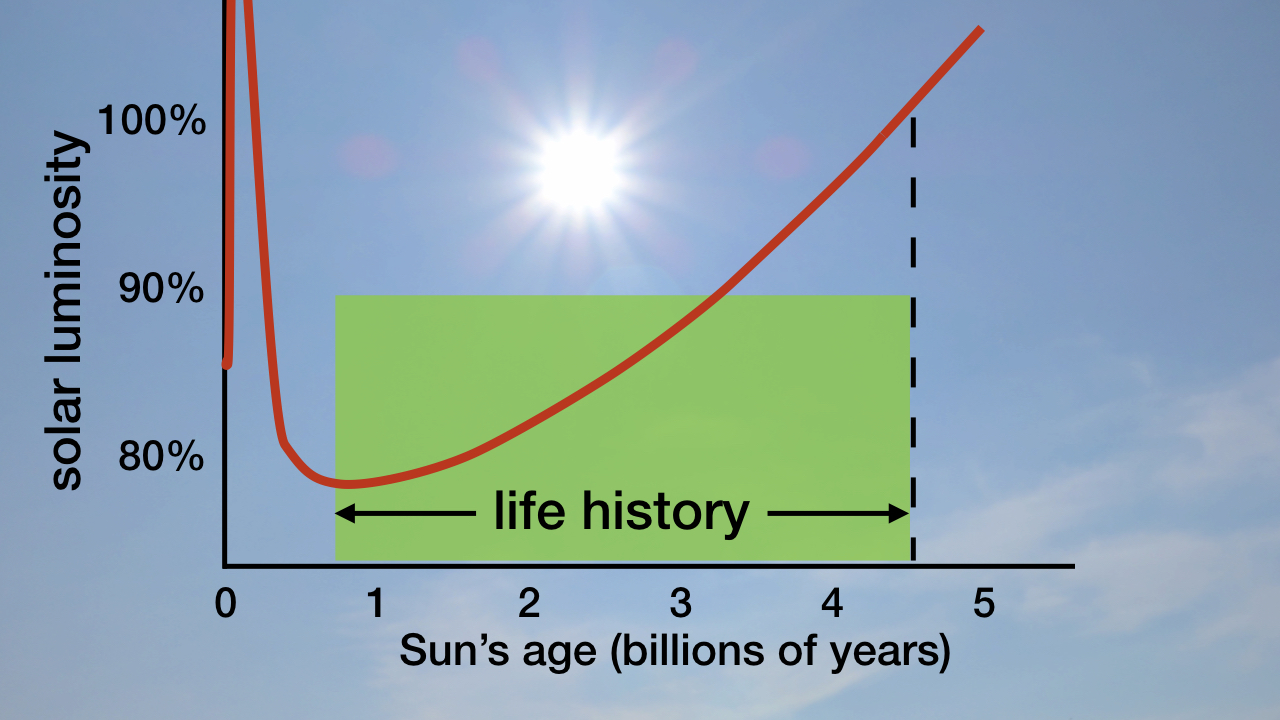
By contrast, we live in an amazing planetary system. Our star has gotten 18–22 percent brighter over the past 3.8 billion years of life’s history on Earth (see figure).1

blog__inline--baby-its-cold-outside

Figure: Sun’s Luminosity throughout Its History
Image credit: Hugh Ross

During that same period, geological and biological processes have combined to continuously cool Earth’s surface at rates that nearly perfectly compensate for the increased heating due to the Sun’s brightening. Those processes include:

    • gradually falling rates of volcanic outgassing of greenhouse gases (predominantly carbon dioxide and methane);
    • falling rates of continental growth and tectonic plate spreading, which lessens the rates at which carbon that is subducted into Earth’s mantle is returned to the atmosphere; and
    • increasing biomass and biodiversity, which results in more carbon dioxide being removed from Earth’s atmosphere through photosynthesis and thereby converted into organic carbon, much of which gets buried and subsumed into Earth’s crust and mantle.

Earth’s geological and biological processes have induced more cooling through the gradual removal of greenhouse gas from Earth’s atmosphere and the gradual increase of Earth’s albedo (reflectivity). The latter results in increasing proportions of solar radiation being reflected into interplanetary space.

This long-enduring delicate balance between the Sun’s brightening and resultant cooling from geological and biological processes has allowed a diverse and super-abundant ecosystem of microbes over the course of 3.2 billion years to chemically transform Earth’s atmosphere, oceans, and continents so that animals could exist and thrive. With the balance extended for another 0.6 billion years, Earth’s atmosphere, oceans, and continents became further transformed so that human beings could exist and thrive.

In a recent issue of the journal Astrobiology, British planetary astronomer David Waltham explains why the enduring delicate balance between the Sun’s brightening and cooling from geological and biological processes is unlikely to occur on any other star-planet system.2 He shows that for the delicate balance to be sustained the star-planet system must be comprised of a star that is exactly like the Sun and a planet that is exactly like Earth.

Problem of Alternate Planets
As I explain in my book Improbable Planet, it takes extraordinary fine-tuning of Earth’s photosynthetic life and Earth’s plate tectonics to sustain tectonic plate subduction at rates sufficient to continuously remove greenhouse gases from Earth’s atmosphere so as to compensate for the Sun’s brightening.3 In two recent blogs on Earth’s carbon cycle (Part 1Part 2), I describe how sixty different features and processes on Earth must be fine-tuned in different ways and at different rates for life to be continuously sustained throughout the past 3.8 billion years. As geophysicist Robert Stern observed, “Earth is the only known planet with subduction zones and plate tectonics, and this fact demonstrates that special conditions are required for this mode of planetary heat loss.”4

Microbial life may be possible on Earth-like planets but only for a short time period. Unless an Earth-like planet possesses the sixty different features and processes that I describe in the blogs, it will not be able to continuously compensate for the brightening of its host star. Such a planet will never be able to sustain animals or the equivalent of human beings.

Problem for Stars More Massive Than the Sun
The mass of a star determines how rapidly it brightens during that part of its history when its nuclear furnace is fusing hydrogen into helium. Stars more massive than the Sun brighten at a much more rapid rate. This enhanced brightening implies that the maximum possible time window for life to be sustained on one of its planets will be too short for the equivalent of humans to ever exist.

On Earth, the combination of geological and biological processes has compensated for the Sun’s increasing luminosity by progressively taking greenhouse gases from Earth’s atmosphere, chemically transforming them into carbon minerals, and depositing those minerals into Earth’s crust and mantle. However, over time these processes could remove too much carbon dioxide from the atmosphere. Photosynthesis requires a minimum level of carbon dioxide in the atmosphere. Photosynthesis rates plummet when the carbon dioxide level falls below 200 parts per million, and it ceases altogether in all plant species responsible for producing food for human consumption when the carbon dioxide level falls below 150 parts per million.

Within just a few tens of millions of years or less the Sun will be so bright (see figure) that atmospheric carbon dioxide levels will have to fall below 150 parts per million to keep Earth’s surface temperature cool enough for advanced life to survive. Hence, advanced life on Earth is doomed. Within a few tens of millions of years or less either the Sun will be too bright or there will be too little atmospheric carbon dioxide.5 To put it another way, we humans are living in the last half percent of the maximum time window for life on Earth.

The luminosity of a star correlates with the fourth power of its mass. The rate at which a star consumes its hydrogen available for fusion into helium rises roughly with the third power of its mass. Therefore, a star just 1 percent more massive than the Sun will either become too bright or its planet’s atmosphere will possess too low of an abundance of greenhouse gases by the time primitive life is able to transform the planet to make it a fit place for advanced life.

Problem for Stars Less Massive Than the Sun
Waltham devotes most of his Astrobiology paper to addressing the problem of stars less massive than the Sun. He explains how such stars experience luminosity increases that occur at rates much slower than the Sun’s. For planets with the geological and biological processes at levels adequate to make possible a long history of life, the removal of greenhouse gases from their atmospheres will occur at rates that overcompensate for the increases in their host stars’ luminosities. Therefore, Waltham writes, “Their climates will cool at a faster rate than is compensated by the relatively slow evolution of their smaller stars.”6

Planets orbiting stars less massive than the Sun will become permanently globally glaciated (baby, it’s cold outside) before any conceivable primitive life can chemically transform the planets’ surfaces so as to make the existence of advanced life possible.

No Problem for Our Planetary System
More than 90 percent of all stars are less massive than the Sun. More than 9 percent of all stars are too massive for advanced life to possibly exist on any of their planets. As explained in my two recent blogs (Part 1Part 2) on Earth’s carbon cycles, much, much less than one Earth-like planet out of a million will possess the necessary geological and biological processes required for the existence of advanced life. Both the Sun and Earth are rare indeed.

In this way, scientific advance reveals results consistent with a science-faith integration model. Waltham’s research has provided yet more evidence that only the God who created and designed the universe for humanity’s specific benefit possesses the power, knowledge, intellect, and care to design the Sun and Earth so that we humans can live and thrive.


Endnotes
  1. For an up-to-date review of solar brightening, see Hugh Ross, Improbable Planet (Grand Rapids, MI: Baker, 2016), 143–64.
  2. David Waltham, “Intrinsic Climate Cooling,” Astrobiology 19, no. 11 (November 2019): 1388–97, doi:10.1089/ast.2018.1942.
  3. Ross, Improbable Planet, 111–18.
  4. Robert J. Stern, “Evidence from Ophiolites, Blueschists, and Ultrahigh-Pressure Metamorphic Terranes that the Modern Episode of Subduction Tectonics Began in Neoproterozoic Time,” Geology 33, no. 7 (July 1, 2005): 557, doi:10.1130/G21365.1.
  5. Hugh Ross, Weathering Climate Change: A Fresh Approach (Covina, CA: RTB Press, forthcoming), chapter 17.
  6. Waltham, “Intrinsic Climate Cooling,” 1388.

About Reasons to Believe

RTB’s mission is to spread the Christian Gospel by demonstrating that sound reason and scientific research—including the very latest discoveries—consistently support, rather than erode, confidence in the truth of the Bible and faith in the personal, transcendent God revealed in both Scripture and nature. Learn More »

Support Reasons to Believe

Your support helps more people find Christ through sharing how the latest scientific discoveries affirm our faith in the God of the Bible.

DONATE NOW


U.S. Mailing Address
818 S. Oak Park Rd.
Covina, CA 91724
  • P (855) 732-7667
  • P (626) 335-1480
  • Fax (626) 852-0178
Posted in Uncategorized | Leave a comment

What Are Science’s Operating Limits?

BY KENNETH R. SAMPLES – DECEMBER 10, 2019

Modern science has dramatically changed the world for the better. All of us have benefitted from medical and technological advances. Because of that success, some people have concluded that science can answer all of humankind’s ultimate questions. This philosophy, called scientism (science is the only or best path to discovering truth), is to be differentiated from science (the study of the natural world through observation and experiment) and is reflected by such prominent secular scientists as Richard Dawkins, Peter Atkins, and Lawrence Krauss.

Does science have “operating limits”? In other words, are there areas of knowledge or questions that the scientific enterprise—because of its very nature—can’t adequately address? Let’s consider this issue.

Science: A Definition

Science involves a general inductive approach to obtaining knowledge about the world. It weighs probabilities and moves logically from the particular to the general. Scientific data generally comes directly through observation and experimentation about the physical universe. Thus science does an excellent job of explaining the physical mechanisms of the material world. It serves as a great tool for understanding the reality of that world. Science helps explain the what and how questions of life. And this practical aspect is what has made science such a successful, deeply valued human endeavor.

Science’s Limits

But science founders when it comes to the truly big questions of meaning, purpose, and significance. These are the ultimate why questions that people naturally and necessarily ask. For example, revealing that something happened in the physical world doesn’t explain why it happened or what it ultimately means. Biologist and philosopher Francisco Ayala has put it this way: “In matters of values, meaning, and purpose, science has all the answers, except the interesting ones.”1 And the eminent philosopher of science Karl Popper, reflecting a modest view of how science functions, stated: “It is important to realize that science doesn’t make assertions about ultimate questions—about the riddles of existence.”2

So what are science’s specific operating limits? They consist of key truths that science can’t formally prove but also that people can rationally affirm as being real and true:3

1. Mathematical and Logical Truths

Math and logic reflect laws and principles that are necessary for scientific theorizing and are foundational assumptions upon which science depends but that science can’t itself prove. Math and logic are conceptual (abstract) in nature rather than being empirically (sensory) derived. Science tends to confirm the truth of math and logic but it can’t justify these conceptual realities.

2. Metaphysical Truths

Metaphysical truths (relating to reality) include ideas like the existence of a real external world (not a mere illusion) and that minds exist (other than our own) that are capable of understanding that world. These critical ideas about reality are also foundational assumptions upon which science begins but can’t justify through the scientific method itself.

3. Ethical Truths

Objective moral truths and values exist (right, wrong, good, bad) and are required to do good science. For example, scientific experiments and the results they provide are valid only if they are conducted with exacting honesty and fair-mindedness. But these ethical and moral principles can’t be derived through science’s observational and empirical means.

4. Aesthetic Judgments

Aesthetics is that branch of philosophy that refers to the nature and appreciation of beauty, taste, and art. Beauty abounds in the natural world. But pure value judgments concerning the meaning and appreciation of beauty, taste, and art cannot be addressed by the scientific method. Again, value judgments about either morality or beauty are formed outside the operating lane of science.


5. Science Itself

The scientific enterprise is based upon critical assumptions that can’t be derived by the scientific method. Science cannot validate those assumptions nor can science tell us how scientific knowledge should be properly used. If scientists are to go about their work with any confidence, they must, for instance, believe in such presuppositions as:4

  • The objective reality of the cosmos
  • The basic intelligibility of the cosmos
  • The order, regularity, and uniformity of nature
  • The validity of mathematics and logic
  • The basic reliability of human cognitive faculties and sensory organs
  • The congruence between the human mind and physical reality
  • That an acceptable criterion for an adequate hypothesis exists
  • That what is observed in nature can provide clues and indicators of unobservable patterns and processes

These eight profound assumptions are just that: assumptions. That is, these preconditions for doing science are not first proven by science. Rather, scientists assume these ideas to be true before beginning to practice science. Science helps to confirm the truth of these preconditions of reality, but the scientific method itself did not establish or justify these prerequisite starting points. In this way, scientists operate on faith in these extraordinary givens—the necessary preconditions of intelligibility.

Ultimate Questions

There are many more areas of knowledge (historical, existential, experiential) that cannot be proven scientifically because they are not matters that can be repeated through critical observation and verified or falsified through the scientific method.
Nobel prize recipient Sir Peter Medawar (1915–1987) offered this statement concerning science’s operating limits:

That there is indeed a limit upon science is made very likely by the existence of questions that science cannot answer and that no conceivable advance of science would empower it to answer. These are the questions that children ask—the “ultimate questions” of Karl Popper. I have in mind such questions as: How did everything begin? What are we all here for? What is the point of living? It is not to science, therefore but to metaphysics, imaginative literature or religion that we must turn for answers to questions having to do with first and last things.5

Science, though robust and fruitful in addressing questions about the mechanisms of the natural world, nevertheless has real operating limits. However, the Christian worldview, which is responsible for giving rise to modern science, can augment science’s limited explanatory scope by offering reasonable explanations of questions about meaning, purpose, and significance.

Reflections: Your Turn

Does recognizing the limits of science in any way diminish the importance of this enterprise? Visit Reflections on WordPress to comment with your response.

Endnotes
  1. Francisco J. Ayala, Darwin’s Gift to Science and Religion (Washington, DC: Joseph Henry Press, 2007), 177.
  2. Karl R. Popper, “Natural Selection and the Emergence of Mind,” in Evolutionary Epistemology, Rationality, and the Sociology of Knowledge, ed. Gerard Radnitzky and W. W. Bartley, III (La Salle, IL: Open Court, 1987), 141.
  3. Christian philosopher William Lane Craig identified these points as being outside of scientific verification yet justifiably rational and acceptable in his debate with atheist scientist Peter Atkins, “Does Science Prove Everything?” (April 21, 2010), https://www.youtube.com/watch?v=vxJQe_FefxY.
  4. For more on these preconditions of science, see Kenneth Richard Samples, Without a Doubt: Answering the 20 Toughest Faith Questions (Grand Rapids: Baker, 2004), 191–96.
  5. Peter Medawar, The Limits of Science (Oxford, UK: Oxford University Press, 1984), 66.

About Reasons to Believe

RTB’s mission is to spread the Christian Gospel by demonstrating that sound reason and scientific research—including the very latest discoveries—consistently support, rather than erode, confidence in the truth of the Bible and faith in the personal, transcendent God revealed in both Scripture and nature. Learn More »

Support Reasons to Believe

Your support helps more people find Christ through sharing how the latest scientific discoveries affirm our faith in the God of the Bible.

DONATE NOW


U.S. Mailing Address
818 S. Oak Park Rd.
Covina, CA 91724
  • P (855) 732-7667
  • P (626) 335-1480
  • Fax (626) 852-0178
Posted in Uncategorized | Leave a comment

Debating Denominational Differences while Non-Christians Watch

BY KENNETH R. SAMPLES – OCTOBER 30, 2018

Christian unity is very special to me as a believer in Jesus Christ. In fact, I feel called by God to promote truth, unity, civility, and charity among all who embrace the historic Christian faith. Personally, I would much rather talk about what all historic Christians affirm theologically than discuss the doctrinal distinctives of my particular theological tradition. I guess that is one reason I find the ecumenical creeds of Christendom (Apostles’ CreedNicene CreedAthanasian Creed) so appealing.

Nevertheless, I am well aware that there are critical—perhaps intractable—theological differences among the three conservative branches of Christendom (Eastern Orthodoxy, Roman Catholicism, Protestantism). The most challenging differences lie in the areas of authority (Scripture and tradition) and soteriology (salvation, specifically the relationship between grace, faith, and works). And yet, while the Protestant denominations share more doctrinal common ground together, there are also some very strong theological disagreements present within the Protestant ranks. For example, the differences between the Reformed and Wesleyan traditions over God’s sovereignty and human responsibility are quite evident.

Yet even with all of the ecclesiastical differences and debate over the centuries, I agree with C. S. Lewis that, “When all is said (and truly said) about the divisions of Christendom, there remains, by God’s mercy, an enormous common ground.”This enormous theological common ground of which Lewis speaks is reflected in the Nicene Creed. All conservative branches of Christendom affirm this ecumenical statement of faith, and the creed is also accepted among the many Protestant denominations.

The Appearance of Disunity

In reality, much more agreement exists among the churches of Christendom than disagreement, but I think non-Christians view the divisions, and particularly the frequent bickering among Christians, as a huge turnoff. Thus, I think the appearance of a fractured and divided Christendom seriously hurts the Christian witness to an unbelieving world. As one skeptic said to me, “Why should I seriously consider Christian truth claims when Christendom is so deeply divided?”

Consider C. S. Lewis’s comment about how the doctrinal differences among Christian bodies affect the non-Christian’s openness to the faith:

I think we must admit that the discussion of these disputed points has no tendency at all to bring an outsider into the Christian fold. So long as we write and talk about them we are much more likely to deter him from entering any Christian communion than to draw him into our own. Our divisions should never be discussed except in the presence of those who have already come to believe that there is one God and that Jesus Christ is His only Son.2

A Proposal for Unity

In order to promote unity and protect the integrity of evangelism, I have a proposition for my Christian friends on social media and on the web. When non-Christians are present and watching, I strongly advise to avoid debating the denominational differences within Christendom.

Because social media and the internet involve a community of believers and nonbelievers, I suggest finding a more private and appropriate venue for such important and needed interactions among Christians to take place. I recognize that Christians need to discuss different doctrinal points of view within the faith, but why not do so on pages and within groups on social media dedicated to that very purpose apart from a public venue?

When Christians do find it necessary to publicly discuss, debate, or clarify issues over which Christendom is divided, then be aware that non-Christians may be observing. In such cases, it may be prudent to first insist upon discussing what all historic Christians affirm (mere Christianity, ecumenical creeds) before moving to the distinctive denominational differences. It is also important for believers in Christ who engage in ecumenical dialogue to consider how they can express their affirmation of Christian truth claims with genuine civility, unity, and charity toward others within Christendom.

Non-Christians need to know that while Christians don’t hold everything in common, they know how to disagree in a respectful, gracious manner. Unfortunately, many Christians—especially on social media and the web—show that they don’t know how to disagree with grace and respect.

Even if you disagree with my proposal, as a Christian I hope you’ll think about the challenge that the appearance of disunity poses for the faith and consider how to address it appropriately. A watching world stands to benefit greatly from our civil, unified engagement.

Resources

For further study of both the unity and disunity within Christendom, listen to my Straight Thinking podcast, “The Idea of Mere Christianity.”

Endnotes
  1. S. Lewis, Christian Reflections(Grand Rapids: Eerdmans,1967), vii.
  2. S. Lewis, Mere Christianity(New York: Macmillan, 1952), 6.

-end-

About Reasons to Believe

RTB’s mission is to spread the Christian Gospel by demonstrating that sound reason and scientific research—including the very latest discoveries—consistently support, rather than erode, confidence in the truth of the Bible and faith in the personal, transcendent God revealed in both Scripture and nature. Learn More »

Support Reasons to Believe

Your support helps more people find Christ through sharing how the latest scientific discoveries affirm our faith in the God of the Bible.

DONATE NOW


U.S. Mailing Address
818 S. Oak Park Rd.
Covina, CA 91724
  • P (855) 732-7667
  • P (626) 335-1480
  • Fax (626) 852-0178

Reasons to Believe logo

Posted in Uncategorized | Leave a comment