Is Supernatural Causation Compatible with Science?

BY PAUL LORENZINI – OCTOBER 11, 2019

When defenders of naturalistic evolution state their case, they frequently begin with the claim that their theory is “scientific.” Alternative views, especially those that would invoke supernatural causation, are pejoratively dismissed as “pseudoscience,” pseudo because they falsely claim to have scientific legitimacy. Given science’s respected status, this becomes a powerful rhetorical device to marginalize Christian claims that life on Earth involved the supernatural intervention of God.

This view played a critically important role in the 2005 case of Kitzmiller v. Dover Area School District.1 Attempts to require the teaching of “Intelligent Design” (ID) were opposed by many parents who claimed it was a subterfuge for bringing religious teachings into the classroom. Ruling in favor of the plaintiffs, Judge John E. Jones of the District Court in the Middle District of Pennsylvania concluded that ID should not be taught in the public schools because, among other reasons, “ID is not science.” Why? Because it “violates the age-old ground rules of science by invoking and permitting supernatural causation.”

But are there any such “age-old ground rules”? Can science not legitimately consider the possibility of supernatural causation? It turns out this so-called “age-old rule” has been discredited, leaving science no basis for excluding supernatural causation.

Development of Science’s “Ground Rules”

When thinker Francis Bacon conceived of what we now call the scientific method in his Novum Organon (1620), it is correct to say he believed any testable hypothesis must be derived from our physical sense experience. This is what we call the method of induction. One starts with data and generalizes toward a hypothesis from the data, then tests the hypothesis. It is a methodology that would, indeed, seem to exclude supernatural causation.

During the next two centuries the notion grew that science, grounded in this methodology, could purge humanity from the distortions of religion and superstition. In the nineteenth century, this idea took the form of positivism, a view vigorously embraced by a group of like-minded scientists and philosophers in the early twentieth century known as the Vienna Circle. Positivism is based on the claim, following Bacon, that the only source of positive knowledge of the world is information we derive from our physical senses. No scientific hypothesis is valid, on this view, unless it is derived from data that can be directly observed, measured, or reproduced. These ideas, having been stirred through much of the nineteenth century, were influential enough that as they spread during the early twentieth century, “an intellectual hegemony of positivism was beginning to be established” in American universities.2

By the mid-twentieth century, however, it became clear that the positivist model was running into problems. It was neither defensible philosophically, nor did it accurately describe how scientists function in practice. As philosopher Richard Bernstein wrote in 1976: “There is not a single major thesis advanced by either nineteenth-century positivists or the Vienna Circle that has not been devastatingly criticized when measured by the positivist’s own standards for philosophical argument.”3 In commenting on Berstein’s remarks, Donald Schon observes “[a]mong philosophers of science no one wants any longer to be called a positivist.”4

The underlying problem goes back to Bacon’s assumption that science operates exclusively on the principle of induction, the idea that any testable hypothesis must be derived from our sense experience. It doesn’t. Induction is certainly one way to form a hypothesis, but it is not exclusive. In practice there is no prescribed method scientists use for developing hypotheses—they are often products of our imaginative and creative minds.

The alternative to induction is the method of deduction. Here one starts with a generalized hypothesis and works toward specifics. Philosopher Karl Popper, a critic of induction, argued “[t]here is no logical method of having new ideas . . . every discovery contains an ‘irrational element’, or a ‘creative intuition.’” He reinforced his argument with quotes from Einstein: “There is no logical path leading to these . . . laws. They can only be reached by intuition, based upon something like an intellectual love of the objects of experience.”5 Popper’s assertion is that the hypotheses scientists test are not products of some disciplined method of organizing data, but rather products of the creative human mind.

Bertrand Russell expressed the issue more pointedly:

Bacon’s inductive method is faulty through insufficient emphasis on hypothesis. He hoped that mere orderly arrangement of data would make the right hypothesis obvious, but this is seldom the case . . . so far no method has been found which would make it possible to invent hypothesis by rule.6


The Essence of Science Is Testing Hypotheses

Science does not really care about the source of the hypothesis. It is concerned about testing ideas once they take the form of a hypothesis. The hypothesis is then tested by the rigid standards of science to determine if it fits what we observe in the surrounding universe. These methods cannot always prove the hypothesis is true—science cannot prove God, for example. But testing can determine if a particular hypothesis is false.

Yet old ideas die hard. In his historical review of positivism, the late German philosopher Oswald Hanfling writes:

… even if the parent plant is dead, many of its seeds are alive and active in one form or another. In an interview in 1979, A.J. Ayer, a leading philosopher of our time, who had been an advocate of logical positivism in the 1930s, was asked what he now saw as its main defects. He replied: ‘I suppose the most important . . . was that nearly all of it was false.’ Yet this did not prevent him from admitting shortly afterwards that he still believed in ‘the same general approach.’7

Thus positivism remains a foil, if a flawed one, used by defenders of naturalistic evolution to discredit Christian views of creation.8

When Reasons to Believe offers its testable creation model, the “test” is a scientific one: is the model consistent with that which we observe in the universe? If it is not, the model can be said to be falsified. If it is, it does not mean the model is proven (verified), but it does mean it cannot be discarded as inconsistent with that which we observe through legitimate science. The more tests the model passes, the more one can say it is grounded in good science.

When advocates of naturalistic evolution offer their model, they too are operating in this realm. They propose a hypothesis then test it by comparing its predictions with that which we observe in the universe. Both approaches employ sound science in the way we want science to operate—as a tool for finding truth and testing truth claims against observations of the natural realm. To be sure, that process itself is fraught with its own complications as philosophers of science debate what ultimate truths can or cannot be asserted once one forms a hypothesis.9 But the starting point is always the hypothesis.

Naturalistic evolution and the RTB creation model are two competing hypotheses that differ in many fundamentals. Science, functioning properly, can and should be willing to test both hypotheses against our observations of the universe in an effort to understand which model better explains the whole of reality. To discard the RTB model because it permits supernatural causation is both irrational and “unscientific” in that it excludes possible answers to big questions with no justification in science for doing so. Perhaps it’s time to discard the “age-old ground rules” of science in favor of a new ground rule for testing all hypotheses.

Endnotes
  1. Kitzmiller v. Dover Area School District400 F. Supp. 2d 707 (M.D. Pa. 2005).
  2. Donald A. Schon, The Reflective Practitioner (New York: Basic Books, 1983), 32–34.
  3. Richard J. Bernstein, The Restructuring of Social and Political Theory (San Diego, CA: Harcourt Brace Jovanovich, 1976), 207, quoted in Schon, The Reflective Practitioner, 48–49.
  4. Schon, The Reflective Practitioner, 49.
  5. Karl Popper, The Logic of Scientific Discovery (New York: Routledge Classics, 2002, originally published in 1935), 8–9.
  6. Bertrand Russell, History of Western Philosophy (London: Routledge Classics, 1996, first published in 1946), 529.
  7. See Oswald Hanfling, chap 5, in Routledge History of Philosophy, Volume IX: Philosophy of Science, Logic, and Mathematics in the Twentieth Century, ed. Stuart G. Shanker (New York: Routledge, 1996), 193–94.
  8. The misuse of positivism is not exclusively a problem for Christians. See Allen S. Lee, “Positivism: A Discredited Model of Science Still in Use in the Study and Practice of Management,” SSRN (September 1987), doi:10.2139/ssrn.2622718.
  9. See Kyle Stanford, “Underdetermination of Scientific Theory,” The Stanford Encyclopedia of Philosophy (Winter 2017), ed. Edward N. Zalta, https://plato.stanford.edu/archives/win2017/entries/scientific-underdetermination/.

Category
Tags

About Reasons to Believe

RTB’s mission is to spread the Christian Gospel by demonstrating that sound reason and scientific research—including the very latest discoveries—consistently support, rather than erode, confidence in the truth of the Bible and faith in the personal, transcendent God revealed in both Scripture and nature. Learn More »

Support Reasons to Believe

Your support helps more people find Christ through sharing how the latest scientific discoveries affirm our faith in the God of the Bible.

DONATE NOW


U.S. Mailing Address
818 S. Oak Park Rd.
Covina, CA 91724
  • P (855) 732-7667
  • P (626) 335-1480
  • Fax (626) 852-0178

Reasons to Believe logo

Posted in Science And Religion, Socio-political, Uncategorized | Leave a comment

U. S. NEED FOR AN UN-AMERICAN ACTIVITY COMMITTEE

via U. S. NEED FOR AN UN-AMERICAN ACTIVITY COMMITTEE

Posted in Uncategorized | Leave a comment

U. S. NEED FOR AN UN-AMERICAN ACTIVITY COMMITTEE

By Will Myers

A partial reading from our U.S. Constitution states:

“We hold these truths to be self-evident, that all men are created equal, that they are endowed by their Creator with certain unalienable Rights, that among these are Life, Liberty and the pursuit of Happiness. — That to secure these rights, Governments are instituted among Men, deriving their just powers from the consent of the governed, — That whenever any Form of Government becomes destructive of these ends, it is the Right of the People to alter or to abolish it, and to institute new Government, laying its foundation on such principles and organizing its powers in such form, as to them shall seem most likely to effect their Safety and Happiness.”

The special interest groups (SIG) has been pushing Christ Jesus and God out of public schools, workplaces, and the nation. The SIG snake organization monitors each citizen and uses sensitive collected info about the citizen to possibly devastate their life if a targeted person doesn’t serve SIG who is instituting hyper-communism whereas the state virtually owns the minds of the citizens. Our Constitution is being undermined by SIG who is an operative of the American Oligarchy.

McCarthyism has a bad rap as advanced by SIG’s snake organization. But, the truth is not totally on either side. Senator McCarthy and the FBI didn’t wake up one morning and think let us have some fun and falsely accuse persons as being a hardcore communist. On the other hand, I do believe that the Committee on Un-America Activity did make a wide sweep and included a lot of innocent persons. I strongly believe that the truth lies somewhere in the between. In this case, we can identify who is passing sensitive info up the chain (collecting) and what is coming down the chain, targeting private citizens (distributing).

SIG now figure that they are home free with the setting up of hyper-communism (State owning virtually the minds of the citizens using intimidation fueled by sensitive, private info). We need McCarthyism to return and clean out the hyper-communist and save our democracy. Trump is moving our nation toward hyper-communism; he is a born and raised oligarch who is part of the collective who are financing the SIG snake organization.

The U.S. Constitution bars the actions of SIG. The Constitution gives a citizen the right to seek a fulfilling life without anyone or group causing adversities in the person’s life.

The recent mass shootings and killings in America’s history are caused by SIG’s induced pressure on individuals. School shootings reveal how low SIG will go to entice their motives. We definitely need another Committee on Un-American Activity. The Supreme Court shall support the committee’s actions of cutting the head of the SIG snake off; thereby saving our democracy and preventing SIG from getting between the citizen and God and becoming a heavy burden on each citizen. This shall almost stop the mass killings.

SIG should be eradicated like snakes because our nation is moving toward atheism as Russia is moving toward a solid oligarch class. The industrial nations are moving toward the working-class and an oligarch class so that we have the oligarch classes ruling the world. We are moving away from democracy due to the dominance of the oligarch class who is opposed to a free and high-quality democracy. For a citizen to claim his God-given rights as expressed in the U.S. Constitution puts a restraint on the powers of the oligarchy to manipulate the individual to serve the best interest of the oligarchy.

IN THE HARVARD LAW REVIEW WE HAVE Willes, J., in Millar v. Taylor, 4 Burr. 2303, 2312 which is a “Right To Privacy” lawsuit. The Supreme Court extended individual privacy right to the right to be happy. This emphasized the right to be let alone in society. The collectors and distributors (SIG) of info concerning an individual can not use such info to make the individual unhappy. SIG cannot create adversities in the life of the individual. The activities of SIG are un-American and does breach the individual’s rights given by the U.S. Constitution.

We all must restrain SIG who targets private citizens, and not let the devil run free.

The first action incurred by SIG is to take your happiness and dignity. STOP SIG. STOP HYPER-COMMUNISM.

Posted in Uncategorized | 1 Comment

Can Intelligent Design Be Part of the Construct of Science?

By Fazale Rana – June 27, 2017

Share to Pinterest Share to More

“If this result stands up to scrutiny, it does indeed change everything we thought we knew about the earliest human occupation of the Americas.”1

This was the response of Christopher Stringer—a highly-regarded paleoanthropologist at the Natural History Museum in London—to the recent scientific claim that Neanderthals made their way to the Americas 100,000 years before the first modern humans.2

At this point, many anthropologists have expressed skepticism about this claim, because it requires them to abandon long-held ideas about the way the Americas were populated by modern humans. As Stringer cautions, “Many of us will want to see supporting evidence of this ancient occupation from other sites before we abandon the conventional model.”3

Yet, the archaeologists making the claim have amassed an impressive cache of evidence that points to Neanderthal occupation of North America.

As Stringer points out, this work has radical implications for anthropology. But, in my view, the importance of the work extends beyond questions relating to human migrations around the world. It demonstrates that intelligent design/creation models have a legitimate place in science.

The Case for Neanderthal Occupation of North America

In the early 1990s, road construction crews working near San Diego, CA, uncovered the remains of a single mastodon. Though the site was excavated from 1992 to 1993, scientists were unable to date the remains. Both radiocarbon and luminescence dating techniques failed.

Recently, researchers turned failure into success, age-dating the site to be about 130,000 years old, using uranium-series disequilibrium methods. This result shocked them because analysis at the site indicated that the mastodon remainswere deliberately processed by hominids, most likely Neanderthals.

The researchers discovered that the mastodon bones displayed spiral fracture patterns that looked as if a creature, such as a Neanderthal, struck the bone with a rock—most likely to extract nutrient-rich marrow from the bones. The team also found rocks (called cobble) with the mastodon bones that bear markings consistent with having been used to strike bones and other rocks.

To confirm this scenario, the archaeologists took elephant and cow bones and broke them open with a hammerstone. In doing so, they produced the same type of spiral fracture patterns in the bones and the same type of markings on the hammerstone as those found at the archaeological site. The researchers also ruled out other possible explanations, such as wild animals creating the fracture patterns on the bones while scavenging the mastodon carcass.

Despite this compelling evidence, some anthropologists remain skeptical that Neanderthals—or any other hominid—modified the mastodon remains. Why? Not only does this claim fly in the face of the conventional explanation for the populating of the Americas by humans, but the sophistication of the tool kit does not match that produced by Neanderthals 130,000 years ago based on archaeological sites in Europe and Asia.

So, did Neanderthals make their way to the Americas 100,000 years before modern humans? An interesting debate will most certainly ensue in the years to come.

But, this work does make one thing clear: intelligent design/creation is a legitimate part of the construct of science.

A Common Skeptical Response to the Case for a Creator

Based on my experience, when confronted with scientific evidence for a Creator, skeptics will often summarily dismiss the argument by asserting that intelligent design/creation isn’t science and, therefore, it is not legitimate to draw the conclusion that a Creator exists from scientific advances.

Undergirding this objection is the conviction that science is the best, and perhaps the only, way to discover truth. By dismissing the evidence for God’s existence—insisting that it is nonscientific—they hope to undermine the argument, thereby sidestepping the case for a Creator.

There are several ways to respond to this objection. One way is to highlight the fact that intelligent design is part of the construct of science. This response is not motivated by a desire to “reform” science, but by a desire to move the scientific evidence into a category that forces skeptics to interact with it properly.

The Case for a Creator’s Role in the Origin of Life

It is interesting to me that the line of reasoning the archaeologists use to establish the presence of Neanderthals in North America equates to the line of reasoning I use to make the case that the origin of life reflects the product of a Creator’s handiwork, as presented in my three books: The Cell’s Design, Origins of Life, and Creating Life in the Lab. There are three facets to this line of reasoning.

The Appearance of Design

The archaeologists argued that: (1) the arrangement of the bones and the cobble and (2) the markings on the cobble and the fracture patterns on the bones appear to result from the intentional activity of a hominid. To put it another way, the archaeological site shows the appearance of design.

In The Cell’s Design I argue that the analogies between biochemical systems and human designs evince the work of a Mind, serving to revitalize Paley’s Watchmaker argument for God’s existence. In other words, biochemical systems display the appearance of design.

Failure to Explain the Evidence through Natural Processes

The archaeologists explored and rejected alternative explanations—such as scavenging by wild animals—for the arrangement, fracture patterns, and markings of the bones and stones.

In Origins of Life, Hugh Ross (my coauthor) and I explore and demonstrate the deficiency of natural process, mechanistic explanations (such as replicator-first, metabolism-first, and membrane-first scenarios) for the origin of life and, hence, biological systems.

Reproduction of the Design Patterns

The archaeologists confirmed—by striking elephant and cow bones with a rock—that the markings on the cobble and the fracture patterns on the bone were made by a hominid. That is, through experimental work in the laboratory, they demonstrated that the design features were, indeed, produced by intelligent agency.

In Creating Life in the Lab, I describe how work in synthetic biology and prebiotic chemistry empirically demonstrate the necessary role intelligent agency plays in transforming chemicals into living cells. In other words, when scientists go into the lab and create protocells, they are demonstrating that the design of biochemical systems is intelligent design.

So, is it legitimate for skeptics to reject the scientific case for a Creator, by dismissing it as non-scientific?

Work in archaeology illustrates that intelligent design is an integral part of science, and it highlights the fact that the same scientific reasoning used to interpret the mastodon remains discovered near San Diego, likewise, undergirds the case for a Creator.

Resources

Endnotes

  1. Colin Barras, “First Americans May Have Been Neanderthals 130,000 Years Ago,” New Scientist, April 26, 2017, https://www.newscientist.com/article/2129042-first-americans-may-have-been-neanderthals-130000-years-ago/.
  2. Steven R. Holen et al., “A 130,000-Year-Old Archaeological Site in Southern California, USA,” Nature 544 (April 27, 2017): 479–83, doi:10.1038/nature22065.
  3. Barras, “First Americans.”

Share to PinterestShare to More

About Reasons to Believe

RTB’s mission is to spread the Christian Gospel by demonstrating that sound reason and scientific research—including the very latest discoveries—consistently support, rather than erode, confidence in the truth of the Bible and faith in the personal, transcendent God revealed in both Scripture and nature. Learn More »

Support Reasons to Believe

Your support helps more people find Christ through sharing how the latest scientific discoveries affirm our faith in the God of the Bible.


U.S. Mailing Address
818 S. Oak Park Rd.
Covina, CA 91724
  • P (855) 732-7667
  • P (626) 335-1480
  • Fax (626) 852-0178

Reasons to Believe logo

Posted in Science And Religion, Socio-political, Uncategorized | Tagged , | Leave a comment

Can Science Detect the Creator’s Fingerprints in Nature?

By Fazale Rana – April 12, 2017

Which of these does not know that the hand of the Lord has done this?

Job 12:9


In early March (2017), I took part in a forum at Samford University (Birmingham, AL), entitled Genesis and Evolution. At this two-day event, the panelists presented and discussed scientific and biblical perspectives on Young-Earth, Old-Earth, and Evolutionary versions of creationism.

The organizers charged me with the responsibility of describing Old-Earth Creationism (OEC) from a scientific vantage point, while also providing the rational for my views.

As part of my presentation, the organizers asked me to discuss the assumptions that undergird my views. One of the foundational tenets of OEC is an important idea taught in Scripture: God has revealed Himself to us through the record of nature. According to passages such as Job 12: 7-9, part of that revelation includes the ‘fingerprints’ He has left on His creation.

If Scripture is true, then scientific investigation should uncover evidence for design throughout the natural realm. Science should find God’s fingerprints. And, indeed, it has. As a biochemist, I am deeply impressed with the elegance, sophistication, and ingenuity of the cell’s molecular systems. In my view, these features reflect the work of a mind—a Divine Mind. But, the evidence for intelligent design in the biochemical realm is much more extensive. For example, the eerie similarity between the structure and function of biochemical systems, and the objects and devices produced by human designers further evinces the Creator’s handiwork. In my book The Cell’s Design, I show how the remarkable similarities serve to revitalize William Paley’s Watchmaker Argument for God’s existence.

To describe the hallmark features of human designs, Paley used the term contrivance. Human designs are contrivances. And so, are biological systems. If human contrivances require the work of human designers, then, it follows that biological systems—which, too, are contrivances—require a Divine designer. In The Cell’s Design, I introduce the concept of an intelligent design pattern. Following Paley, I identify several features that characterize human designs. Collectively, these characteristics form a pattern that can then be matched to the features of biological and biochemical systems. The greater the match between the intelligent design pattern and biological/biochemical systems, the greater the certainty that designs found in living systems are the work of a mind.

In response to my presentation at the Genesis and Evolution event, cell biologist Ken Miller from Brown University—a well-known critic of intelligent design—argued that creationism and intelligent design cannot be part of the construct of science, because science lacks the capability of detecting the supernatural. In his book, The Triumph of Evolution and the Failure of Creationism, paleontologist Niles Eldredge makes this very point:

“We humans can directly experience the material world only through our senses, and there is no way we can directly experience the supernatural. Thus, in the enterprise that is science, it isn’t an ontological claim that a God does not exist, but rather an epistemological recognition that even if such a God did exist, there would be no way to experience that God given the impressive, but still limited, means afforded by science. And that is true by definition.”1

But, as I pointed out during my presentation and elsewhere there are scientific disciplines predicated on science’s capacity to detect the activity of intelligent agency. One is SETI: The Search for Extraterrestrial Intelligence. Astronomers involved in this research program seek ways to distinguish between electromagnetic radiation emanating from astronomical objects from those hypothetically generated by intelligent agents that are part of alien civilizations. To put it another way, SETI is an intelligent design research program.

Research by scientists from the Harvard-Smithsonian Center for Astrophysics powerfully illustrates this point.2 These investigators propose that fast radio burst (FRBs) emanate from alien technology, specifically planet-sized transmitters powering interstellar probes.

Astronomers discovered FRBs in 2007. Since then, around two dozen exceedingly bright, millisecond bursts of radio emissions have been detected. Astronomers think that FRBs originate in distant galaxies, billions of light years away.

The Harvard-Smithsonian scientists calculate that the transmitters could generate enough energy from sunlight to move probes through space, if the light was directed to onto structures twice the size of Earth. Given the energies involved, the transmitters would have to be cooled. Again, the researchers estimate that a water-cooled device twice Earth’s size could keep the transmitter from melting.

The researchers recognize that construction of the transmitters lays beyond our technology, but is possible given the laws of physics. They speculate aliens built these transmitter to power light sails to move space craft, weighing a million tons and carrying living creatures across interstellar space.

These astronomers maintain that the transmitter would have to continually focus its beam on the light sails. FRBs originate when the transmitter and light sails briefly point in Earth’s direction due to the relative motion of the transmitter and light sail.

So, are FRBs evidence for alien technology? Avi Loeb, one of the Harvard-Smithsonian scientists, admits that their proposal is speculative, but justifies it because, “we haven’t identified a possible natural source with any confidence.”3 But, Loeb argues, “Deciding what’s likely ahead of time limits the possibilities. It’s worth putting ideas out there and letting the data be the judge.”4

So, contrary to the protests of scientists, such as Miller and Eldredge, science does have the tool kit to detect the handiwork of intelligent agents and even discern the capabilities and motives of the intelligent designer(s). So, why not let intelligent design proponents and creationists put their ideas out there and let the data be the judge?

It is interesting that the Harvard-Smithsonian astronomers think they can recognize the work of intelligent designers who possess capabilities beyond what we can understand—and, maybe, even imagine. They also think that they can discern the purpose behind the alien technology—space exploration. So why can’t science recognize the work of a Creator whose capabilities exist beyond what we can imagine?

So, considering the proposal by the Harvard-Smithsonian investigators, it is disingenuous for Miller, Eldredge, and other scientists, to reject, out of hand, the claim the scientific evidence for God’s fingerprints in biochemical systems. I contend that the intelligent design pattern that I describe in The Cell’s Design can be used to rigorously—and, even, quantitatively—characterize the Creator’s activity in biological systems. Moreover, as I have discussed previously, science has the tools to identify the designer.

As the apostle Paul wrote, evidence for the Creator is “clearly seen from what has been made.” (Romans 1:20) If only the scientific community would be willing to look.

Resources:

Fast Radio Bursts: E. T. Is Not Calling Home by Hugh Ross (article)

Fast Radio Bursts Update by Hugh Ross (article)

A Biochemical Watch Found in a Cellular Heath by Fazale Rana (article)

Can Science Identify the Intelligent Designer? by Fazale Rana (article)

The Cell’s Design By Fazale Rana (book)

Endnotes
  1. Niles Eldredge, The Triumph of Evolution and the Failure of Creationism (New York: Holt and Company, 200) p. 13.
  2. Harvard-Smithsonian Center for Astrophysics, “Could Fast Radio Burst Be Powering Alien Probes?” ScienceDaily (March 9, 2017), sciencedaily.com/releases/2017/03/170309120419.htm
  3. Harvard-Smithsonian Center for Astrophysics, “Could Fast Radio Burst Be Powering Alien Probes?” ScienceDaily (March 9, 2017), sciencedaily.com/releases/2017/03/170309120419.htm
  4. Harvard-Smithsonian Center for Astrophysics, “Could Fast Radio Burst Be Powering Alien Probes?” ScienceDaily (March 9, 2017), www.sciencedaily.com/releases/2017/03/170309120419.htm

Share to PinterestShare to More

About Reasons to Believe

RTB’s mission is to spread the Christian Gospel by demonstrating that sound reason and scientific research—including the very latest discoveries—consistently support, rather than erode, confidence in the truth of the Bible and faith in the personal, transcendent God revealed in both Scripture and nature. Learn More »

Support Reasons to Believe

Your support helps more people find Christ through sharing how the latest scientific discoveries affirm our faith in the God of the Bible.


U.S. Mailing Address
818 S. Oak Park Rd.
Covina, CA 91724
  • P (855) 732-7667
  • P (626) 335-1480
  • Fax (626) 852-0178

Reasons to Believe logo

Posted in Uncategorized | Leave a comment

Democracy vs. Oligarchy

By Will Myers

It’s a gross misleading of the citizens by stating the Right vs. Left. It is not so; it is our democracy vs. the oligarchy of America; furthermore, it’s democracy vs. oligarchy of the world. There are special interest groups (SIG) who collect, analyze (dossiers), and distribute sensitive info, targeting private citizens with devastating effects upon the targeted person. The SIG snake organization is an operative of the oligarchy who seeks control of the citizens.

The American oligarchs have never been believers in a truly free democracy. They fear the loss of their assets. In the beginning, we have had a fair balance between control of the masses vs. restricting the capitalizing upon the citizens by the oligarchy. Recently, with the advent of the advancement of technology, SIG has many new toys that give an advantage to the oligarchy. Very secretive info about each person’s life can be in the files of a CEO of a corporation that goes beyond the person’s job description, but into their private lifestyle. SIG can now create adversities in one’s life with devastating effect – the destruction of one’s livelihood.

America is moving away from a free democracy toward hyper-communism whereas the state owns the minds of the citizens in an ideal sense, but having definite powers to destroy any citizens’ livelihood and happiness definitely.

Hyper-communism is the desired government of the oligarchy. Being connected in order to get crumbs from the SIG snake organization as they become your god; quickly, the organization shall begin acting on their behalf and best interest as opposed to your best interest. For the front office to be interested in you no longer means a good opportunity but could mean teaching, disciplinary, or a molding experience. One can face adversity on the job about something that happened weeks prior hundreds of miles away of no concern of your job but is a concern of the hyper-communist SIG organization for the oligarchy. This is a burden on your life and a god between you and your GOD, Heavenly Father. Hyper-communism is anti-U.S. Constitution and by all means anti-democracy.

Posted in Uncategorized | Leave a comment

Rats’ Hide-and-Seek Game Affirms Biblical Creation

BY HUGH ROSS – SEPTEMBER 30, 2019

In many war movies that were released fifty to eighty years ago, an infantry lieutenant would challenge his platoon with the question, “Are we mice or are we men?” The platoon soldiers would shout back, “We are men! We are men!” The platoon would then charge into battle, suffering horrific casualties before ultimately winning a great victory. I do remember one spoof of such movies where the soldiers shouted, “We are mice! We are mice!” and then beat a hasty retreat.

Rodents share a lot more with humans than we realize, according to a research paper recently published in Science.1 The new research affirms Bible passages written more than three thousand years ago that teach that God designed certain bird and mammal species to form relationships with human beings and to serve and please us—each species in its own unique way.

Four neuroscientists at Humboldt University in Berlin headed by Annika Reinhold first noted that mammals can be trained to perform complex behaviors, tasks, and games by motivating the mammals with food treats. They developed a set of experiments to determine if mammals can be trained in an environment where the rewards are not food treats but instead social interactions with humans.

Hide-and-Seek Game Behavior
A characteristic of animal play behavior is that play occurs freely (there is no compulsion for the animals to play) and it provides no material profit. The predominant benefit to the animals is social interaction.

Reinhold’s team sought to establish if rats would play with humans and if the level of play would be more complex than if rats played with one another without human intervention. In their experiments, the team also desired to discover if the rats would play with humans when the only reward for playing would be additional social interaction with the humans. Finally, they wanted to find out if certain play activities were correlated with prefrontal cortex activity.

Reinhold and her colleagues set up the role-play game hide-and-seek with ten adolescent male rats. They tested whether the rats could play a two-player rat-and-human game.

In the “seek” part of the game the human would place a rat in a box and close the lid. Closing the lid of the start box signaled that the rat was the seeker. The human then hid in one of several locations and remotely opened the box. The rat then searched for the human. A close approach (less than 40 centimeters) to the human with a clear line of sight was scored as a “find.” After the rat found the human, the human would reward the rat with playful interaction before returning the rat to the box. Readers can watch a video clip of the seek part of the game here:

In the “hide” part of the game the human left the start box open and crouched motionlessly next to it. This circumstance cued the rat to hide. The human would wait 90 seconds and search for the rat. Upon finding the rat the human would reward the rat with playful interaction. Readers can watch a video clip of the hide part of the game here:

all ten rats learned the seek part of the game in less than two weeks. nine of the rats in the same time period learned to hide and switch roles. reinhold’s team observed that the rats kept track of past hiding locations and, hence, became more proficient with practice. the rats also quickly developed a preference for opaque and cardboard boxes over transparent ones.

surprisingly, most of the rats in the hide part of the game showed re-hide and runaway behaviors. evidently, the rats preferred prolonging the game over getting a quick social reward. readers can watch a video clip of the re-hide and runaway part of the game here:

The rats would vocalize when they found the human but remained silent when the human found them. This vocalization was not shaped by human conditioning since the rat vocalizations were inaudible to the humans.

The rats were strategic. “Seeking strategies included systematic searches, use of visual cues, and targeting of past hiding locations. Hiding strategies included preferences for opaque enclosures, being silent when hiding, and changing hiding locations.”2

Neural Correlations
In testing neural correlations Reinhold’s team did tetrode (electrophysiological) recordings of single neurons in the medial prefrontal cortex, a brain area associated with encoding social proximity. The recordings revealed “neuronal activity specific to phases and events of hide-and-seek.”3

These hide-and-seek experiments showed that rats are capable of decision-making, navigation, and role-playing. The tests also demonstrated that rats are highly motivated to socially engage humans and, when doing so, manifest intellectual and relational capabilities beyond what occurs in the wild where they have no contact with humans.

Biblical Affirmations
The researchers did not discuss philosophical inferences of their experiments beyond suggesting that the behaviors they observed may have evolutionary implications. Their results, however, do affirm several principles found in Genesis 1Exodus 21, and the book of Job 38–42.

The first biblical principle is that God created three different broad categories of life:

  1. life-forms that are purely physical;
  2. life-forms that are physical and soulish, meaning that they are endowed with mind, will, and emotions and the capability to form relationships with and to serve and please human beings;
  3. human beings who are physical, soulish, and spiritual and endowed with the capability of forming relationships with and serving and pleasing God.

A second biblical principle is that the intellectual and relational capabilities of individuals within the second and third categories of life are much enhanced when those individuals are strongly bonded to a higher being.

Thirdly, individuals within the second and third categories of life are happiest when they are strongly bonded to a higher being.

This hierarchy of relational bonds and fulfillment displays the activity of a Creator—One who enjoys not only creating, but also seeing his creatures enjoy each other.

Resource

Endnotes
  1. Annika Stefanie Reinhold et al., “Behavioral and Neural Correlates of Hide-and-Seek in Rats,” Science 365, no. 6458 (September 13, 2019): 1180–83, doi:10.1126/science.aax4705.
  2. Reinhold et al., “Behavioral and Neural Correlates,” 1182.
  3. Reinhold et al., “Behavioral and Neural Correlates,” 1183.

About Reasons to Believe

RTB’s mission is to spread the Christian Gospel by demonstrating that sound reason and scientific research—including the very latest discoveries—consistently support, rather than erode, confidence in the truth of the Bible and faith in the personal, transcendent God revealed in both Scripture and nature. Learn More »

Support Reasons to Believe

Your support helps more people find Christ through sharing how the latest scientific discoveries affirm our faith in the God of the Bible.

DONATE NOW


U.S. Mailing Address
818 S. Oak Park Rd.
Covina, CA 91724
  • P (855) 732-7667
  • P (626) 335-1480
  • Fax (626) 852-0178

Reasons to Believe logo

Posted in Uncategorized | Leave a comment

Does the Bible Teach Big Bang Cosmology?

BY HUGH ROSS – AUGUST 26, 2019

One of the most popular articles I have written is “Big Bang—The Bible Taught It First!” I wrote it with the encouragement and assistance of theologian John Rea and we published it in Reasons to Believe’s Facts for Faith magazine in 2000.1 In the two decades since then, one of the most common objections I have received from skeptics is that the Bible teaches no such thing. Who is correct?

Biblical Evidence
John Rea and I did not claim in this article that the Bible teaches all the fundamental features of the big bang creation model. We did explain, however, how it teaches the four most fundamental properties of big bang cosmology. The four properties it teaches are:

  1. an ex nihilo [out of nothing] beginning for the universe
  2. expansion of the universe from its ex nihilo beginning
  3. constant laws of physics
  4. a law of decay that pervades the entirety of the universe

These four properties imply that the universe must get progressively colder, in a highly specified manner, as it expands from its ex nihilo beginning. A pervasive law of decay, known today as the second law of thermodynamics or the law of entropy or Murphy’s law, implies that any system that expands, whether it be the piston chamber in an automobile engine or the entire universe, must get colder in proportion to the degree of expansion.

The notion that the Bible describes the four most important features of the big bang creation model makes a powerful apologetics case for the Christian faith and for the divine inspiration and inerrancy of the Bible. One reason why is that for over 2,500 years the Bible stood alone as the only book, outside of commentaries on the Bible, that made such claims about the universe. It was not until 1925 that any scientist made note that the universe possessed such features. The Belgian Roman Catholic priest and astrophysicist Abbé Georges Lemaître was the first scientist to write about the expansion of the universe from a cosmic beginning.2

Additionally, the Bible’s foreshadowing these four fundamental features of big bang cosmology—thousands of years before any astronomer had ever discerned that the universe possessed such properties—establishes the Bible’s predictive power. The only reasonable explanation for such a dramatic demonstration of predictive power is that the Bible was inspired by the One who created the universe and controlled its history.

Reaction from Nontheists
Understandably, people who deny the existence of God strongly react to the claim that the Bible teaches the four most important features of big bang cosmology. In every public debate I have had with an atheist, the opponent has asserted that the Bible makes no such declarations. During the last several months, an average of at least one response per day has appeared on my Twitter page denying that the Bible teaches any of the features of the big bang creation model.

These nontheists insist that I am using my twenty-first century knowledge of astronomy to read into the Bible what the Bible has never taught. They contend that I am imposing literal interpretations upon Bible passages that are clearly intended to be figurative. I consistently observe, however, that these assertions are made by people who have neither read my article nor the Bible passages I cite. My article explains why these passages must be understood as literal declarations and not mere figures of speech.

Is It Just Hindsight Interpretation?
The nontheists who have engaged me about the Bible and the big bang avow that they don’t need to read my article or the biblical passages I cite to know that my claims are wrong. No theologian previous to the twentieth century ever commented on the Bible making such claims, they say, which is sufficient evidence that it is just my twenty-first–century astrophysical bias that makes me think the Bible teaches big bang features of the universe.

Here again, however, these nontheistic skeptics are mistaken. Long before the twentiethcentury, both Christian and Jewish theologians wrote about the universe possessing properties that today we recognize as descriptives of the big bang creation model.

Meanwhile, these skeptics tend not to dispute that the Bible teaches that the laws of physics are constant and that one of those laws is a pervasive law of decay. The claim for the former is stated in passages in Genesis 1–3Jeremiah 33Romans 8:19–22, and Revelation 21:1–5. The claim for the latter is found throughout Proverbs and especially in Ecclesiastes and Romans 8:18–22. Nontheists unfamiliar with these Bible passages note that these two properties—at least as far as Earth and its life are concerned—would have been evident to pre-twentieth-century populations.

Pre-Twentieth-Century Theologians on Ex Nihilo Creation and Cosmic Expansion

Many nontheists dispute that any theologians previous to the twentieth century had ever discerned that the Bible teaches an ex nihilo beginning for the universe or that the Bible teaches the universe has expanded and is expanding.

However, many pre-twentieth-century Jewish and Christian theologians wrote about the Bible’s teachings concerning the characteristics of the universe. For the sake of brevity, I will highlight only some of the comments by a few of the more prominent ones.

Irenaeus, Bishop of Lyons (120–202), stated, “God, according to His pleasure, in the exercise of His own will and power, formed all things (so that those things which now are should have an existence) out of what did not previously exist.”3

Augustine of Hippo (354–430) wrote in his Confessions, “You [God] were, and besides you nothing was. From nothing, then, you created heaven and earth.”Later in Confessions he added, “You created them [the heavens and the earth, that is, the material universe] from nothing, not from your own substance or from some matter not created by yourself or already in existence. …You created the matter from absolutely nothing and the form of the world from this formless matter.”5

The most famous of the medieval Jewish theologians, Moses Maimonides (1135–1204), also known as the Rambam, wrote extensively about Old Testament declarations concerning the beginning of the universe. In his 13 Principles of Faith, Maimonides stated, “We believe that this Oneness is necessarily primary. All that exists other than Him is not primary in relationship to Him. There are many references in the Scriptures. This is the fourth Principle, as affirmed by the verse (Deuteronomy 33:27): ‘God who preceded all existence is a refuge…’”6Here, Maimonides explicitly states that the universe cannot be eternal. It must have a beginning.

In The Guide for the Perplexed, Maimonides elucidated what the Torah (the first five books of the Bible) stated about God, the universe, space, and time. He wrote that the entire universe “was brought into existence by God after having been purely and absolutely nonexistent.”7Maimonides declared that Moses in the Torah asserted “that there is nothing eternal in any way at all existing simultaneously with God.”8 Therefore, according to Maimonides, the Mosaic position puts forth a view of creation that is both ex nihilo and de novo (from [the] new).

Maimonides explains that creation de novo does not mean God exists in time and space and picks a particular moment to begin his creations.9 He asserts that time itself is one of these creations. It is not eternal; only God is eternal. Only God is responsible for creating the universe.10 Maimonides also clarifies his definition of nothing and the impotence of nothing: “if nothing is pure and absolute, it cannot be the material cause of anything; it is, after all, nothing.”11

In the thirteenth century, another medieval Jewish theologian, Moses Nachmanides wrote about the expansion of the universe: “There is only one physical creation, and that creation was a tiny speck. . . . As this speck expanded out, this substance—so thin it has no essence—turned into matter as we know it.”12

Evidence for All Readers
In my book The Fingerprint of God I documented the strong reaction by nontheistic astronomers and physicists against the big bang creation model when Georges Lemaître and other astronomers first seriously promoted it to the scientific community.13 These nontheistic astronomers and physicists recognized the concordance between the big bang and biblical cosmology. Since this recognition occurred before the big bang creation model became mainstream astrophysics, these scientists cannot be accused of hindsight bias.

While it’s true that twentieth and twenty-first-century discoveries about the universe have brought more attention to biblical texts describing the origin and characteristics of the universe, readers both before and after the twentieth century recognized and wrote about the Bible’s cosmological declarations. Georges Lemaître, Edwin Hubble, Albert Einstein, and George Gamow were not the first humans to talk and write about the big bang creation model. That credit goes back to biblical authors Job, Moses, David, Isaiah, Jeremiah, Zechariah, Paul, and the author of Hebrews. They discerned and wrote about features of our big bang universe because their writings were inspired by the One who created and designed the cosmos.

Endnotes
  1. Hugh Ross with John Rea, “Big Bang—The Bible Taught It First!,” Facts for Faith (quarter 3, 2000): 26–32, https://www.reasons.org/explore/publications/facts-for-faith/read/facts-for-faith/2000/07/01/big-bang-the-bible-taught-it-first! The article has been reissued as an RTB101 paper and appears as a chapter in both The Creator and the Cosmos (pages 25–31) and A Matter of Days (pages 135–44).
  2. Abbé G. Lemaître, “A Homogeneous Universe of Constant Mass and Increasing Radius Accounting for the Radial Velocity of Extra-Galactic Nebulae,” Monthly Notices of the Royal Astronomical Society 91, issue 5 (March 13, 1931): 483–90, doi:10.1093/mnras/91.5.483. The original paper appears in French in Annales de la Société Scientifique de Bruxelles, Tome XLVII, Serie A, Premiere Partie (April 1927): 49.
  3. Irenaeus, Against Heresies, Book II, chapter 10.2 in Alexander Roberts and James Donaldson, eds., Ante-Nicene Fathers, Volume 1, The Apostolic Fathers, Justin Martyr, Irenaeus (Peabody, Massachusetts: Hendrickson, 1999): 370.
  4. Saint Augustine, Confessions, R. S. Pine-Coffin, trans. (London, UK: Penguin Books, 1961), Book XII.7, 285.
  5. Augustine, Confessions, 344.
  6. Moses Maimonides, The Guide for the Perplexed, translated by Shlomo Pines (Chicago: University of Chicago Press, 1963), Guide II.13, 281.
  7. Maimonides, Guide for the Perplexed, Guide II.13, 281–82; Kenneth Seeskin, “Metaphysics and Its Transcendence” in Kenneth Seeskin, ed., The Cambridge Companion to Maimonides (New York: Cambridge University Press, 2005), 92.
  8. Maimonides, The Guide for the Perplexed, 281–82; Seeskin, The Cambridge Companion, 92.
  9. Maimonides, The Guide for the Perplexed, 281–82; Seeskin, The Cambridge Companion, 92.
  10. Maimonides, The Guide for the Perplexed, 281–82; Seeskin, The Cambridge Companion, 92.
  11. Maimonides in Kenneth Seeskin, Searching for a Distant God: The Legacy of Maimonides (New York: Oxford University Press, 2000): 71.
  12. Moses Nachmanides, The Spiritual Roots of NASA’s Big Bang Premise, Kabbalist Cosmological Wisdom: Modern Cosmology in Ancient Form, 12–13, https://sites.google.com/site/oldshepherd1935/kabbalistcosmologicalwisdom; also available at http://www.fixedearth.com/nasas-spiritual-roots.html.
  13. Hugh Ross, The Fingerprint of God, commemorative ed. (Covina, CA: RTB Press, 2010): 46–48, 53–54, 62–64, https://shop.reasons.org/product/271/fingerprint-of-god-commemorative-edition.

About Reasons to Believe

RTB’s mission is to spread the Christian Gospel by demonstrating that sound reason and scientific research—including the very latest discoveries—consistently support, rather than erode, confidence in the truth of the Bible and faith in the personal, transcendent God revealed in both Scripture and nature. Learn More »

Support Reasons to Believe

Your support helps more people find Christ through sharing how the latest scientific discoveries affirm our faith in the God of the Bible.

DONATE NOW


U.S. Mailing Address
818 S. Oak Park Rd.
Covina, CA 91724
  • P (855) 732-7667
  • P (626) 335-1480
  • Fax (626) 852-0178

Reasons to Believe logo

Posted in Uncategorized | Leave a comment

No Greater Love Than to Lay One’s Life (or Organs) Down for One’s Friends

BY ANJEANETTE ROBERTS – SEPTEMBER 26, 2019

Greater love has no one than this: to lay down one’s life for one’s friends. — John 15:13

More than 6,000 people die every year in the US because they didn’t receive a transplant in time.1 Help may arrive soon, according to a recent press release from the National Institutes of Health, which highlights research that might help save some of these lives. Researchers have turned data from successful studies of organ preservation in rats to applications in human health and treatments.

Keeping organs viable is key. To meet that challenge “scientists have greatly extended the amount of time human livers can be stored for transplantation by modifying a protocol that extends the viability of rat livers. Previously, human livers were only viable for an average of nine hours, but the new method of preservation maintains liver tissue for up to 27 hours, giving transplant doctors and patients a much longer timeframe to work with.”2

Due to tissue damage caused by the formation of ice crystals in liver tissue, human livers for transplant are routinely stored and transported at temperatures above freezing (4°C). This process has allowed about nine hours for viable liver transplants from donor to recipient. Previous research conducted in rats allowed development of a method for supercooling livers by perfusing them with a cooled protective solution that included additives of a modified glucose compound and polyethylene glycol (a component of antifreeze). By this method, rat livers could be stored at temperatures just below freezing (-6°C) yet avoiding the formation of ice crystals, thus extending the time for successful transplants. However, human livers are much (200 times) larger than rat livers, and when this method is directly applied to human livers it does not sufficiently protect them from the formation of damaging ice crystals.

Prolonging Organ Storage

Working in collaboration, researchers at Massachusetts General Hospital and Harvard Medical School have modified the protocol with three additional steps that now allow perfusion of human livers and prolonged storage at subzero temperatures.

  • They removed air from the supercooling storage bag, eliminating the air-solution interface where ice crystal formation progresses more rapidly.
  • They included two more additives to the protective solution: trehalose and glycerol. Both of these components are used in cryogenic preservation of cells at temperatures far below zero, but had never been used in organs destined for transplant.
  • They developed a perfusion delivery system—using machine perfusion rather than manual perfusion—that solves the problem of delivering a more viscous modified supercooling solution. Machine perfusion allows profusion at 4°C with the traditional protective solution followed by gradual decreases in temperature while increasing the concentration of the additives.

Researchers have yet to implement this new protocol in human transplants, but traditional standards of assessing liver viability indicate that this process will not negatively affect these organs.3 This is certainly good news. The increase in time of viability gives transplant teams more time to get an organ from the deceased donor to the neediest recipient, not just the closest. So this factor may save some lives each year as patients in critical condition may be able to receive organs from more distant sites.

Every Life Saved Matters

Over 120,000 people remained on the wait list at the end of 2015—a year in which nearly 31,000 transplants took place. Despite the amazing ability to save over 30,000 lives in a single year, the gap between the number of patients on the wait list and the limited number of available organs continues to widen.4

Although the news from NIH is promising and may save thousands of lives, another challenge remains. The time from harvest to transplant is not the primary reason why so many people are left on the donor recipient lists or find that their time runs out before receiving a donor organ. No, the biggest problem is the insufficient number of donors/organs available.

One possible solution to the organ shortage problem might be to change policies surrounding organ transplants from appropriate deceased donors. Many people believe that there would be no shortage of organ donations if we would adopt a national opt-out policy (also known as intended consent or intended approval) as compared to the current opt-in policy (also known as explicit consent).5

There are hard and soft versions of intended consent policies.6 A soft version of intended consent is likely to do well in the US where there is widespread religious support for organ donations already.7 Under a soft policy of intended consent, the intent for organ donation is assumed, but the option to opt out remains open to the family.8 If increasing human organ donations doesn’t meet the organ shortfall, perhaps additional animal research will close the gap.

How Shared Physiology and Genetic Similarity Help

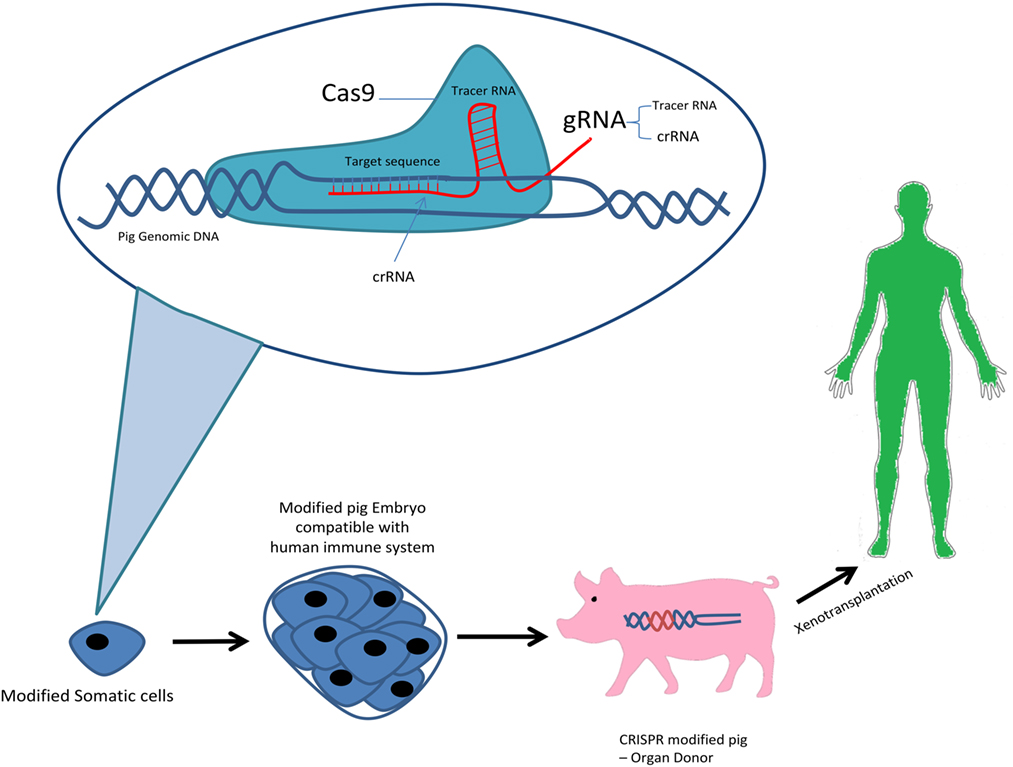
The extended time for liver transplants came from insights garnered in rat studies and highlights one of many ways that research in animals has helped provide practical applications affecting human health and treatment. Perhaps research in and with animals will provide a solution to the organ shortage problem as well. Researchers are investigating this possibility. Another recent report highlights how human organs for transplant may one day be grown as animal chimeras (or animal hybrids growing human-like organs) thanks to gene-editing techniques provided by CRISPR technology that allow for gene manipulation of blastocysts.9

Both of these studies show how scientific advances and research in animals might help save human lives and improve quality of life for those suffering from organ disease and deficiencies. Many people think that the only explanation for all of life sharing the same DNA code and similar physiologies is that naturalistic evolution has occurred. But it’s obvious our shared biologies provide a way for us to discover means to better care for creation and for others who suffer from various ailments and disease. As we consider these insights into how God has provided for us through shared biology with animals and capacities to discover ways to steward creation and care for one another better, we can see ways to help others.

Loving Our Neighbor

A hallmark of following Christ is that we love God with all our heart, soul, mind, and strength and that we love our neighbors as ourselves. All the law and prophets are fulfilled in these two great commandments. Our neighbor may be the one we find in need no matter who they are or what circumstances surround their needs (Matthew 5:42–47, 22:37–40; Luke 6:27–28, 10:25–37).

Organ donation really is a way to give the gift of life. And who knows whether such a gift might extend someone else’s life and provide greater opportunity for them to discover grace, generosity, and new life in Christ before their time runs out. These studies and our actions show how God allows us to discover ways to care for one another and creation, and by acts of mercy, to contribute to human flourishing.

Endnotes
  1. Raffaele Girlanda, “Deceased Organ Donation for Transplantation: Challenges and Opportunities,” World Journal of Transplantation 6, no. 3 (September 24, 2016): 451–59, doi.org/10.5500/wjt.v6.i3.451.
  2. “Scientists Triple Storage Time of Human Donor Livers,” National Institutes of Health, September 9, 2019, https://www.nih.gov/news-events/news-releases/scientists-triple-storage-time-human-donor-livers; Reinier J. de Vries et al., “Supercooling Extends Preservation Time of Human Livers,” Nature Biotechnology (September 9, 2019), doi.org/10.1038/s41587-019-0223-y.
  3. “Scientists Triple Storage Time of Human Donor Livers.”
  4. Girlanda, “Deceased Organ Donation for Transplantation.”
  5. “‘Opt Out’ Policies Increase Organ Donation,” Stanford SPARQ, accessed September 20, 2019, https://sparq.stanford.edu/solutions/opt-out-policies-increase-organ-donation.
  6. Runólfur Pálsson, “Organ Donation Law in Iceland: Is It Timely to Adopt the Intended Consent?,” trans. Google Translate, Læknablaðið: The Icelandic Medical Journal 103, no. 2 (February 2017): 65, doi:10.17992/lbl.2017.02.119.
  7. “Religion and Organ Donation,” National Kidney Foundation, accessed September 20, 2019, https://www.kidney.org/atoz/content/religion-organ-donation.
  8. Chris J. Rudge, “Organ Donation: Opting in or Opting Out?” British Journal of General Practice 68, no. 667 (February 2018): 62–63, doi.org/10.3399/bjgp18X694445.
  9. Alejandro De Los Angeles, Nam Pho, and D. Eugene Redmond Jr., “Generating Human Organs via Interspecies Chimera Formation: Advances and Barriers,” Yale Journal of Biology and Medicine 91, no. 3 (September 21, 2018): 333–42, https://www.ncbi.nlm.nih.gov/pmc/articles/PMC6153627/pdf/yjbm_91_3_333.pdf.

About Reasons to Believe

RTB’s mission is to spread the Christian Gospel by demonstrating that sound reason and scientific research—including the very latest discoveries—consistently support, rather than erode, confidence in the truth of the Bible and faith in the personal, transcendent God revealed in both Scripture and nature. Learn More »

Support Reasons to Believe

Your support helps more people find Christ through sharing how the latest scientific discoveries affirm our faith in the God of the Bible.

DONATE NOW


U.S. Mailing Address
818 S. Oak Park Rd.
Covina, CA 91724
  • P (855) 732-7667
  • P (626) 335-1480
  • Fax (626) 852-0178
Posted in Uncategorized | Leave a comment

The Communist Of The McCarthy Age Has Crept Back As Hyper-communist

By Will Myers

The organization of special interest groups (SIG) who collect, analyze, and distribute sensitive info about private citizens has taken control of our socio-political world. They now have the power to create or destroy a person’s livelihood. This snake organization is disguised as representing the people and works to take the place of religion (To be our god) and to undermine our U.S. Constitution. We need another leader who is in the image of Senator McCarthy to reorganize the Committee On Un-American Activity for the purpose of restraining hyper-communism whereas SIG is targeting private citizens with very sensitive info about the private citizen. The bible scripture noted below depicts SIG.

Ephesians 6:12 King James Version (KJV)

12 For we wrestle not against flesh and blood, but against principalities, against powers, against the rulers of the darkness of this world, against spiritual wickedness in high places.

Noting the above scripture gives us the reason SIG is working to push Christianity our of America. The whistleblower, Ed Snowden, testified about the existing machinery that collected the sensitive info about private citizens which had the facade of listening to our telephone conversations in order to intercept criminal intentions. The front position of the government was that they were listening for info indicating terrorist activity. But, this all turned into sensitive info about private citizens being back channeled to SIG.

We need another McCarthy to fight SIG, and clean the U.S. of hyper-communism. Those who distribute sensitive info about any private citizen should be punished. This would keep America free. I am sure that Trump is a hyper-communist, and support the acts of eliminating freedom in America.

The U.S. Supreme Court shall support the Un-American Committee alone with Christ Jesus which is the killing of SIG in America. I reiterate that I am referring to those special interests that target a private citizen, not the ones that use info for the sake of developing demographics to be used by businesses.

KILL THE SNAKE!


Posted in Uncategorized | Leave a comment