Can Science Detect the Creator’s Fingerprints in Nature?

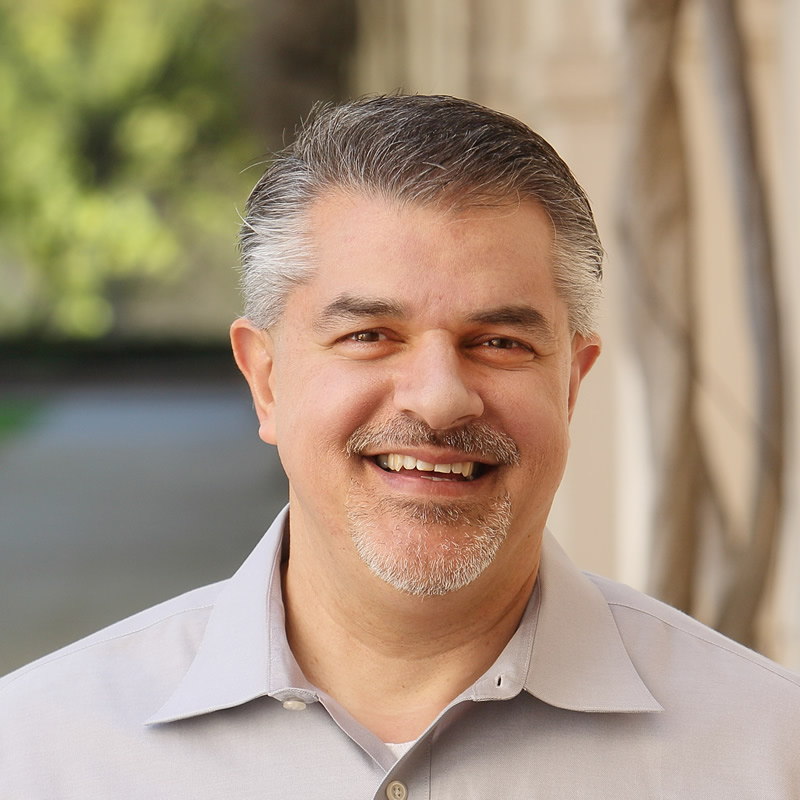
By Fazale Rana – April 12, 2017

Which of these does not know that the hand of the Lord has done this?

Job 12:9


In early March (2017), I took part in a forum at Samford University (Birmingham, AL), entitled Genesis and Evolution. At this two-day event, the panelists presented and discussed scientific and biblical perspectives on Young-Earth, Old-Earth, and Evolutionary versions of creationism.

The organizers charged me with the responsibility of describing Old-Earth Creationism (OEC) from a scientific vantage point, while also providing the rational for my views.

As part of my presentation, the organizers asked me to discuss the assumptions that undergird my views. One of the foundational tenets of OEC is an important idea taught in Scripture: God has revealed Himself to us through the record of nature. According to passages such as Job 12: 7-9, part of that revelation includes the ‘fingerprints’ He has left on His creation.

If Scripture is true, then scientific investigation should uncover evidence for design throughout the natural realm. Science should find God’s fingerprints. And, indeed, it has. As a biochemist, I am deeply impressed with the elegance, sophistication, and ingenuity of the cell’s molecular systems. In my view, these features reflect the work of a mind—a Divine Mind. But, the evidence for intelligent design in the biochemical realm is much more extensive. For example, the eerie similarity between the structure and function of biochemical systems, and the objects and devices produced by human designers further evinces the Creator’s handiwork. In my book The Cell’s Design, I show how the remarkable similarities serve to revitalize William Paley’s Watchmaker Argument for God’s existence.

To describe the hallmark features of human designs, Paley used the term contrivance. Human designs are contrivances. And so, are biological systems. If human contrivances require the work of human designers, then, it follows that biological systems—which, too, are contrivances—require a Divine designer. In The Cell’s Design, I introduce the concept of an intelligent design pattern. Following Paley, I identify several features that characterize human designs. Collectively, these characteristics form a pattern that can then be matched to the features of biological and biochemical systems. The greater the match between the intelligent design pattern and biological/biochemical systems, the greater the certainty that designs found in living systems are the work of a mind.

In response to my presentation at the Genesis and Evolution event, cell biologist Ken Miller from Brown University—a well-known critic of intelligent design—argued that creationism and intelligent design cannot be part of the construct of science, because science lacks the capability of detecting the supernatural. In his book, The Triumph of Evolution and the Failure of Creationism, paleontologist Niles Eldredge makes this very point:

“We humans can directly experience the material world only through our senses, and there is no way we can directly experience the supernatural. Thus, in the enterprise that is science, it isn’t an ontological claim that a God does not exist, but rather an epistemological recognition that even if such a God did exist, there would be no way to experience that God given the impressive, but still limited, means afforded by science. And that is true by definition.”1

But, as I pointed out during my presentation and elsewhere there are scientific disciplines predicated on science’s capacity to detect the activity of intelligent agency. One is SETI: The Search for Extraterrestrial Intelligence. Astronomers involved in this research program seek ways to distinguish between electromagnetic radiation emanating from astronomical objects from those hypothetically generated by intelligent agents that are part of alien civilizations. To put it another way, SETI is an intelligent design research program.

Research by scientists from the Harvard-Smithsonian Center for Astrophysics powerfully illustrates this point.2 These investigators propose that fast radio burst (FRBs) emanate from alien technology, specifically planet-sized transmitters powering interstellar probes.

Astronomers discovered FRBs in 2007. Since then, around two dozen exceedingly bright, millisecond bursts of radio emissions have been detected. Astronomers think that FRBs originate in distant galaxies, billions of light years away.

The Harvard-Smithsonian scientists calculate that the transmitters could generate enough energy from sunlight to move probes through space, if the light was directed to onto structures twice the size of Earth. Given the energies involved, the transmitters would have to be cooled. Again, the researchers estimate that a water-cooled device twice Earth’s size could keep the transmitter from melting.

The researchers recognize that construction of the transmitters lays beyond our technology, but is possible given the laws of physics. They speculate aliens built these transmitter to power light sails to move space craft, weighing a million tons and carrying living creatures across interstellar space.

These astronomers maintain that the transmitter would have to continually focus its beam on the light sails. FRBs originate when the transmitter and light sails briefly point in Earth’s direction due to the relative motion of the transmitter and light sail.

So, are FRBs evidence for alien technology? Avi Loeb, one of the Harvard-Smithsonian scientists, admits that their proposal is speculative, but justifies it because, “we haven’t identified a possible natural source with any confidence.”3 But, Loeb argues, “Deciding what’s likely ahead of time limits the possibilities. It’s worth putting ideas out there and letting the data be the judge.”4

So, contrary to the protests of scientists, such as Miller and Eldredge, science does have the tool kit to detect the handiwork of intelligent agents and even discern the capabilities and motives of the intelligent designer(s). So, why not let intelligent design proponents and creationists put their ideas out there and let the data be the judge?

It is interesting that the Harvard-Smithsonian astronomers think they can recognize the work of intelligent designers who possess capabilities beyond what we can understand—and, maybe, even imagine. They also think that they can discern the purpose behind the alien technology—space exploration. So why can’t science recognize the work of a Creator whose capabilities exist beyond what we can imagine?

So, considering the proposal by the Harvard-Smithsonian investigators, it is disingenuous for Miller, Eldredge, and other scientists, to reject, out of hand, the claim the scientific evidence for God’s fingerprints in biochemical systems. I contend that the intelligent design pattern that I describe in The Cell’s Design can be used to rigorously—and, even, quantitatively—characterize the Creator’s activity in biological systems. Moreover, as I have discussed previously, science has the tools to identify the designer.

As the apostle Paul wrote, evidence for the Creator is “clearly seen from what has been made.” (Romans 1:20) If only the scientific community would be willing to look.

Resources:

Fast Radio Bursts: E. T. Is Not Calling Home by Hugh Ross (article)

Fast Radio Bursts Update by Hugh Ross (article)

A Biochemical Watch Found in a Cellular Heath by Fazale Rana (article)

Can Science Identify the Intelligent Designer? by Fazale Rana (article)

The Cell’s Design By Fazale Rana (book)

Endnotes
  1. Niles Eldredge, The Triumph of Evolution and the Failure of Creationism (New York: Holt and Company, 200) p. 13.
  2. Harvard-Smithsonian Center for Astrophysics, “Could Fast Radio Burst Be Powering Alien Probes?” ScienceDaily (March 9, 2017), sciencedaily.com/releases/2017/03/170309120419.htm
  3. Harvard-Smithsonian Center for Astrophysics, “Could Fast Radio Burst Be Powering Alien Probes?” ScienceDaily (March 9, 2017), sciencedaily.com/releases/2017/03/170309120419.htm
  4. Harvard-Smithsonian Center for Astrophysics, “Could Fast Radio Burst Be Powering Alien Probes?” ScienceDaily (March 9, 2017), www.sciencedaily.com/releases/2017/03/170309120419.htm

Share to PinterestShare to More

About Reasons to Believe

RTB’s mission is to spread the Christian Gospel by demonstrating that sound reason and scientific research—including the very latest discoveries—consistently support, rather than erode, confidence in the truth of the Bible and faith in the personal, transcendent God revealed in both Scripture and nature. Learn More »

Support Reasons to Believe

Your support helps more people find Christ through sharing how the latest scientific discoveries affirm our faith in the God of the Bible.


U.S. Mailing Address
818 S. Oak Park Rd.
Covina, CA 91724
  • P (855) 732-7667
  • P (626) 335-1480
  • Fax (626) 852-0178

Reasons to Believe logo

Posted in Uncategorized | Leave a comment

Democracy vs. Oligarchy

By Will Myers

It’s a gross misleading of the citizens by stating the Right vs. Left. It is not so; it is our democracy vs. the oligarchy of America; furthermore, it’s democracy vs. oligarchy of the world. There are special interest groups (SIG) who collect, analyze (dossiers), and distribute sensitive info, targeting private citizens with devastating effects upon the targeted person. The SIG snake organization is an operative of the oligarchy who seeks control of the citizens.

The American oligarchs have never been believers in a truly free democracy. They fear the loss of their assets. In the beginning, we have had a fair balance between control of the masses vs. restricting the capitalizing upon the citizens by the oligarchy. Recently, with the advent of the advancement of technology, SIG has many new toys that give an advantage to the oligarchy. Very secretive info about each person’s life can be in the files of a CEO of a corporation that goes beyond the person’s job description, but into their private lifestyle. SIG can now create adversities in one’s life with devastating effect – the destruction of one’s livelihood.

America is moving away from a free democracy toward hyper-communism whereas the state owns the minds of the citizens in an ideal sense, but having definite powers to destroy any citizens’ livelihood and happiness definitely.

Hyper-communism is the desired government of the oligarchy. Being connected in order to get crumbs from the SIG snake organization as they become your god; quickly, the organization shall begin acting on their behalf and best interest as opposed to your best interest. For the front office to be interested in you no longer means a good opportunity but could mean teaching, disciplinary, or a molding experience. One can face adversity on the job about something that happened weeks prior hundreds of miles away of no concern of your job but is a concern of the hyper-communist SIG organization for the oligarchy. This is a burden on your life and a god between you and your GOD, Heavenly Father. Hyper-communism is anti-U.S. Constitution and by all means anti-democracy.

Posted in Uncategorized | Leave a comment

Rats’ Hide-and-Seek Game Affirms Biblical Creation

BY HUGH ROSS – SEPTEMBER 30, 2019

In many war movies that were released fifty to eighty years ago, an infantry lieutenant would challenge his platoon with the question, “Are we mice or are we men?” The platoon soldiers would shout back, “We are men! We are men!” The platoon would then charge into battle, suffering horrific casualties before ultimately winning a great victory. I do remember one spoof of such movies where the soldiers shouted, “We are mice! We are mice!” and then beat a hasty retreat.

Rodents share a lot more with humans than we realize, according to a research paper recently published in Science.1 The new research affirms Bible passages written more than three thousand years ago that teach that God designed certain bird and mammal species to form relationships with human beings and to serve and please us—each species in its own unique way.

Four neuroscientists at Humboldt University in Berlin headed by Annika Reinhold first noted that mammals can be trained to perform complex behaviors, tasks, and games by motivating the mammals with food treats. They developed a set of experiments to determine if mammals can be trained in an environment where the rewards are not food treats but instead social interactions with humans.

Hide-and-Seek Game Behavior
A characteristic of animal play behavior is that play occurs freely (there is no compulsion for the animals to play) and it provides no material profit. The predominant benefit to the animals is social interaction.

Reinhold’s team sought to establish if rats would play with humans and if the level of play would be more complex than if rats played with one another without human intervention. In their experiments, the team also desired to discover if the rats would play with humans when the only reward for playing would be additional social interaction with the humans. Finally, they wanted to find out if certain play activities were correlated with prefrontal cortex activity.

Reinhold and her colleagues set up the role-play game hide-and-seek with ten adolescent male rats. They tested whether the rats could play a two-player rat-and-human game.

In the “seek” part of the game the human would place a rat in a box and close the lid. Closing the lid of the start box signaled that the rat was the seeker. The human then hid in one of several locations and remotely opened the box. The rat then searched for the human. A close approach (less than 40 centimeters) to the human with a clear line of sight was scored as a “find.” After the rat found the human, the human would reward the rat with playful interaction before returning the rat to the box. Readers can watch a video clip of the seek part of the game here:

In the “hide” part of the game the human left the start box open and crouched motionlessly next to it. This circumstance cued the rat to hide. The human would wait 90 seconds and search for the rat. Upon finding the rat the human would reward the rat with playful interaction. Readers can watch a video clip of the hide part of the game here:

all ten rats learned the seek part of the game in less than two weeks. nine of the rats in the same time period learned to hide and switch roles. reinhold’s team observed that the rats kept track of past hiding locations and, hence, became more proficient with practice. the rats also quickly developed a preference for opaque and cardboard boxes over transparent ones.

surprisingly, most of the rats in the hide part of the game showed re-hide and runaway behaviors. evidently, the rats preferred prolonging the game over getting a quick social reward. readers can watch a video clip of the re-hide and runaway part of the game here:

The rats would vocalize when they found the human but remained silent when the human found them. This vocalization was not shaped by human conditioning since the rat vocalizations were inaudible to the humans.

The rats were strategic. “Seeking strategies included systematic searches, use of visual cues, and targeting of past hiding locations. Hiding strategies included preferences for opaque enclosures, being silent when hiding, and changing hiding locations.”2

Neural Correlations
In testing neural correlations Reinhold’s team did tetrode (electrophysiological) recordings of single neurons in the medial prefrontal cortex, a brain area associated with encoding social proximity. The recordings revealed “neuronal activity specific to phases and events of hide-and-seek.”3

These hide-and-seek experiments showed that rats are capable of decision-making, navigation, and role-playing. The tests also demonstrated that rats are highly motivated to socially engage humans and, when doing so, manifest intellectual and relational capabilities beyond what occurs in the wild where they have no contact with humans.

Biblical Affirmations
The researchers did not discuss philosophical inferences of their experiments beyond suggesting that the behaviors they observed may have evolutionary implications. Their results, however, do affirm several principles found in Genesis 1Exodus 21, and the book of Job 38–42.

The first biblical principle is that God created three different broad categories of life:

  1. life-forms that are purely physical;
  2. life-forms that are physical and soulish, meaning that they are endowed with mind, will, and emotions and the capability to form relationships with and to serve and please human beings;
  3. human beings who are physical, soulish, and spiritual and endowed with the capability of forming relationships with and serving and pleasing God.

A second biblical principle is that the intellectual and relational capabilities of individuals within the second and third categories of life are much enhanced when those individuals are strongly bonded to a higher being.

Thirdly, individuals within the second and third categories of life are happiest when they are strongly bonded to a higher being.

This hierarchy of relational bonds and fulfillment displays the activity of a Creator—One who enjoys not only creating, but also seeing his creatures enjoy each other.

Resource

Endnotes
  1. Annika Stefanie Reinhold et al., “Behavioral and Neural Correlates of Hide-and-Seek in Rats,” Science 365, no. 6458 (September 13, 2019): 1180–83, doi:10.1126/science.aax4705.
  2. Reinhold et al., “Behavioral and Neural Correlates,” 1182.
  3. Reinhold et al., “Behavioral and Neural Correlates,” 1183.

About Reasons to Believe

RTB’s mission is to spread the Christian Gospel by demonstrating that sound reason and scientific research—including the very latest discoveries—consistently support, rather than erode, confidence in the truth of the Bible and faith in the personal, transcendent God revealed in both Scripture and nature. Learn More »

Support Reasons to Believe

Your support helps more people find Christ through sharing how the latest scientific discoveries affirm our faith in the God of the Bible.

DONATE NOW


U.S. Mailing Address
818 S. Oak Park Rd.
Covina, CA 91724
  • P (855) 732-7667
  • P (626) 335-1480
  • Fax (626) 852-0178

Reasons to Believe logo

Posted in Uncategorized | Leave a comment

Does the Bible Teach Big Bang Cosmology?

BY HUGH ROSS – AUGUST 26, 2019

One of the most popular articles I have written is “Big Bang—The Bible Taught It First!” I wrote it with the encouragement and assistance of theologian John Rea and we published it in Reasons to Believe’s Facts for Faith magazine in 2000.1 In the two decades since then, one of the most common objections I have received from skeptics is that the Bible teaches no such thing. Who is correct?

Biblical Evidence
John Rea and I did not claim in this article that the Bible teaches all the fundamental features of the big bang creation model. We did explain, however, how it teaches the four most fundamental properties of big bang cosmology. The four properties it teaches are:

  1. an ex nihilo [out of nothing] beginning for the universe
  2. expansion of the universe from its ex nihilo beginning
  3. constant laws of physics
  4. a law of decay that pervades the entirety of the universe

These four properties imply that the universe must get progressively colder, in a highly specified manner, as it expands from its ex nihilo beginning. A pervasive law of decay, known today as the second law of thermodynamics or the law of entropy or Murphy’s law, implies that any system that expands, whether it be the piston chamber in an automobile engine or the entire universe, must get colder in proportion to the degree of expansion.

The notion that the Bible describes the four most important features of the big bang creation model makes a powerful apologetics case for the Christian faith and for the divine inspiration and inerrancy of the Bible. One reason why is that for over 2,500 years the Bible stood alone as the only book, outside of commentaries on the Bible, that made such claims about the universe. It was not until 1925 that any scientist made note that the universe possessed such features. The Belgian Roman Catholic priest and astrophysicist Abbé Georges Lemaître was the first scientist to write about the expansion of the universe from a cosmic beginning.2

Additionally, the Bible’s foreshadowing these four fundamental features of big bang cosmology—thousands of years before any astronomer had ever discerned that the universe possessed such properties—establishes the Bible’s predictive power. The only reasonable explanation for such a dramatic demonstration of predictive power is that the Bible was inspired by the One who created the universe and controlled its history.

Reaction from Nontheists
Understandably, people who deny the existence of God strongly react to the claim that the Bible teaches the four most important features of big bang cosmology. In every public debate I have had with an atheist, the opponent has asserted that the Bible makes no such declarations. During the last several months, an average of at least one response per day has appeared on my Twitter page denying that the Bible teaches any of the features of the big bang creation model.

These nontheists insist that I am using my twenty-first century knowledge of astronomy to read into the Bible what the Bible has never taught. They contend that I am imposing literal interpretations upon Bible passages that are clearly intended to be figurative. I consistently observe, however, that these assertions are made by people who have neither read my article nor the Bible passages I cite. My article explains why these passages must be understood as literal declarations and not mere figures of speech.

Is It Just Hindsight Interpretation?
The nontheists who have engaged me about the Bible and the big bang avow that they don’t need to read my article or the biblical passages I cite to know that my claims are wrong. No theologian previous to the twentieth century ever commented on the Bible making such claims, they say, which is sufficient evidence that it is just my twenty-first–century astrophysical bias that makes me think the Bible teaches big bang features of the universe.

Here again, however, these nontheistic skeptics are mistaken. Long before the twentiethcentury, both Christian and Jewish theologians wrote about the universe possessing properties that today we recognize as descriptives of the big bang creation model.

Meanwhile, these skeptics tend not to dispute that the Bible teaches that the laws of physics are constant and that one of those laws is a pervasive law of decay. The claim for the former is stated in passages in Genesis 1–3Jeremiah 33Romans 8:19–22, and Revelation 21:1–5. The claim for the latter is found throughout Proverbs and especially in Ecclesiastes and Romans 8:18–22. Nontheists unfamiliar with these Bible passages note that these two properties—at least as far as Earth and its life are concerned—would have been evident to pre-twentieth-century populations.

Pre-Twentieth-Century Theologians on Ex Nihilo Creation and Cosmic Expansion

Many nontheists dispute that any theologians previous to the twentieth century had ever discerned that the Bible teaches an ex nihilo beginning for the universe or that the Bible teaches the universe has expanded and is expanding.

However, many pre-twentieth-century Jewish and Christian theologians wrote about the Bible’s teachings concerning the characteristics of the universe. For the sake of brevity, I will highlight only some of the comments by a few of the more prominent ones.

Irenaeus, Bishop of Lyons (120–202), stated, “God, according to His pleasure, in the exercise of His own will and power, formed all things (so that those things which now are should have an existence) out of what did not previously exist.”3

Augustine of Hippo (354–430) wrote in his Confessions, “You [God] were, and besides you nothing was. From nothing, then, you created heaven and earth.”Later in Confessions he added, “You created them [the heavens and the earth, that is, the material universe] from nothing, not from your own substance or from some matter not created by yourself or already in existence. …You created the matter from absolutely nothing and the form of the world from this formless matter.”5

The most famous of the medieval Jewish theologians, Moses Maimonides (1135–1204), also known as the Rambam, wrote extensively about Old Testament declarations concerning the beginning of the universe. In his 13 Principles of Faith, Maimonides stated, “We believe that this Oneness is necessarily primary. All that exists other than Him is not primary in relationship to Him. There are many references in the Scriptures. This is the fourth Principle, as affirmed by the verse (Deuteronomy 33:27): ‘God who preceded all existence is a refuge…’”6Here, Maimonides explicitly states that the universe cannot be eternal. It must have a beginning.

In The Guide for the Perplexed, Maimonides elucidated what the Torah (the first five books of the Bible) stated about God, the universe, space, and time. He wrote that the entire universe “was brought into existence by God after having been purely and absolutely nonexistent.”7Maimonides declared that Moses in the Torah asserted “that there is nothing eternal in any way at all existing simultaneously with God.”8 Therefore, according to Maimonides, the Mosaic position puts forth a view of creation that is both ex nihilo and de novo (from [the] new).

Maimonides explains that creation de novo does not mean God exists in time and space and picks a particular moment to begin his creations.9 He asserts that time itself is one of these creations. It is not eternal; only God is eternal. Only God is responsible for creating the universe.10 Maimonides also clarifies his definition of nothing and the impotence of nothing: “if nothing is pure and absolute, it cannot be the material cause of anything; it is, after all, nothing.”11

In the thirteenth century, another medieval Jewish theologian, Moses Nachmanides wrote about the expansion of the universe: “There is only one physical creation, and that creation was a tiny speck. . . . As this speck expanded out, this substance—so thin it has no essence—turned into matter as we know it.”12

Evidence for All Readers
In my book The Fingerprint of God I documented the strong reaction by nontheistic astronomers and physicists against the big bang creation model when Georges Lemaître and other astronomers first seriously promoted it to the scientific community.13 These nontheistic astronomers and physicists recognized the concordance between the big bang and biblical cosmology. Since this recognition occurred before the big bang creation model became mainstream astrophysics, these scientists cannot be accused of hindsight bias.

While it’s true that twentieth and twenty-first-century discoveries about the universe have brought more attention to biblical texts describing the origin and characteristics of the universe, readers both before and after the twentieth century recognized and wrote about the Bible’s cosmological declarations. Georges Lemaître, Edwin Hubble, Albert Einstein, and George Gamow were not the first humans to talk and write about the big bang creation model. That credit goes back to biblical authors Job, Moses, David, Isaiah, Jeremiah, Zechariah, Paul, and the author of Hebrews. They discerned and wrote about features of our big bang universe because their writings were inspired by the One who created and designed the cosmos.

Endnotes
  1. Hugh Ross with John Rea, “Big Bang—The Bible Taught It First!,” Facts for Faith (quarter 3, 2000): 26–32, https://www.reasons.org/explore/publications/facts-for-faith/read/facts-for-faith/2000/07/01/big-bang-the-bible-taught-it-first! The article has been reissued as an RTB101 paper and appears as a chapter in both The Creator and the Cosmos (pages 25–31) and A Matter of Days (pages 135–44).
  2. Abbé G. Lemaître, “A Homogeneous Universe of Constant Mass and Increasing Radius Accounting for the Radial Velocity of Extra-Galactic Nebulae,” Monthly Notices of the Royal Astronomical Society 91, issue 5 (March 13, 1931): 483–90, doi:10.1093/mnras/91.5.483. The original paper appears in French in Annales de la Société Scientifique de Bruxelles, Tome XLVII, Serie A, Premiere Partie (April 1927): 49.
  3. Irenaeus, Against Heresies, Book II, chapter 10.2 in Alexander Roberts and James Donaldson, eds., Ante-Nicene Fathers, Volume 1, The Apostolic Fathers, Justin Martyr, Irenaeus (Peabody, Massachusetts: Hendrickson, 1999): 370.
  4. Saint Augustine, Confessions, R. S. Pine-Coffin, trans. (London, UK: Penguin Books, 1961), Book XII.7, 285.
  5. Augustine, Confessions, 344.
  6. Moses Maimonides, The Guide for the Perplexed, translated by Shlomo Pines (Chicago: University of Chicago Press, 1963), Guide II.13, 281.
  7. Maimonides, Guide for the Perplexed, Guide II.13, 281–82; Kenneth Seeskin, “Metaphysics and Its Transcendence” in Kenneth Seeskin, ed., The Cambridge Companion to Maimonides (New York: Cambridge University Press, 2005), 92.
  8. Maimonides, The Guide for the Perplexed, 281–82; Seeskin, The Cambridge Companion, 92.
  9. Maimonides, The Guide for the Perplexed, 281–82; Seeskin, The Cambridge Companion, 92.
  10. Maimonides, The Guide for the Perplexed, 281–82; Seeskin, The Cambridge Companion, 92.
  11. Maimonides in Kenneth Seeskin, Searching for a Distant God: The Legacy of Maimonides (New York: Oxford University Press, 2000): 71.
  12. Moses Nachmanides, The Spiritual Roots of NASA’s Big Bang Premise, Kabbalist Cosmological Wisdom: Modern Cosmology in Ancient Form, 12–13, https://sites.google.com/site/oldshepherd1935/kabbalistcosmologicalwisdom; also available at http://www.fixedearth.com/nasas-spiritual-roots.html.
  13. Hugh Ross, The Fingerprint of God, commemorative ed. (Covina, CA: RTB Press, 2010): 46–48, 53–54, 62–64, https://shop.reasons.org/product/271/fingerprint-of-god-commemorative-edition.

About Reasons to Believe

RTB’s mission is to spread the Christian Gospel by demonstrating that sound reason and scientific research—including the very latest discoveries—consistently support, rather than erode, confidence in the truth of the Bible and faith in the personal, transcendent God revealed in both Scripture and nature. Learn More »

Support Reasons to Believe

Your support helps more people find Christ through sharing how the latest scientific discoveries affirm our faith in the God of the Bible.

DONATE NOW


U.S. Mailing Address
818 S. Oak Park Rd.
Covina, CA 91724
  • P (855) 732-7667
  • P (626) 335-1480
  • Fax (626) 852-0178

Reasons to Believe logo

Posted in Uncategorized | Leave a comment

No Greater Love Than to Lay One’s Life (or Organs) Down for One’s Friends

BY ANJEANETTE ROBERTS – SEPTEMBER 26, 2019

Greater love has no one than this: to lay down one’s life for one’s friends. — John 15:13

More than 6,000 people die every year in the US because they didn’t receive a transplant in time.1 Help may arrive soon, according to a recent press release from the National Institutes of Health, which highlights research that might help save some of these lives. Researchers have turned data from successful studies of organ preservation in rats to applications in human health and treatments.

Keeping organs viable is key. To meet that challenge “scientists have greatly extended the amount of time human livers can be stored for transplantation by modifying a protocol that extends the viability of rat livers. Previously, human livers were only viable for an average of nine hours, but the new method of preservation maintains liver tissue for up to 27 hours, giving transplant doctors and patients a much longer timeframe to work with.”2

Due to tissue damage caused by the formation of ice crystals in liver tissue, human livers for transplant are routinely stored and transported at temperatures above freezing (4°C). This process has allowed about nine hours for viable liver transplants from donor to recipient. Previous research conducted in rats allowed development of a method for supercooling livers by perfusing them with a cooled protective solution that included additives of a modified glucose compound and polyethylene glycol (a component of antifreeze). By this method, rat livers could be stored at temperatures just below freezing (-6°C) yet avoiding the formation of ice crystals, thus extending the time for successful transplants. However, human livers are much (200 times) larger than rat livers, and when this method is directly applied to human livers it does not sufficiently protect them from the formation of damaging ice crystals.

Prolonging Organ Storage

Working in collaboration, researchers at Massachusetts General Hospital and Harvard Medical School have modified the protocol with three additional steps that now allow perfusion of human livers and prolonged storage at subzero temperatures.

  • They removed air from the supercooling storage bag, eliminating the air-solution interface where ice crystal formation progresses more rapidly.
  • They included two more additives to the protective solution: trehalose and glycerol. Both of these components are used in cryogenic preservation of cells at temperatures far below zero, but had never been used in organs destined for transplant.
  • They developed a perfusion delivery system—using machine perfusion rather than manual perfusion—that solves the problem of delivering a more viscous modified supercooling solution. Machine perfusion allows profusion at 4°C with the traditional protective solution followed by gradual decreases in temperature while increasing the concentration of the additives.

Researchers have yet to implement this new protocol in human transplants, but traditional standards of assessing liver viability indicate that this process will not negatively affect these organs.3 This is certainly good news. The increase in time of viability gives transplant teams more time to get an organ from the deceased donor to the neediest recipient, not just the closest. So this factor may save some lives each year as patients in critical condition may be able to receive organs from more distant sites.

Every Life Saved Matters

Over 120,000 people remained on the wait list at the end of 2015—a year in which nearly 31,000 transplants took place. Despite the amazing ability to save over 30,000 lives in a single year, the gap between the number of patients on the wait list and the limited number of available organs continues to widen.4

Although the news from NIH is promising and may save thousands of lives, another challenge remains. The time from harvest to transplant is not the primary reason why so many people are left on the donor recipient lists or find that their time runs out before receiving a donor organ. No, the biggest problem is the insufficient number of donors/organs available.

One possible solution to the organ shortage problem might be to change policies surrounding organ transplants from appropriate deceased donors. Many people believe that there would be no shortage of organ donations if we would adopt a national opt-out policy (also known as intended consent or intended approval) as compared to the current opt-in policy (also known as explicit consent).5

There are hard and soft versions of intended consent policies.6 A soft version of intended consent is likely to do well in the US where there is widespread religious support for organ donations already.7 Under a soft policy of intended consent, the intent for organ donation is assumed, but the option to opt out remains open to the family.8 If increasing human organ donations doesn’t meet the organ shortfall, perhaps additional animal research will close the gap.

How Shared Physiology and Genetic Similarity Help

The extended time for liver transplants came from insights garnered in rat studies and highlights one of many ways that research in animals has helped provide practical applications affecting human health and treatment. Perhaps research in and with animals will provide a solution to the organ shortage problem as well. Researchers are investigating this possibility. Another recent report highlights how human organs for transplant may one day be grown as animal chimeras (or animal hybrids growing human-like organs) thanks to gene-editing techniques provided by CRISPR technology that allow for gene manipulation of blastocysts.9

Both of these studies show how scientific advances and research in animals might help save human lives and improve quality of life for those suffering from organ disease and deficiencies. Many people think that the only explanation for all of life sharing the same DNA code and similar physiologies is that naturalistic evolution has occurred. But it’s obvious our shared biologies provide a way for us to discover means to better care for creation and for others who suffer from various ailments and disease. As we consider these insights into how God has provided for us through shared biology with animals and capacities to discover ways to steward creation and care for one another better, we can see ways to help others.

Loving Our Neighbor

A hallmark of following Christ is that we love God with all our heart, soul, mind, and strength and that we love our neighbors as ourselves. All the law and prophets are fulfilled in these two great commandments. Our neighbor may be the one we find in need no matter who they are or what circumstances surround their needs (Matthew 5:42–47, 22:37–40; Luke 6:27–28, 10:25–37).

Organ donation really is a way to give the gift of life. And who knows whether such a gift might extend someone else’s life and provide greater opportunity for them to discover grace, generosity, and new life in Christ before their time runs out. These studies and our actions show how God allows us to discover ways to care for one another and creation, and by acts of mercy, to contribute to human flourishing.

Endnotes
  1. Raffaele Girlanda, “Deceased Organ Donation for Transplantation: Challenges and Opportunities,” World Journal of Transplantation 6, no. 3 (September 24, 2016): 451–59, doi.org/10.5500/wjt.v6.i3.451.
  2. “Scientists Triple Storage Time of Human Donor Livers,” National Institutes of Health, September 9, 2019, https://www.nih.gov/news-events/news-releases/scientists-triple-storage-time-human-donor-livers; Reinier J. de Vries et al., “Supercooling Extends Preservation Time of Human Livers,” Nature Biotechnology (September 9, 2019), doi.org/10.1038/s41587-019-0223-y.
  3. “Scientists Triple Storage Time of Human Donor Livers.”
  4. Girlanda, “Deceased Organ Donation for Transplantation.”
  5. “‘Opt Out’ Policies Increase Organ Donation,” Stanford SPARQ, accessed September 20, 2019, https://sparq.stanford.edu/solutions/opt-out-policies-increase-organ-donation.
  6. Runólfur Pálsson, “Organ Donation Law in Iceland: Is It Timely to Adopt the Intended Consent?,” trans. Google Translate, Læknablaðið: The Icelandic Medical Journal 103, no. 2 (February 2017): 65, doi:10.17992/lbl.2017.02.119.
  7. “Religion and Organ Donation,” National Kidney Foundation, accessed September 20, 2019, https://www.kidney.org/atoz/content/religion-organ-donation.
  8. Chris J. Rudge, “Organ Donation: Opting in or Opting Out?” British Journal of General Practice 68, no. 667 (February 2018): 62–63, doi.org/10.3399/bjgp18X694445.
  9. Alejandro De Los Angeles, Nam Pho, and D. Eugene Redmond Jr., “Generating Human Organs via Interspecies Chimera Formation: Advances and Barriers,” Yale Journal of Biology and Medicine 91, no. 3 (September 21, 2018): 333–42, https://www.ncbi.nlm.nih.gov/pmc/articles/PMC6153627/pdf/yjbm_91_3_333.pdf.

About Reasons to Believe

RTB’s mission is to spread the Christian Gospel by demonstrating that sound reason and scientific research—including the very latest discoveries—consistently support, rather than erode, confidence in the truth of the Bible and faith in the personal, transcendent God revealed in both Scripture and nature. Learn More »

Support Reasons to Believe

Your support helps more people find Christ through sharing how the latest scientific discoveries affirm our faith in the God of the Bible.

DONATE NOW


U.S. Mailing Address
818 S. Oak Park Rd.
Covina, CA 91724
  • P (855) 732-7667
  • P (626) 335-1480
  • Fax (626) 852-0178
Posted in Uncategorized | Leave a comment

The Communist Of The McCarthy Age Has Crept Back As Hyper-communist

By Will Myers

The organization of special interest groups (SIG) who collect, analyze, and distribute sensitive info about private citizens has taken control of our socio-political world. They now have the power to create or destroy a person’s livelihood. This snake organization is disguised as representing the people and works to take the place of religion (To be our god) and to undermine our U.S. Constitution. We need another leader who is in the image of Senator McCarthy to reorganize the Committee On Un-American Activity for the purpose of restraining hyper-communism whereas SIG is targeting private citizens with very sensitive info about the private citizen. The bible scripture noted below depicts SIG.

Ephesians 6:12 King James Version (KJV)

12 For we wrestle not against flesh and blood, but against principalities, against powers, against the rulers of the darkness of this world, against spiritual wickedness in high places.

Noting the above scripture gives us the reason SIG is working to push Christianity our of America. The whistleblower, Ed Snowden, testified about the existing machinery that collected the sensitive info about private citizens which had the facade of listening to our telephone conversations in order to intercept criminal intentions. The front position of the government was that they were listening for info indicating terrorist activity. But, this all turned into sensitive info about private citizens being back channeled to SIG.

We need another McCarthy to fight SIG, and clean the U.S. of hyper-communism. Those who distribute sensitive info about any private citizen should be punished. This would keep America free. I am sure that Trump is a hyper-communist, and support the acts of eliminating freedom in America.

The U.S. Supreme Court shall support the Un-American Committee alone with Christ Jesus which is the killing of SIG in America. I reiterate that I am referring to those special interests that target a private citizen, not the ones that use info for the sake of developing demographics to be used by businesses.

KILL THE SNAKE!


Posted in Uncategorized | Leave a comment

The Sneaking In Of Hyper-communism — Intelligent Design and Biblical Scripture

By Will Myers America had the lofty goal of a free, high-quality democracy. We are no longer on that course. Our democracy is moving toward hyper-communism whereas special interest groups (SIG) monitor each citizen by collecting sensitive information; analyzing the info while creating dossiers that are used to target each private citizen (Ed Snowden, whistleblower, […]

via The Sneaking In Of Hyper-communism — Intelligent Design and Biblical Scripture

Posted in Uncategorized | 1 Comment

The Sneaking In Of Hyper-communism

By Will Myers

America had the lofty goal of a free, high-quality democracy. We are no longer on that course. Our democracy is moving toward hyper-communism whereas special interest groups (SIG) monitor each citizen by collecting sensitive information; analyzing the info while creating dossiers that are used to target each private citizen (Ed Snowden, whistleblower, exposed design of partial socio-political machinery). The end results are the molding of the mind of each citizen by the use of intimidation and coercion. The goal of instituting hyper-communism has been an objective for a long time, only recently has there been leaps and bounds in its advancements; setting the stage for SIG to institute hyper-communism.

The nature of SIG who is the enemy of democracy is depicted in the biblical book of Ephesians 6:12;

For we wrestle not against flesh and blood, but against principalities, against powers, against the rulers of the darkness of this world, against spiritual wickedness in high places.”

The SIG snake organization is very divisive and covert because it is a criminal enterprise as defined by our U.S. Constitution. SIG has been taking control of our governorship. SIG is anti-Christian. Christ Jesus had to be pushed out of public schools, workplaces, and other public places in order to attack the individual.

SIG desires to be our god.

SIG is un-American. Senator McCarthy’s Committee on Un-American Activity may have exercised a too broad of an overreach during the early 50″s, but I believe that they were attempting to preserve our emerging democracy from SIG because of the powerful impressive tool of television which could change the attitudes of the citizens rapidly and substantially.

SIG must be restrained or else we possibly could be mentally enslaved and kept in a designated mental box in the not so far future. SIG has infested our democracy and is ubiquitous. We have a question of freedom of speech which is a necessary element of our free democracy. Speech that expresses an opposing view is healthy for a free, high-quality democracy. SIG orchestrates adversity in our lives; it lives and thrives on conflicts. It’s SIG’s plan for our lives or it’s God’s plan for our lives. SIG is an enemy of God and the U.S. Constitution.


Posted in Uncategorized | 2 Comments

Three Goals in a Christian Apologetics Encounter

BY KENNETH R. SAMPLES – AUGUST 20, 2019

Recently someone asked me how you can know if you have had a successful apologetics encounter. My immediate answer was that defending the faith (Greek: apologia) is never easy and one must trust in God’s grace for the results. Ultimately, I believe that only God by his extraordinary grace can instill a desire for himself in a human being.

Yet I do think there are important goals to strive for in apologetics interactions. So whether it’s a television or radio interview, a formal debate, or a personal discussion with someone, I generally have three goals in mind when engaging in the enterprise of apologetics. If I can work toward accomplishing these goals, then I think my time of defending the faith has been well served.

3 Broad Goals of Christian Apologetics Interactions

First, I try to present clear, careful, and cogent arguments for my faith. Whether presenting arguments for God’s existence, a defense of the Christian worldview, or an explanation of Christian truth claims like Jesus’s incarnation, atonement, or resurrection—I endeavor to convey what I believe as a historic Christian and why I think it is indeed true. I want people to know that they can embrace Christianity because it is true.

Second, I attempt to demonstrate an intellectual code of conduct by striving to treat other people and their beliefs the way I want mine treated. That means I try to engage with other people’s beliefs and arguments with respect and in a fair-minded manner. I work to discipline myself to carefully listen to others in order to understand their beliefs, arguments, and objectionsMy desire, especially in debate, is to render an honest and fair assessment of my opponent’s position.

Third, I look to build bridges with others when I can do so without compromising my beliefs and values. Because all people are made in God’s image and everyone benefits from general revelation and common grace, there are inevitably important places where I can find common ground with others. I want to have meaningful connections with other people, and finding places of agreement often provides further opportunities for authentic dialogue.

Of course, I’m not always able to accomplish these three lofty goals. There have been times when my apologetics efforts have been weak, argumentative, and excessively confrontational. Becoming a skillful Christian apologist takes deliberate intellectual preparation, practice, and growth in character. As an apologist, I have learned from my rocky encounters. But no matter how much I learn, I still humbly ask the Triune God to use my modest efforts in communicating and defending the great truths of historic Christianity.

Reflections: Your Turn

Of the three goals, which is the most important? Which is hardest to achieve? Visit Reflectionson WordPress to comment with your response.

Resources

Here is a link to an apologetics dialogue-debate I had with a Hindu scholar: https://www.premierchristianradio.com/Shows/Saturday/Unbelievable/Episodes/Unbelievable-Krishna-Christ-and-Hinduism-debate-Ken-Samples-and-Dipen-Rajyaguru

Here is a link to an apologetics dialogue-debate I had with a Buddhist scholar: https://www.premierchristianradio.com/Shows/Saturday/Unbelievable/Episodes/Unbelievable-Buddhism-Christianity-Nirvana-Salvation-Alex-Crowe-Ken-Samples

For further study in Christian apologetics, I hope you’ll consider four of my books: Without a Doubt: Answering the 20 Toughest Faith Questions (Grand Rapids: Baker, 2004); A World of Difference: Putting Christian Truth-Claims to the Worldview Test (Grand Rapids: Baker, 2007); 7 Truths That Changed the World (Grand Rapids, MI: Baker, 2012); God among Sages: Why Jesus Isn’t Just Another Religious Leader (Grand Rapids, MI: Baker, 2017).

About Reasons to Believe

RTB’s mission is to spread the Christian Gospel by demonstrating that sound reason and scientific research—including the very latest discoveries—consistently support, rather than erode, confidence in the truth of the Bible and faith in the personal, transcendent God revealed in both Scripture and nature. Learn More »

Support Reasons to Believe

Your support helps more people find Christ through sharing how the latest scientific discoveries affirm our faith in the God of the Bible.

DONATE NOW


U.S. Mailing Address
818 S. Oak Park Rd.
Covina, CA 91724
  • P (855) 732-7667
  • P (626) 335-1480
  • Fax (626) 852-0178

Reasons to Believe logo

Posted in Uncategorized | Leave a comment

General Relativity and Cosmic Creation Pass Another Test, Part 1

By Hugh Ross – September 9, 2019

Share to PinterestShare to More

It may be surprising to learn that a star orbiting the Milky Way Galaxy’s black hole has produced evidence for one of the most tested and implication-laden theories of science—general relativity—but that’s what’s happened. An international team of astronomers, equipped with sophisticated measuring instruments, has analyzed data they’ve captured from recent measurements of the star’s orbit and provided evidence buttressing the idea of a cosmic beginning and, hence, a causal agent. I’ll explain the findings in this post and will discuss the philosophical implications in next week’s entry.

Implications of a Beginning
Albert Einstein’s theory of general relativity gave astronomers their first indication that the universe had a beginning, implying a cosmic Beginner. As I demonstrated in my first full-length book, The Fingerprint of God, a straightforward solution of the equations of general relativity demonstrated that the universe was expanding.1 Early twentieth century astronomers recognized that this cosmic expansion implied a cosmic beginning with consequent philosophical inferences.2 The most fundamental of these inferences was that a cosmic beginning implies that something or Someone caused it.

In the late twentieth and early twenty-first centuries, astronomers and physicists deduced powerful space-time theorems from general relativity.3 These theorems establish that even space and time are created entities, implying that a Causal Agent beyond space and time created our universe. Hence, increasing evidence for the veracity, reliability, and generality (ubiquitous applicability) of general relativity (including weak, strong, and extremely strong gravitational field tests) also provides increasing evidence for the God of the Bible and for a biblical cosmic creation model.

Weak and Strong Gravitational Field Verifications of General Relativity
As I have documented in my book The Creator and the Cosmos, 4th edition, general relativity has passed every conceivable weak gravitational field test with flying colors.4 In two recent Today’s New Reason to Believe blogs I described how observations of gravitational waves emitted as a result of two neutron stars merging to produce a black hole and two black holes with masses equal to 29 and 36 times the Sun’s mass merging to make a black hole of mass 62 times the Sun’s mass established the validity of general relativity for strong gravitational fields. You can watch a computer animation of a neutron star merging event here.

Extremely Strong Gravitational Field Tests of General Relativity
However, until very recently, tests of general relativity in the vicinity of extremely strong gravitational fields had been lacking. The orbit of the star S0-2 (also known as S2) around the supermassive black hole at the center of our galaxy provides such a test.

S-stars are nuclear burning stars with masses greater than the Sun that formed in star clusters near the galactic center, escaped from their clusters, and migrated into close orbits around our galaxy’s supermassive black hole, Sagittarius A* (Sgr A*). Figure 1 shows the S stars that most closely orbit the supermassive black hole.

Of all S stars, S0-2 has the closest orbit about Sgr A*, with an orbital period of only 16 years. Also, at 13.6 times the Sun’s mass it is the most massive of the S stars. Hence, it is by far the best star for astronomers to use in testing the validity of general relativity in an extremely strong gravitational field.

blog__inline--general-relativity-and-cosmic-creation-part-1

Figure 1: S-stars in the Vicinity of Sagittarius A* (SgrA*), the Supermassive Black Hole at the Center of Our Galaxy
The cross just below and left of the star S2 marks the position of the Milky Way Galaxy’s supermassive black hole.
Image credit: M. Habibi et al., Astrophysical Journal 847, id. 120.

In May 2018, S0-2 reached the point of closest approach in its orbit about Sgr A* at a distance 120 times farther than Earth is from the Sun. At that time, its orbital velocity was 2.7% the speed of light or 18 million miles per hour (29 million kilometers per hour)! In March and September of 2018, S0-2 passed through its maximum and minimum velocities, respectively, along the line of sight with Earth. An international team of 29 astronomers observed these three velocity events with three different high precision spectroscopic instruments attached to three different telescopes (the W. M. Keck Telescope, the Gemini North Telescope, and the Subaru Telescope).5 All three instruments and all three telescopes were used for all three events. Their observations, combined with slightly less precise measurements of S0-2’s orbit from 1995–2017 (I reported on these previous measurements in a blog posted on April 2, 2018), yielded an unprecedented extremely strong gravitational field test of general relativity.

Groundbreaking Test Results
This test was unprecedented not only in its accuracy, but also in its elimination of systematic uncertainties (uncertainties due to instrumental or measuring technique offsets). The team in their current and previous sets of measurements used four different imaging telescopes and nine different spectroscopic instruments. Furthermore, they were able to determine maximum possible systematic uncertainties by observations of bright radial velocity (velocity along the line of sight with Earth) standard stars of the same spectral type as S0-2.

The team ascertained that the combination of the maximum systematic error and maximum random error in their radial velocity measurements was 20 kilometers per second. Since the range of radial velocities the team observed for S0-2 from March 2018 to September 2018 was 6,000 kilometers per second, the team produced an excellent test of general relativity.

Measurements resulting from the test established that the redshift parameter, γ = 0.88±0.17, which is consistent with general relativity (γ = 1.0) and excludes Newtonian models (γ = 0.0). That is, general relativity contrasted with Newtonian models has been affirmed with a statistical significance of five standard deviations. To put it another way, general relativity “is 43,000 times more likely than the Newtonian model in explaining the observations.”6

The team’s measurements also constrained two other important characteristics of the Milky Way Galaxy. First, they established that the Milky Way Galaxy’s supermassive black hole has a mass of 3.964±0.047±0.026 million times the Sun’s mass, where the 0.047 is the probable random error and 0.026 the calculated systematic error.7 Second, they determined that the distance from Earth to the galactic center is 7,946±50±32 parsecs (25,916±163±98 light-years), where the 50 parsecs is the probable error and the 32 parsecs is the calculated systematic error.8

The previous best measure of the mass of the Milky Way Galaxy’s supermassive black hole was 4.02±0.16 million solar masses.9 The previous best estimate of the distance to the galactic center based on an average of different measuring methods and a comparison of different statistical techniques was 8,122 parsecs (26,490 light-years).10

Although these technical details might seem superfluous for nonexperts, they show the rigor and scope of the work that excites researchers. Thanks to the team’s measurements and analysis of the orbit of S0-2 about our galaxy’s supermassive black hole, the validity and reliability of general relativity have now been established for the full range of gravitational field strengths. This comprehensive verification further strengthens the case for a cosmic beginning—and for a Causal Agent beyond space and time who created our universe.

I’ll explain in next week’s post how there might be possible loopholes for escaping the implications of a cosmic beginning and how the team’s extensive research addresses them. I also will explain how the team’s research combined with another new set of measurements largely resolved the recently claimed discrepancy in the cosmic expansion rate and removed consequent doubts in certain big bang creation models. Finally, I will address the implications of a slightly smaller supermassive black hole in our galaxy’s core.

Featured Image: Map of the Milky Way Galaxy
The black dot shows the location of our galaxy’s supermassive black hole. The yellow dot shows the location of the Sun.
Image credit: Caltech/JPL/R. Hurt

Endnotes
  1. Hugh Ross, The Fingerprint of God, commemorative edition (Covina, CA: RTB Press, 2010), 34–38, https://shop.reasons.org/product/271/fingerprint-of-god-commemorative-edition.
  2. Ross, The Fingerprint of God, 39–48.
  3. Stephen William Hawking and Roger Penrose, “The Singularities of Gravitational Collapse and Cosmology,” Proceedings of the Royal Society of London 314, Series A, no. 1519 (January 27, 1970): 529–48, doi:10.1098/rspa.1970.0021; Arvind Borde, Alan H. Guth, and Alexander Vilenkin, “Inflationary Spacetimes Are Incomplete in Past Directions,” Physical Review Letters 90, no. 15 (April 18, 2003): id. 151031, doi:10.1103/PhysRevLett.90.151301; Aron C. Wall, “The Generalized Second Law Implies a Quantum Singularity Theorem,” Classical and Quantum Gravity 30, no. 16 (August 2013): id. 165003, doi:10.1088/0264-9381/30/16/165003; Aron C. Wall, “The Generalized Second Law Implies a Quantum Singularity Theorem,” (December 6, 2016), https://arxiv.org/abs/1010.5513v5.
  4. Hugh Ross, The Creator and the Cosmos, 4th edition (Covina, CA: RTB Press, 2018), 114–20, https://shop.reasons.org/product/599/the-creator-and-the-cosmos-fourth-edition.
  5. Tuan Do et al., “Relativistic Redshift of the Star S0-2 Orbiting the Galactic Center Supermassive Black Hole,” Science 365, no. 6454 (August 16, 2019): 664–68, doi:10.1126/science.aav8137.
  6. Do et al., 667.
  7. Do et al., 667.
  8. Do et al., 667.
  9. A. Boehle et al., “An Improved Distance and Mass Estimate for Sgr A* from a Multistar Orbit Analysis,” Astrophysical Journal 830, no. 1 (October 10, 2016): id. 17, doi:10.3847/0004-637X/830/1/17.
  10. Zinovy Malkin, “The Current Best Estimate of the Galactocentric Distance of the Sun Based on Comparison of Different Statistical Techniques,” (February 28, 2012), https://arxiv.org/abs/1202.6128v1; “Galactic Center,” Wikipedia, last modified May 12, 2019, 01:09, https://en.wikipedia.org/wiki/Galactic_Center.

Share to PinterestShare to More

About Reasons to Believe

RTB’s mission is to spread the Christian Gospel by demonstrating that sound reason and scientific research—including the very latest discoveries—consistently support, rather than erode, confidence in the truth of the Bible and faith in the personal, transcendent God revealed in both Scripture and nature. Learn More »

Support Reasons to Believe

Your support helps more people find Christ through sharing how the latest scientific discoveries affirm our faith in the God of the Bible.


U.S. Mailing Address
818 S. Oak Park Rd.
Covina, CA 91724
  • P (855) 732-7667
  • P (626) 335-1480
  • Fax (626) 852-0178

Reasons to Believe logo

Posted in Uncategorized | Leave a comment