Faith In God; Our Protector

By Will Myers

We are facing an encroachment upon our freedoms and liberties of a free democracy. The threatening force is the collecting and distributing information targeting private citizens, any citizen of the working class especially. This social machinery of special interest groups (SIG) has moved within eye-shot of any citizen in America. The American Oligarchy finances this social machinery (SIG) in order to achieve maximum control of the working class. Our faith is a buffer between the individual citizen and the masses, and SIG. Without God being involved in a very influential manner the individual can be enslaved by the people (SIG) or the government; the individual would have no grounds to have standings. This is why there has been a movement against Christianity and all other religions who worship God in recent times.

Our human rights and freedoms afforded us in the U.S. Constitution need the spirit of Christianity in order for an individual to stand for their rights against the harassing public, and against unwarranted public scrutiny. The Constitution is so general that a person can live their entire life without being aware of their constitutional rights when in essence we teach and learn not to offend a person on the elementary schoolyard. Christianity engages all wrong suffered by a person while our Constitution is non-engaging at the everyday encounters for most mental devastating incidences. The law is always late when concerning individuals; they have to suffer a great loss for the constitutional rights to be engaging. The police appear after the person has been victimized.

We have a prominent example now; it’s the encroaching social machinery that collects and peddle (SIG) private information targeting private citizens. In America, SIG can destroy any one’s life without fear of retribution. Only the Spirit Of Christianity who is Jesus Christ can give standing as to what is wrong that you are suffering from the public. One example is that the Constitution helps one when the mountain falls on you, but Christianity says that the mountain should not fall on you and keeps the mountain from falling on you in most cases. The Spirit of Christianity is in the first good words understood by the toddler from their parents. What is instilled in a person in the beginning usually remain.

The Son of God, Christ Jesus, is our Savior in all ways, form, and manners. He is the way, the life, and the truth. Many scientists who study the physical world is witnessing that the universe has a purpose. Many are witnessing that the Spirit of the physical laws are giving testimony that the purpose of the universe is to instill in each the facts that motivate us unto accepting Jesus who has God’s Spirit.

Our arms are too short to box with the Supreme Court who Lord over all of our laws. From 5 to 80 years of our lives we can pray to Jesus and He shall reply; just listen patiently.

The SIG snake organization is Anti-Democracy of freedoms and liberties and above all Anti-Christian and all other religions. SIG works to enslave the minds of the citizenry who serves the controlling oligarchy.

Ephesians 6:12 King James Version (KJV)

12 For we wrestle not against flesh and blood, but against principalities, against powers, against the rulers of the darkness of this world, against spiritual wickedness in high places.

13 Wherefore take unto you the whole armour of God, that ye may be able to withstand in the evil day, and having done all, to stand.

14 Stand therefore, having your loins girt about with truth, and having on the breastplate of righteousness;

15 And your feet shod with the preparation of the gospel of peace;

16 Above all, taking the shield of faith, wherewith ye shall be able to quench all the fiery darts of the wicked.

17 And take the helmet of salvation, and the sword of the Spirit, which is the word of God:

18 Praying always with all prayer and supplication in the Spirit, and watching thereunto with all perseverance and supplication for all saints;

19 And for me, that utterance may be given unto me, that I may open my mouth boldly, to make known the mystery of the gospel,

20 For which I am an ambassador in bonds: that therein I may speak boldly, as I ought to speak.

Posted in Uncategorized | Leave a comment

How Does Science Show That God Is a Personal Being?

BY HUGH ROSS – OCTOBER 11, 2018

The following question was posted on my Facebook page several days ago:

I understand that the fine-tuning evidence for God’s existence is overwhelming. But how do we know that this God is a personal Being? I know it myself from the indwelling of the Holy Spirit, but how do I explain it to a skeptic?

I answer this question at length in my book The Creator and the Cosmos.1 Here, I will provide a much briefer answer.

The experimental and observational evidence that the universe has a beginning in finite time establishes that the universe must have some kind of Beginner. Space-time theorems provide additional evidence that some kind of causal Agent beyond space and time created our universe of matter, energy, space, and time. I describe and document in much detail the experimental, observational, and theoretical evidence for this causal Agent in The Creator and the Cosmos.2

While this evidence for a cosmic causal Agent establishes deism (the existence of an uncaused Agent that created the universe but does not interfere directly with the created universe), it does not necessarily establish theism (the existence of a Supreme Being who not only creates the universe but also directly intervenes in shaping the created universe to achieve specific purposes and goals). Deists reject either that God is a personal Being or that the personal Being who created the universe intervenes in any way at any point in the history of the universe beyond the cosmic creation event. Theists, on the other hand, assert that God is a personal Being and that he has demonstrated his personality by directly intervening throughout cosmic history to achieve his personal goals and purposes for the universe.

Christians frequently cite the fine-tuning of the universe, Milky Way Galaxy, solar system, Earth, and Earth’s life to make possible the existence of human beings and human civilization as indisputable evidence that God is a personal Being. I explain why this evidence is so powerful in chapters 5, 6, and 14­–17 of The Creator and the Cosmos.3

In many cases, the level of fine-tuning of the universe and the laws of physics to make possible the existence of human beings, or their functional equivalent, measures far beyond the best examples of fine-tuning achieved by us humans. Some examples would be the needed fine-tuning of dark energy, dark matter, the force of gravity, and the force of electromagnetism. That this fine-tuning far exceeds our best human achievements implies that the causal Agent—who designed these features for the existence and benefit of human beings—is, at minimum, many orders of magnitude more intelligent, knowledgeable, inventive, creative, and powerful than we humans. Since intellect, knowledge, inventiveness, creativity, and power are attributes that only a personal being can possess, the causal Agent who created the universe must be a personal Being.

Fine-tuning evidence for the existence and benefit of human beings, and high-technology human civilization in particular, is not limited to the laws of physics and the gross features of the universe. This evidence for fine-tuning is ubiquitous. It exists on all size scales.

As I show in The Creator and the Cosmos, for humans to possibly exist in the universe, not only must the laws of physics and the universe as a whole be exquisitely designed, but also the cluster of galaxies, the galaxy, the host star, the planetary system, the host planet, and the host planet’s moon in which the humans reside.4 Furthermore, as I show in my book Improbable Planet, the physical, chemical, and biological history of the humans’ planet must also be exquisitely fine-tuned.5 The required fine-tuning extends all the way down in size scales to molecules, atoms, and fundamental particles.

No matter where in the realm of nature human investigators look, they will find overwhelming scientific evidence for the existence of God and for the personal attributes of God. A quick look at the four past editions of The Creator and the Cosmos will affirm that the more we learn about nature, the more evidence we gain for the existence of an all-knowing, all-powerful, all-loving personal God and for what Paul declared in Romans 1:20 (Christian Standard Bible),

For his [God’s] invisible attributes, that is, his eternal power and divine nature, have been clearly seen since the creation of the world, being understood through what he has made.

Endnotes
  1. Hugh Ross, The Creator and the Cosmos: How the Latest Scientific Discoveries Reveal God, 4th ed.(Covina, CA: RTB Press, 2018), 45–266.
  2. Ross, Creator and the Cosmos, 33–158.
  3. Ross, Creator and the Cosmos, 45–76, 159–222.
  4. Ross, Creator and the Cosmos, 159–222, 243–66.
  5. Hugh Ross, Improbable Planet: How Earth Became Humanity’s Home(Grand Rapids, MI: Baker, 2016), 28–219.

About Reasons to Believe

RTB’s mission is to spread the Christian Gospel by demonstrating that sound reason and scientific research—including the very latest discoveries—consistently support, rather than erode, confidence in the truth of the Bible and faith in the personal, transcendent God revealed in both Scripture and nature. Learn More »

Support Reasons to Believe

Your support helps more people find Christ through sharing how the latest scientific discoveries affirm our faith in the God of the Bible.

DONATE NOW


U.S. Mailing Address
818 S. Oak Park Rd.
Covina, CA 91724
  • P (855) 732-7667
  • P (626) 335-1480
  • Fax (626) 852-0178

Reasons to Believe logo

Posted in Uncategorized | Leave a comment

Discovery of Missing Atomic Matter Boosts Cosmic Creation Model

BY HUGH ROSS – NOVEMBER 12, 2018

During my graduate school days at the University of Toronto I had the privilege of taking a short course from Princeton University astronomer and cosmologist Jeremiah Ostriker. In that course Ostriker spoke about the missing mass of the universe. The mass he was referring to was not the dark matter (aka cold dark matter; exotic dark matter) that is comprised of particles that do not interact or that interact very weakly with photons. Rather, he was concerned about atomic matter, matter comprised of protons, neutrons, and electrons that has the property of interacting strongly with photons. Detection of such matter carries significant implications for the reliability of big bang models for the beginning of the universe.

Electrons contribute a trivial amount to the total mass of the universe’s atomic matter. Hence, astronomers refer to the missing atomic matter problem as the “missing baryons” problem, where baryons refer to both protons and neutrons (essentially, all matter that we experience in everyday life).

Back in the 1970s the missing baryons was a big problem because the big bang creation model predicted that there should be many more baryons in the universe—nearly ten times as many—as what astronomers at that time had inventoried. This dilemma led to lingering doubts about the validity of the biblically predicted big bang model1 for the universe.

In the 1970s Ostriker stated that many of these missing baryons likely lurked in the hot diffuse gas in the otherwise empty voids between galaxies. He also pointed out that these baryons would be extremely difficult to detect.

Absorption Spectra Detection of the Missing Baryons
In 1999 Ostriker and his Princeton colleague Renyue Cen published computer simulations they had run on gas movements in and between galaxies.2 They concluded that hot gas accumulates along filaments between galaxies. These filaments, they calculated, likely contained the missing baryons of the universe. They determined that this hot gas would be detectable in the absorption spectra (see figure 1) of quasars at X-ray wavelengths by the new generation of X-ray telescopes that were planned or scheduled for launch into Earth orbit.

blog__inline--discovery-of-missing-atomic-matter-1
Figure 1: Absorption Spectrum for Hydrogen. Hydrogen gas between the light source and the observer absorbs light at the spectral lines of hydrogen. The absorption lines from right to left are Hα, Hβ, Hγ, and Hδ. Image credit: Hugh Ross

The gas between us and a bright quasar or galaxy will absorb some of the light of the quasar or galaxy if that gas is not too hot. Typically, astronomers determine the mass of the gas by measuring the absorption spectra of the two most abundant elements comprising intergalactic gas, namely, hydrogen and helium. (Hydrogen and helium make up 98–99 percent of the baryons in intergalactic gas.) This option, however, is out. The intergalactic gas is so extremely hot that it completely strips away all the electrons normally attached to hydrogen and helium nuclei. The resulting plasma of free electrons and hydrogen and helium nuclei do not absorb any light.

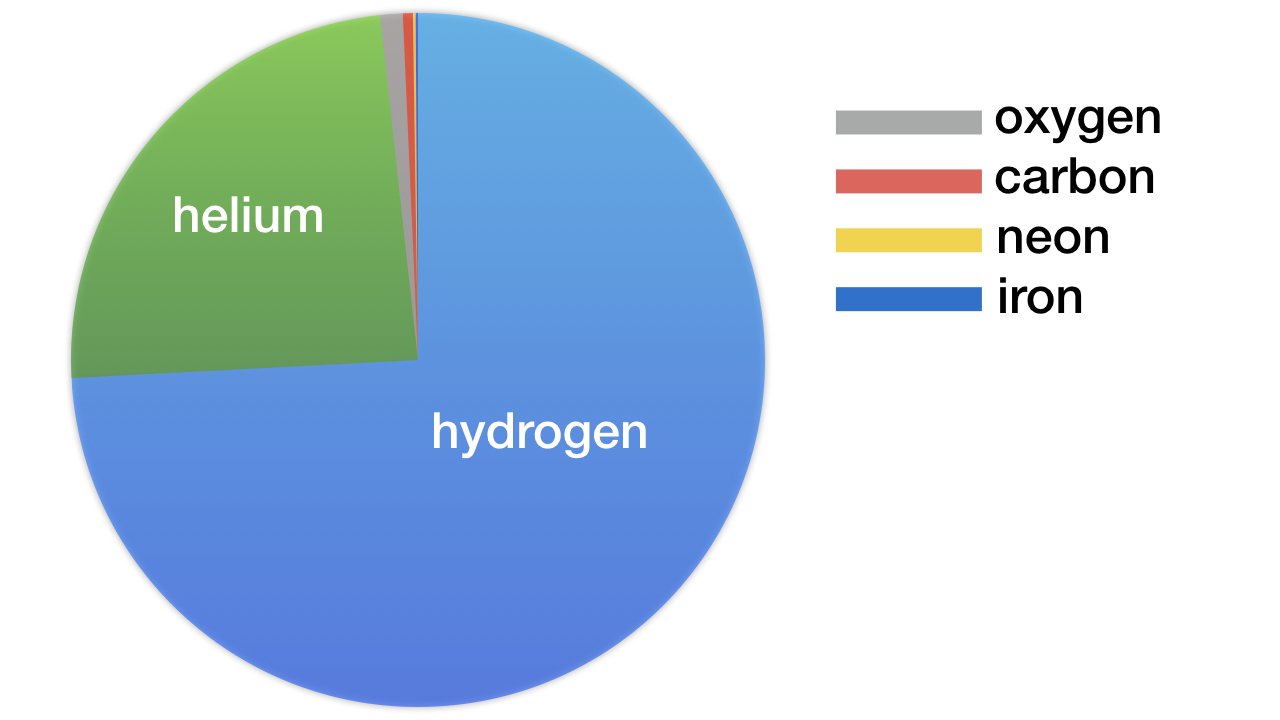
After hydrogen and helium, oxygen is the third most abundant element in the universe (see figure 2).3 Oxygen atoms have eight electrons compared to two for helium and one for hydrogen. It takes a lot more heat to strip away all electrons of oxygen than it does for helium or hydrogen. Ostriker and Cen calculated that the heat of intergalactic gas would be able to strip away only five, six, or seven of oxygen’s eight electrons. Therefore, the remaining electrons would produce an absorption spectrum that would permit a determination of the mass of the intergalactic mass.
blog__inline--discovery-of-missing-atomic-matter-2

Figure 2: Relative Mass Fractions of the Elements in the Universe. Hydrogen and helium comprise more than 98 percent of the universe’s element abundance. Image credit: Hugh Ross

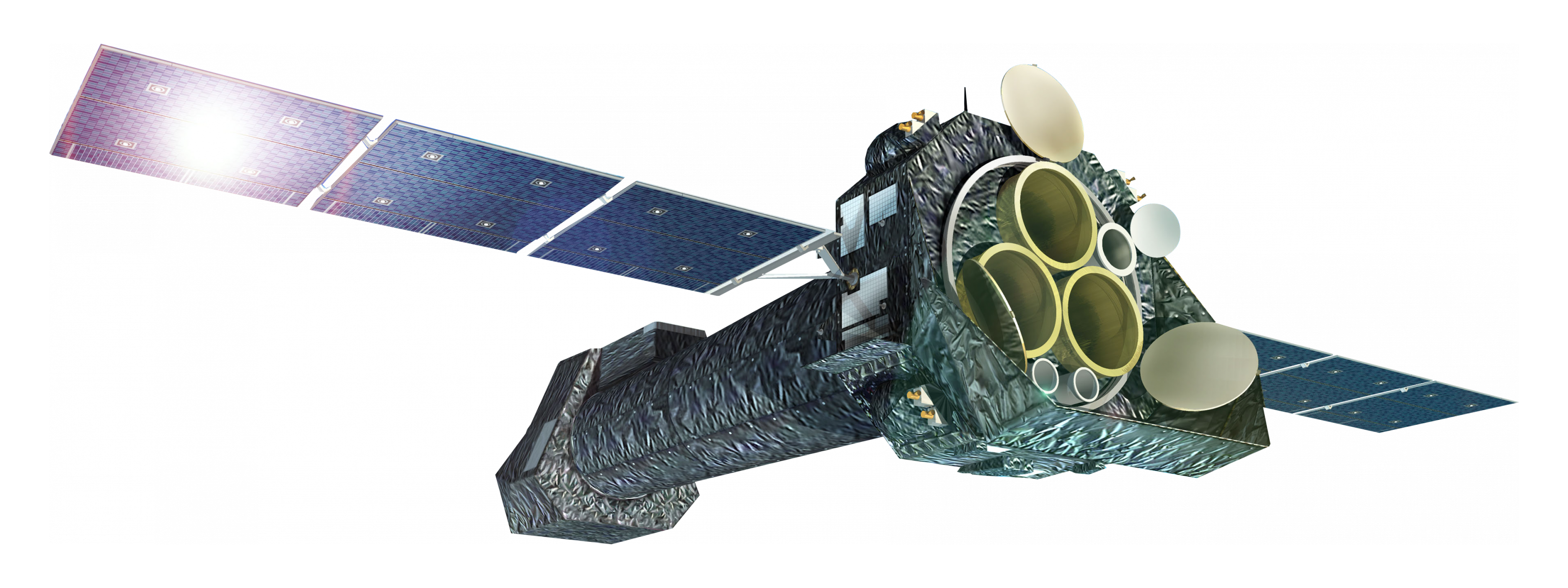
Not until this year did astronomers gain the necessary instrumentation and observing time to detect (more than marginally) the oxygen absorption spectra of hot intergalactic gas. A team of 21 astronomers led by Fabrizio Nicastro performed a very long duration observation on the brightest known X-ray blazer, IES 1553+1334, with the X-ray multi-mirror Newton telescope(see figure 3).5 They detected the absorption spectrum of OVII, oxygen atoms with six of their eight electrons stripped away by the hot intergalactic gas. Thanks to their long observing time, Nicastro’s team achieved a high enough signal-to-noise ratio in their absorption spectra measurements to conclude that they had found all of the missing baryons.
blog__inline--discovery-of-missing-atomic-matter-3

Figure 3: The XMM-Newton X-Ray Telescope and Spacecraft. Image credit: NASA/ESA

The conclusion by Nicastro’s team, however, was based on a single object. The possibility remained that the density of the hot intergalactic medium might vary slightly from location to location. To be certain that they had found all the missing baryons, astronomers needed confirmation based on at least one other bright extragalactic source and preferably accomplished with a different X-ray telescope.

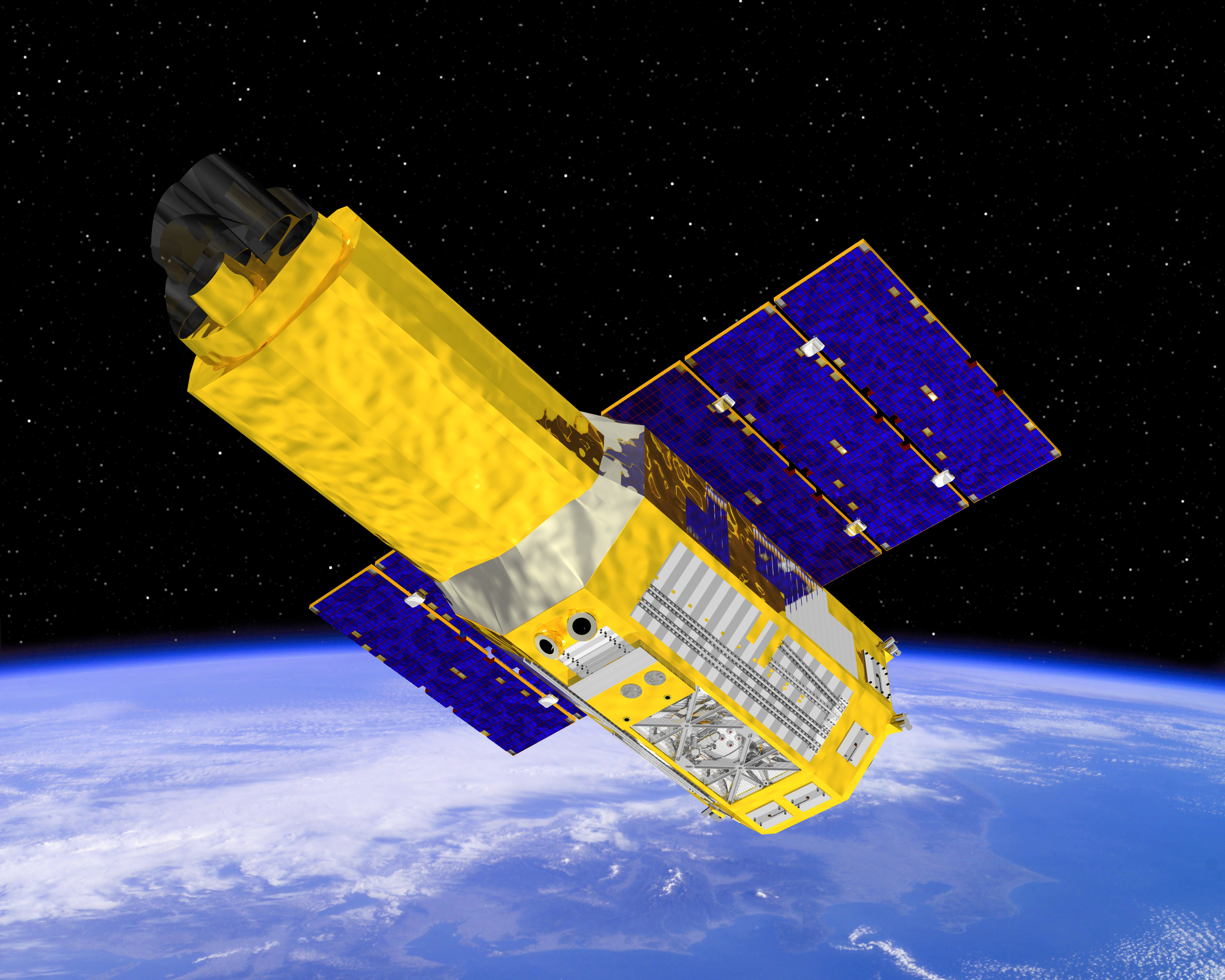
In a recent submission to the Astrophysical Journal, a team of six astronomers led by Sanskriti Das reported that they had achieved OVII absorption line measurements on the spiral galaxy NGC 3221 (see figure 4) using the Suzaku X-ray telescope (see figure 5).6 Though the signal-to-noise ratio of their measurements was not as good as that realized by Nicastro’s team, the Das team’s measurements were consistent with the conclusion that they found all the missing baryons.

blog__inline--discovery-of-missing-atomic-matter-4Figure 4: Spiral Galaxy NGC 3221. Image credit: Sloan Digital Sky Survey
blog__inline--discovery-of-missing-atomic-matter-5

Figure 5: Suzaku X-Ray Telescope and Spacecraft. Image credit: NASA

Sunyaev-Zel’dovitch Effect on Detection of the Missing Baryons
At the same time that Nicastro’s and Das’s teams of astronomers were finding the universe’s missing baryons through the X-ray absorption spectra method, two other teams of astronomers found the missing baryons using a completely different method. They looked for subtle distortions in the spectrum of the cosmic microwave background radiation, the radiation left over from the cosmic creation event.

As the radiation from the very early history of the universe streams across the cosmos, it can be slightly distorted by the regions of gas that it passes through. The electrons in the hot intergalactic gas will interact with photons from the cosmic microwave background radiation in a manner that imparts a little extra energy to those photons. Thus, astronomers should be able to see subtle distortions in their maps of the cosmic microwave background radiation.

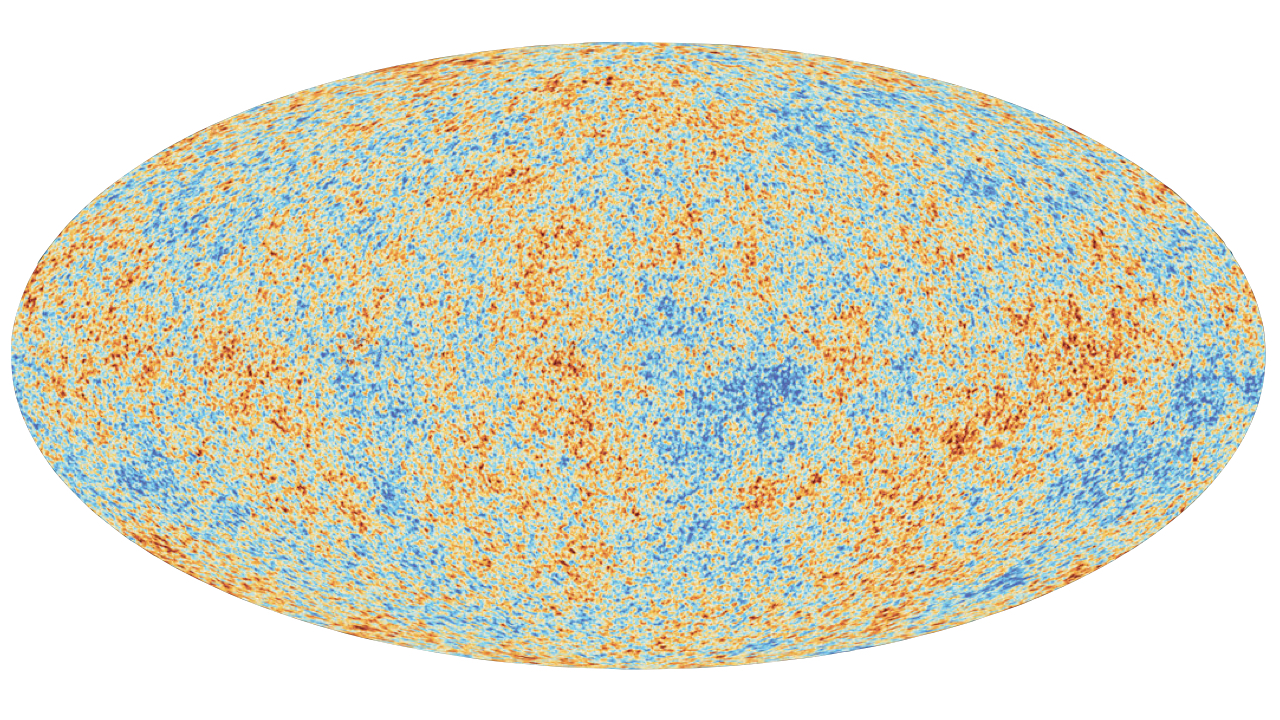
The Planck spacecraft yielded the most detailed map of the cosmic microwave background radiation (see figure 6). However, for even this most detailed map, the distortions from the electrons in the hot intergalactic gas were too subtle to see.
blog__inline--discovery-of-missing-atomic-matter-6

Figure 6: Planck Spacecraft Map of the Cosmic Microwave Background Radiation. The colors indicate tiny temperature fluctuations, with red regions warmer and blue regions colder by about 0.0002 degrees. Image credit: ESA/Planck Collaboration

While the Planck spacecraft was not able to detect the effect of intergalactic hot gas existing between any single pair of galaxies, astronomers found a way to enhance the signal by stacking images of different galaxy pairs on top of one another. First, they searched published galaxy catalogs and selected pairs of galaxies that were massive enough and the appropriate distance apart from one another that the astronomers expected there would be a dense web of hot intergalactic gas between them. Second, they went to the Planck map of the cosmic microwave background radiation and precisely identified the location for each galaxy pair. Third, they used digital scissors to clip the region for each galaxy pair from the Planck map. Fourth, they stacked all the clipped regions on top of one another so that all the pairs of galaxies were aligned in the same exact position. Fifth, they subtracted out the light from all the gas associated with the galaxy pairs from the stacked images, leaving just the signal from the intervening intergalactic gas. What had not been possible to detect based on a single pair of galaxies became visible when integrated over many, many pairs of galaxies.

In another research effort, a team of four astronomers led by University of Edinburgh’s Anna de Graaff stacked Planck map image pieces of a million pairs of galaxies on top of one another.7 The remaining signal after the subtraction of the signal from all the gas associated with the one million galaxy pairs was strong enough to enable de Graaff’s team to determine the mass of the hot intergalactic gas. That mass added up to the missing baryons.

Finally, an independent team of nine astronomers led by University of British Columbia’s Hideki Tanimura used 260,000 pairs of luminous red galaxies taken from the Sloan Digital Sky Survey Data Release 12 and stacked their Planck map image pieces on top of one another.8Their measured mass of the hot intergalactic gas also added up to the missing baryons.

All together, astronomers have four independently achieved measurements of the mass of the hot intergalactic medium based on two completely distinct methods and using different telescopes and different databases of galaxies and quasars. That all four measurements add up to the missing baryons gives astronomers confidence that they really have found the missing baryons of the universe. The missing baryons problem of big bang cosmology has now been solved. Hence, the scientific case for the validity of the biblically predicted big bang creation model is more firmly established than ever before.9 Thus, we can all be assured that the God of the Bible personally created and designed the universe for the express benefit of human beings.

Featured image: Computer Simulation Showing Distribution of the Warm-Hot Intergalactic Gas in the Universe
Image credit: Princeton University


Endnotes
  1. Hugh Ross and John Rea, “Big Bang—The Bible Taught It First!” Facts For Faith (Quarter 3, 2000): 26–32, https://www.reasons.org/explore/publications/rtb-101/read/rtb-101/2000/06/30/big-bang-the-bible-taught-it-first.
  2. Renyue Cen and Jeremiah Ostriker, “Where Are the Baryons?” Astrophysical Journal 514 (March 20, 1999): 1–6, doi:10.1086/306949.
  3. Wikipedia, s.v. “Abundance of the Chemical Elements,” https://en.wikipedia.org/wiki/Abundance_of_the_chemical_elements.
  4. M. Raiteri et al., “Synchrotron Emission from the Blazar PG 1553+133. An Analysis of Its Flux and Polarization Variability,” Monthly Notices of the Royal Astronomical Society 466 (April 21, 2017): 3762–74, doi:10.1093/mnras/stw3333.
  5. Fabrizio Nicastro et al., “Observations of the Missing Baryons in the Warm-Hot Intergalactic Medium,” Nature558 (June 21, 2018): 406–9, doi:10.1038/s41586-018-0204-1.
  6. Sanskriti Das et al., “Discovery of Massive Warm-Hot Circumgalactic Medium around NGC 3221,” arXiv:1810.12454v1 [astro-ph.GA], October 31, 2018, submitted to the Astrophysical Journal, https://arxiv.org/pdf/1810.12454.pdf.
  7. Anna de Graaff et al., “Missing Baryons in the Cosmic Web Revealed by the Sunyaev-Zel’dovich Effect,” arXiv:1709.10378v2 [astro-ph.CO], October 5, 2017, https://arxiv.org/pdf/1709.10378v1.pdf.
  8. Hideki Tanimura et al., “A Search for Warm/Hot Gas Filaments between Pairs of SDSS Luminous Red Galaxies,” arXiv:1709.05024v2 [astro-ph.CO], October 5, 2018, submitted and accepted by Monthly Notices of the Royal Astronomical Society, https://arxiv.org/pdf/1709.05024.pdf.
  9. Ross and Rea, “Big Bang.”

About Reasons to Believe

RTB’s mission is to spread the Christian Gospel by demonstrating that sound reason and scientific research—including the very latest discoveries—consistently support, rather than erode, confidence in the truth of the Bible and faith in the personal, transcendent God revealed in both Scripture and nature. Learn More »

Support Reasons to Believe

Your support helps more people find Christ through sharing how the latest scientific discoveries affirm our faith in the God of the Bible.

DONATE NOW


U.S. Mailing Address
818 S. Oak Park Rd.
Covina, CA 91724
  • P (855) 732-7667
  • P (626) 335-1480
  • Fax (626) 852-0178

Reasons to Believe logo

Posted in Uncategorized | Leave a comment

Take Up and Read: C.S. Lewis’ Case for the Christian Faith


BY KENNETH R. SAMPLES – NOVEMBER 13, 2018

I am writing this ongoing blog series on Reflections to encourage Christians to read more vigorously and enrich their lives with Christian classics in such fields as theology, philosophy, and apologetics. Hopefully, a brief introduction to these Christian texts will motivate today’s believers to, as St. Augustine was called in his dramatic conversion to Christianity, “take up and read” (Latin: Tolle lege) these excellent books.

blog__inline--take-up-and-read-cs-lewis-case-for-christian-faithThis week’s book is C. S. Lewis’ Case for the Christian Faith by Catholic philosopher Richard Purtill. It is one of the best books for helping people—both those who are new to Lewis and those who know his writings well—to understand Lewis’s basic case for the truth of Christianity. A reliable guide, Purtill explains Lewis’s apologetics thinking with powerful insights.

Why Is This Author Notable?

Richard Purtill (1931–2016) taught philosophy at Western Washington University for many years. A prolific author, Purtill wrote many academic works on philosophy, religion, ethics, and the study of logic. But he was also a popular author of fantasy and science fiction novels. A Roman Catholic by theological conviction and a lover of imaginative literature, Purtill wrote books on the thoughts of both J. R. R. Tolkien and Lewis.

What Is This Book About?

Using his broad knowledge of Lewis’s writings of fiction and nonfiction, Purtill presents, in 10 chapters, Lewis’s basic apologetics approach for the truth of the Christian faith. Purtill’s book introduces Lewis’s thinking on such critical topics as God’s existence, the nature and attributes of God, the person of Christ, miracles, faith and reason, rivals of Christianity, Christian living and prayer, and death and the hereafter.

Purtill systematically presents Lewis’s theological and apologetics ideas with clarity. He also organizes Lewis’s thoughts and provides a basic philosophical framework for seeing Lewis’s case in terms of a logically based worldview. Purtill’s work helps readers to think through and understand the bigger picture. It also encourages people to reread Lewis’s writings with fresh understanding and with a greater overall perspective on Lewis’s apologetics model.

Here, Purtill offers a brief explanation for Lewis’s enormous success and influence as a Christian thinker and author:

The explanation for Lewis’ success is to be found in all the aspects of Lewis as a man and a writer, in his imaginative and moral qualities as well as his intellectual capacities.1

Why Is This Book Worth Reading?

C. S. Lewis is arguably the most influential Christian apologist of the twentieth century. But his books sell better today than when he was living, more than 50 years ago. Anyone who wants to gain a greater understanding of Lewis’s thinking will benefit significantly from reading Purtill’s fine introduction. Read Purtill and then reread Lewis’s masterful apologetics works.

Resources

Endnotes
  1. Richard Purtill, S. Lewis’ Case for the Christian Faith (San Francisco: Ignatius, 2004), 14.

About Reasons to Believe

RTB’s mission is to spread the Christian Gospel by demonstrating that sound reason and scientific research—including the very latest discoveries—consistently support, rather than erode, confidence in the truth of the Bible and faith in the personal, transcendent God revealed in both Scripture and nature. Learn More »

Support Reasons to Believe

Your support helps more people find Christ through sharing how the latest scientific discoveries affirm our faith in the God of the Bible.

DONATE NOW


U.S. Mailing Address
818 S. Oak Park Rd.
Covina, CA 91724
  • P (855) 732-7667
  • P (626) 335-1480
  • Fax (626) 852-0178

Reasons to Believe logo

Posted in Uncategorized | Leave a comment

Learning about Christian Creeds, Part 1

BY KENNETH R. SAMPLES – AUGUST 14, 2018

Have you ever recited the Apostles’ Creed?

It is widely used in Western Christendom, both in the Roman Catholic Church and in various Protestant churches (Lutheran, Reformed, Presbyterian, Anglican, Methodist, Congregational, among others). In fact, most evangelical churches have creedal statements that serve as something like the Apostles’ Creed. Some nondenominational churches even sing the creed in their worship services.

Christian historian Jaroslav Pelikan says this about creeds and their use in Christendom:

Every Sunday all over the world, millions and millions of Christians recite or sing (or, at any rate, hear) one or another creed, and most of them have had a creed spoken over them, or by them, at their baptism.1

Let’s take some time to read through the Apostles’ Creed, and then we’ll learn more about Christian creeds in general:

Apostles’ Creed

I believe in God, the Father almighty,
creator of heaven and earth.

I believe in Jesus Christ, his only Son, our Lord,
who was conceived by the Holy Spirit
and born of the virgin Mary.
He suffered under Pontius Pilate,
was crucified, died, and was buried;
he descended to hell.
The third day he rose again from the dead.
He ascended to heaven
and is seated at the right hand of God the Father almighty.
From there he will come to judge the living and the dead.

I believe in the Holy Spirit,
the holy Catholic church,
the communion of saints,
the forgiveness of sins,
the resurrection of the body,
and the life everlasting. Amen.

Five Important Points about Christian Creeds

Creeds have been an important part of historic Christianity from the very beginning. Christians recite creeds to confess or profess their faith publicly. The creeds serve as authoritative pronouncements that set forth in summary form the central beliefs of the Christian faith.

Let’s consider five points you may not know about creeds:

1. The term “creed” comes from the Latin credo, meaning “I believe.” The opening line of the Apostles’ Creed in Latin reads Credo in Deum—“I believe in God.” In the ancient world, the name of documents often came from the first words that were used in the statement.

2. There are creedal or protocreedal statements even in the Bible. The most often cited Old Testament passage serves as a creed and is called the Shema (Hebrew for “Hear”). This comes from Deuteronomy 6:4, which reads, “Hear, O Israel: The LORD our God, the LORD is one.”The New Testament contains a number of ancient Christian creeds (1 Corinthians 8:6, 15:3–4), with possibly the earliest creed being the statement “Jesus is Lord!” from Romans 10:9 and Philippians 2:11 (Greek: κύριος Ἰησοῦς, kyrios Iesous). So creeds have a clear biblical basis.

3. Christian creeds serve to both formulate and affirm essential Christian doctrine. For example, the Apostles’ Creed focuses upon a fully formed Trinitarian theology by having the three stanzas of the creed address the three distinct persons of the Trinity (Father, Son, Holy Spirit).

4. The creeds can and do play a helpful role in catechetical instruction in Christian doctrine and theology. At a time when doctrine is often undervalued, the creeds can aid believers in developing an organized, precise, and correct understanding of the Christian faith.

5. The creeds have direct theological and apologetic importance. All of Christendom’s formal creeds were written to specifically combat heresies that had arisen in the early centuries of the Christian church (such as the influential Christological heresy known as “Arianism”).

So why do historic Christians continually recite their creeds? Theologian Luke Timothy Johnson has a very good response:

Some truths are so critical that they must be repeated over and over again.2

Join me next week for the second installment of this series in which we’ll examine the creeds further.

Resources

Endnotes
  1. Jaroslav Pelikan, Credo (New Haven, CT: Yale University Press, 2003), 1.
  2. Luke Timothy Johnson, The Creed (New York: Doubleday, 2004), 40.

About Reasons to Believe

RTB’s mission is to spread the Christian Gospel by demonstrating that sound reason and scientific research—including the very latest discoveries—consistently support, rather than erode, confidence in the truth of the Bible and faith in the personal, transcendent God revealed in both Scripture and nature. Learn More »

Support Reasons to Believe

Your support helps more people find Christ through sharing how the latest scientific discoveries affirm our faith in the God of the Bible.

DONATE NOW


U.S. Mailing Address
818 S. Oak Park Rd.
Covina, CA 91724
  • P (855) 732-7667
  • P (626) 335-1480
  • Fax (626) 852-0178

Reasons to Believe logo

Posted in Uncategorized | Leave a comment

Why Did God Kill All the Men, Women, and Children in Sodom?

BY HUGH ROSS – AUGUST 8, 2018

The way I typically hear this question is, why did God kill every man, woman, and child living in Sodom and Gomorrah? This question is frequently asked by Christians and non-Christians alike, and it’s commonly used as a basis for people to reject the existence of the God of the Bible. Such individuals presume that an all-loving God would never do such a thing.

Societal Reprobation
The full description given in Genesis of the behavior and morality of the people living in Sodom and Gomorrah makes it indisputably clear that Sodom and Gomorrah are examples of societal reprobation. Reprobation is a term used in the Bible to describe an individual who is irretrievably evil. It describes an individual whose every thought and action is evil all the time. Such individuals believe that what normal human beings consider as evil acts are actually good, and what normal human beings consider as good acts are actually evil. Such human beings not only are continually intent on evil, but also work tirelessly to morally corrupt others; to persuade, and if possible force, others to join them in their evil thinking and behavior.

Societal reprobation describes a town, city, set of cities, or a nation where every man, woman, and child in that town, city, set of cities, or nation is reprobate. Societal reprobation has always been rare. In fact, since the day of Pentecost described in Acts 2, when Jewish Christians for the first time were permanently indwelled by the Holy Spirit, the equivalent of the day of Pentecost for Samaritan Christians described in Acts 8, and the equivalent of the day of Pentecost for gentile Christians described in Acts 10, it has been nonexistent. That permanent indwelling made the followers of Jesus Christ “the salt of the earth.” Such spiritual salt acts as a preservative that prevents the outbreak of societal reprobation.

The possibility of societal reprobation during Old Testament times and its impossibility since the days of Pentecost explains why many skeptics conclude that the God of the Old Testament contradicts the God of the New Testament. Such skeptics err—God has not changed. It is people who have changed.

Evidence of Societal Reprobation in Sodom and Gomorrah
Three different Bible texts affirm that Sodom and Gomorrah indeed are examples of societal reprobation. One text, Genesis 19:1–9, describes a test performed by two of God’s righteous angels. These angels visited Sodom to determine if its inhabitants were as evil as the reports they had heard. They decided to spend the night in the city square so as to observe the behavior of the Sodomites for themselves. Lot, the only man in the city who had not yet succumbed to reprobation, insisted that they not spend the night in the city square. Evidently, he knew how dangerous that would be for them. He implored them to stay under the protection of his house. Shortly thereafter, Lot’s house became surrounded by every man, young and old, from every part of the city Sodom. The phrase “young and old” implies that the men surrounding Lot’s house included young boys and elderly men. The men demanded that Lot send his two guests outside so that they could all subject his two guests to homosexual rape.

There was no stopping the assembled mob. Desperate to protect his two guests, Lot even offered to send his two virgin daughters out to the mob to do with them as they wished, if only they would leave his guests alone. The mob turned down the offer, moved forward to break down the door to Lot’s house, and threatened to do to Lot much worse than what they were intent on doing to his two guests.

Lot’s offer testifies to the degree of reprobation in Sodom. This offer shows that the reprobation was so persuasive that even Lot, a righteous man, was in grave danger of succumbing to the spiritual cancer that surrounded him. 2 Peter 2:7–8 describes how the Sodomites distressed and tormented Lot.

The second Bible text, Genesis 18:16–33, describes a conversation between God and Abraham where Abraham, on behalf of his nephew Lot, begs God to save Sodom and Gomorrah from destruction. Abraham first asks if fifty people in Sodom are found to be righteous, would not God save all the inhabitants of Sodom on behalf of those fifty? God says he would. Abraham then bargains God all the way down to just ten righteous people in the city. Every time, God says “yes.” At that point, Abraham realizes that the only righteous people left in Sodom are Lot and his family. Knowing that God has promised to rescue Lot and his family before destroying Sodom and Gomorrah, Abraham stops his begging. He now recognizes that all the inhabitants of the Sodomite plain are reprobate except for Lot and his family.

The third Bible text affirming societal reprobation in Sodom and Gomorrah is Genesis 15:12–16. In this text God says to Abraham that while the Amorites living in the hills with him are evil, their evil “has not yet reached its full measure.” God explained to Abraham that it would take another four hundred years for the Amorites to degrade into societal reprobation. Only at that time would God act to remove the Amorites from the land of Canaan.

Why Not Isolation? 
A remaining question is, why does God not simply isolate reprobate societies and let them die natural deaths? The answer is to protect the future generations of those societies and to protect the inhabitants of their neighboring societies.

Once all the inhabitants of a city become completely reprobate, there is no hope for the children born in that city. As Paul points out in Romans 1:32, reprobation is malignant. Children born in a city where all the inhabitants are reprobates will be surrounded by the malignant spiritual cancer of reprobation. For them, there is no escape. As with metastasized stage 4 cancer, they will be infected and completely overcome. To prevent that from happening, God surgically removes a reprobate society as soon as its reprobation becomes pervasive.

Another reason God surgically intervenes is to prevent the spiritual cancer from spreading to communities adjoining the reprobate society. Societies do not and cannot operate in isolation. Cities must be maintained by trade with adjoining communities. If God had not acted in the manner that he did, the spiritual malignancy in Sodom and Gomorrah inevitably would have spread.

God’s destruction of Sodom and Gomorrah was a profound act of mercy and love. As I explain in my book Beyond the Cosmos, from the perspective of eternity it was even a profound act of mercy and love to the reprobates themselves.1

Endnotes
  1. Hugh Ross, Beyond the Cosmos: The Transdimensionality of God, 3rd ed. (Covina, CA: RTB Press, 2017), 177–84.

About Reasons to Believe

RTB’s mission is to spread the Christian Gospel by demonstrating that sound reason and scientific research—including the very latest discoveries—consistently support, rather than erode, confidence in the truth of the Bible and faith in the personal, transcendent God revealed in both Scripture and nature. Learn More »

Support Reasons to Believe

Your support helps more people find Christ through sharing how the latest scientific discoveries affirm our faith in the God of the Bible.

DONATE NOW


U.S. Mailing Address
818 S. Oak Park Rd.
Covina, CA 91724
  • P (855) 732-7667
  • P (626) 335-1480
  • Fax (626) 852-0178

Reasons to Believe logo

Posted in Uncategorized | Leave a comment

Scripture Requiring Deep Interpretation

By Will Myers

All Scripture is rewarding for those who seek the meaning from God, the Son, and God’s Holy Spirit through meditation and prayer. Of course, studying the Word of God helps also. Some scripture’s interpretation continues deeply into the intellect. At this time, the most in-depth scripture for me is Ecclesiastes 3:15; “That which hath been is now; and that which is to be hath already been; and God requireth that which is past.” I wrote an article about this scripture last year and, boy, did I miss the meaning. But, getting back on track, it’s my belief that each and all scripture weights on any subject to their own proportion. If one is cold, then they turn on the furnace. If a match is held near the furnace while giving out its heat, then one can’t really feel the heat from the match because the furnace is proportionally larger, but the match is still giving out its warmth. So it is with each subject; the furnace can be far removed and the match very close while intensifying than one can feel the warmth from the match more. All scripture weights upon any and all subjects and treatments.

Singling out Ecclesiastes 3:15 from above, we must have the knowledge that God’s Holy Spirit has always existed and manifested in His Son as He came into time. The universe was designed to bring man unto God’s Holy Spirit; the goal is that all possess God’s Holy Spirit. The universe was created thru God’s Son to reveal God’s Glory. “That which hath been is now…” is God’s Holy Spirit, and “…that which is to be hath already been…”; once again, its God’s Holy Spirit Who is in His Son. “…God requireth that which is past…” is again God’s Holy Spirit; during the meantime, the universe of man is imposed upon by God’s creation which is perfect as is His Son.

A more basic meaning of the scripture is that whatever man investigates in the universe they shall encounter God’s form or His metaphysical equation UspaceVspace=Q in His creation. The Uspace is defined as “All that God does or creates is perfect righteousness.” The Vspace is simply the nexuses of all thing” because everything inexistent is changing. The Q is a thing that IS and it is unique even as it comes into fruition and goes out of being. This is likened unto the absolute meaning of Ecclesiastes 3:15, and this latter example is nearer to the soul (As God makes a material statement) and, of course, our spirit is interacting with the Spirit of God in the formal example.

The universe displays the absoluteness of God. Its physical laws have been created by God thru and for His Son and were discovered by scientists who believe them to be perfect. What God does is forever. Through God’s Son, we can become nearer to God, our Heavenly Father.

ISAIAH 40:10 (KJV) (God’s righteousness is perfect)

 Fear thou not; for I am with thee: be not dismayed; for I am thy God: I will strengthen thee; yea, I will help thee; yea, I will uphold thee with the right hand of my righteousness.

Therefore thus saith the Lord God, Behold, I lay in Zion for a foundation a stone, a tried stone, a precious corner stone, a sure foundation: he that believeth shall not make haste.
<
Romans 1:20
For the invisible things of him from the creation of the world are clearly seen, being understood by the things that are made, even his eternal power and Godhead; so that they are without excuse:
The Word became flesh and made his dwelling among us. We have seen his glory, the glory of the one and only Son, who came from the Father, full of grace and truth.
For we are his workmanship, created in Christ Jesus unto good works, which God hath before ordained that we should walk in them.
And to make all men see what is the fellowship of the mystery, which from the beginning of the world hath been hid in God, who created all things by Jesus Christ:
Posted in Uncategorized | Leave a comment

The Christian Apologetics Mandate


BY KENNETH R. SAMPLES – OCTOBER 2, 2018

The Greek word apologia (Greek: ἀπολογία) is the root for the English term “apologetics.” Apologia and its root forms are found in the New Testament (Acts 26:2; Romans 1:20; Philippians 1:7, 16), with 1 Peter 3:15 revealing the mandate imploring Christians to be ready to explain and defend their faith. Throughout Christian history, apologetics became known as the enterprise by which apologists sought to give a reasoned defense of the truth of Christianity. Today, Christian apologetics involves the use of various disciplines to defend the faith, including the biblical, doctrinal, philosophical, historical, literary, and scientific fields.

In more technical terms, apologetics is a branch of Christian theology that seeks to provide rational justification for the truth claims of Christianity.1 For 20 centuries, Christian scholars and leaders have engaged in a fourfold defense of the faith by (1) presenting and clarifying the central truth claims of Christianity, (2) offering clear and compelling positive evidence for accepting Christian truth, (3) answering people’s questions and objections concerning the faith, and (4) providing a penetrating critique and refutation of alternative non-Christian systems of thought.2

This type of apologetic endeavor remains as important today as at any time in Christian history. And it is imperative that believers look to Scripture and church history to instruct them in the performance of this critical task. Fortunately, the apostle Peter—the central preacher in the primitive Christian church—offers such guidance in his first epistle.

Since 1 Peter 3:15 contains the official New Testament order or commission to do apologetics, let’s cite the passage and explore its meaning in some detail.

But in your hearts set apart Christ as Lord. Always be prepared to give an answer to everyone who asks you to give the reason for the hope that you have. But do this with gentleness and respect.

–1 Peter 3:15, NIV

Rules of Apologetic Engagement

In Peter’s words, we discover four points that provide a context for apologetic engagement and that honor God and instruct the apologist.

  1. Courage in Suffering

The backdrop of Peter’s admonition in verse 15 is the topic of suffering (see verses 13–14 and 16–17). In the apostolic age as well as for virtually three centuries following, a defense of the Christian faith would often occur under hostile interrogation (see, for example, Acts 25:16). Since Christianity was an illegal and politically controversial religion in the Roman Empire, the early Christians suffered through periods of great persecution and even martyrdom. Apologetic work in the early church (as today in totalitarian and Islamic-ruled countries) took great moral and physical courage.

  1. Christ’s Lordship

Peter instructs believers that at the core of their being (Greek: kardia, the “heart”), where people form their most essential beliefs, they should acknowledge the Lordship of Christ. Calling Jesus “Lord” (Greek: Kyrios) in this context is equivalent to referring to him as Yahweh(ruler, king, and God).3 Christians can engage in the apologetic enterprise with the full assurance that Christ is the exclusive, sovereign ruler over all things (Matthew 28:18). Facing suffering, trial, and hostile interrogation with the conviction that Christ is in sovereign control serves to grant the believer peace and confidence.

  1. A Reasoned Defense

To provide the proper rational justification for the Christian faith and worldview today demands rigorous intellectual preparation. It presupposes an in-depth knowledge of the faith and the ability to answer questions and rebut objections. Peter sets forth the idea that the Christian faith has a rational foundation worth defending. Yet one does not need to be a professional to become an effective apologist.

  1. Gentleness and Respect

When it comes to rational persuasion, the advocate’s attitude and demeanor often carry as much weight as his or her arguments. People measure the credibility of one’s beliefs often by how they are communicated. Cogent arguments conveyed with an air of arrogance and disrespect will be drained of their apologetic potency. But apologetic responses that reflect a calm, measured approach and tone signify a quality consistent with the conviction that it is God (the Holy Spirit) alone who makes the human heart and mind receptive to the gospel (Acts 16:14; 1 Corinthians 12:3).

The apostle goes on to speak of the importance of joining one’s rational defense with the virtue of moral transparency (“keeping a clear conscience,” verse 16). The effective apologist seeks to integrate the witness of one’s life with one’s words. A reasoned and winsome apologetic case possesses great force in conveying the message that historic Christianity is rational, viable, and true.

Reflections: Your Turn

Which aspect of Peter’s mandate concerning apologetics stands out to you? Visit Reflections on WordPress to comment with your response.

Endnotes
  1. William Lane Craig, Reasonable Faith: Christian Truth and Apologetics (Wheaton, IL: Crossway, 1994), xi.
  2. See Kenneth Richard Samples, Without a Doubt: Answering the 20 Toughest Faith Questions(Grand Rapids: Baker Books, 2004), 255–59.
  3. F. Bruce, Jesus: Lord and Savior(Downers Grove, IL: InterVarsity, 1986), 203.

About Reasons to Believe

RTB’s mission is to spread the Christian Gospel by demonstrating that sound reason and scientific research—including the very latest discoveries—consistently support, rather than erode, confidence in the truth of the Bible and faith in the personal, transcendent God revealed in both Scripture and nature. Learn More »

Support Reasons to Believe

Your support helps more people find Christ through sharing how the latest scientific discoveries affirm our faith in the God of the Bible.

DONATE NOW


U.S. Mailing Address
818 S. Oak Park Rd.
Covina, CA 91724
  • P (855) 732-7667
  • P (626) 335-1480
  • Fax (626) 852-0178

Reasons to Believe logo

Posted in Uncategorized | Leave a comment

Undermining Our Constitutional Rights

By Will Myers

A social machinery of special interest groups who collect and peddle sensitive and intimate information about a private citizen, any private citizen, has grown with leaps and bounds with the advent of personal computers. In conjunction with mass storage of information with an almost instant recall of the information, the privacy of individuals is at peril.

A famed political scientist once stated that regardless of the sophistication and superior knowledge of any group or person who can counsel and monitor you while anticipating the thoughts of your, the “right to be let alone” is far superior for happiness and fulfillment of life. These special interest groups (SIG) who do attempt to monitor private citizen’s lives fall into this category. From personal experience,  there is a lure into temptation followed by much adversity manifesting by a sophisticated orchestration by SIG. This is classically the devil.

We have the constitutional right to live without any orchestration against our private lives; we have the right to “pursue our happiness and a fulfilling life.”The social machinery SIG opposes the U.S. Constitution blatantly.

If all citizens accept SIG and perpetuate the actions of SIG then we are creating a new government. I label this new government hyper communism whereas the government practically own the minds of the working class. The SIG snake organization is advancing in America while undercutting our constitutional rights. Our democracy is being counterfeited. The Trump Administration is exercising the powers of a Republic whereas the people have given total authority to the powers that be. I believe that Trump is from the American Oligarchy and he is their king snake. With this delegated power, Trump is opening doors for the institution of hyper communism. The Russian government is also moving toward hyper communism. This is the pairing of Trump-Putin in the near future.

Ephesians 6:12-15 New International Version (NIV)

12 For our struggle is not against flesh and blood, but against the rulers, against the authorities, against the powers of this dark world and against the spiritual forces of evil in the heavenly realms. 13 Therefore put on the full armor of God, so that when the day of evil comes, you may be able to stand your ground, and after you have done everything, to stand. 14 Stand firm then, with the belt of truth buckled around your waist, with the breastplate of righteousness in place, 15 and with your feet fitted with the readiness that comes from the gospel of peace.

Posted in Uncategorized | Leave a comment

Interplanetary Dust Delivery Allows Human Existence

BY HUGH ROSS – OCTOBER 22, 2018

Extraterrestrial iron dust delivery by means of exquisitely fine-tuned processes has made modern civilization possible. Scientists sought to discern the nature of an unknown part of a phenomenon—bioavailable iron on Earth—and their research led to a major discovery that was published in the October issue of Geology.1

Life has been present on Earth at a high abundance level throughout the past 3.8 billion years. While Earth’s continents possess the greatest diversity of life, it is the oceans that contain the greatest quantity of life—and the foundation for all this marine life is phytoplankton.

Phytoplankton Sustain Marine Life
Phytoplankton are microscopic organisms that engage in photosynthesis. They are primary producers in that they manufacture sugars, starches, and fats from water and carbon dioxide dissolved in water. These sugars, starches, and fats sustain the entire aquatic food web.

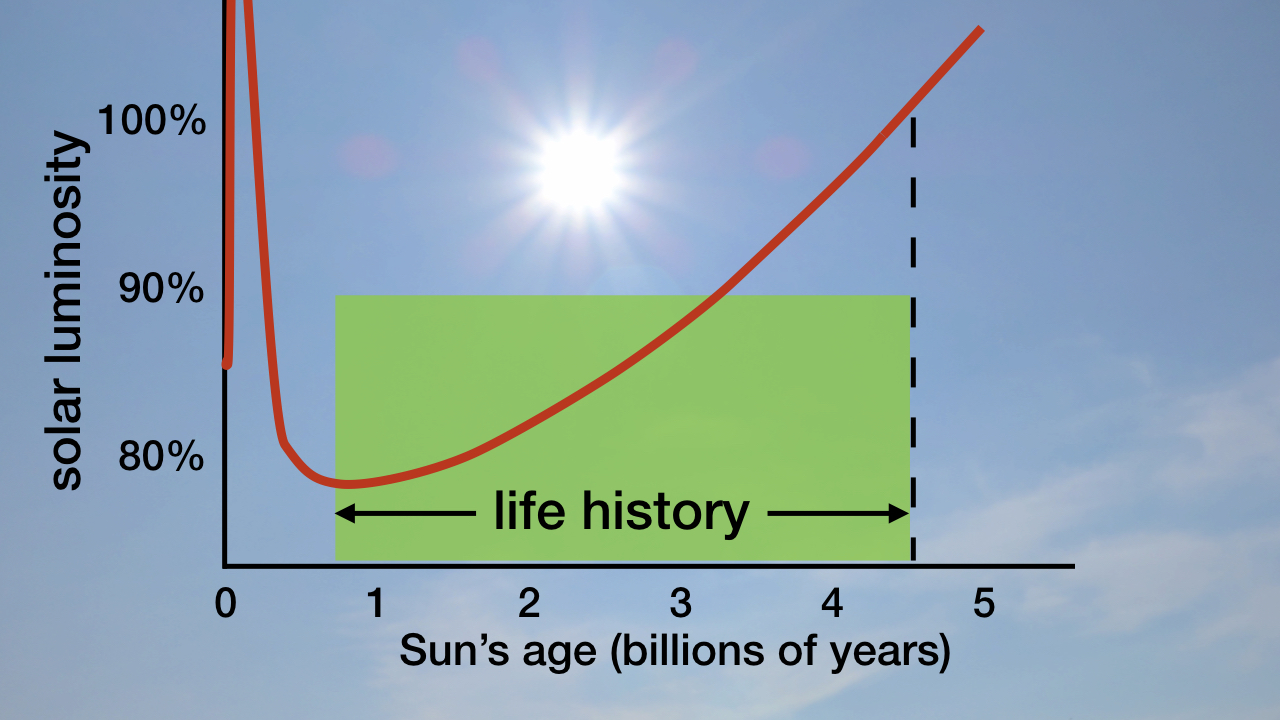
Phytoplankton account for more than half of all photosynthetic activity on Earth. When present at high-enough densities, some species are easily visible as colored patches on surface waters (see figure 1). Phytoplankton play a major role not only in sustaining marine life and diversity but also in removing sufficient quantities of carbon dioxide (a powerful greenhouse gas) from the atmosphere to compensate for the ever-brightening Sun (see figure 2).

blog__inline--interplanetary-dust-delivery-1

Figure 1: Phytoplankton Blooms off the Southwest Coast of England
credit: NASA

blog__inline--interplanetary-dust-delivery-2

Figure 2: The Sun’s Increasing Brightness throughout Life’s History. Image credit: Figure created by the author

What limits the quantity of phytoplankton in the oceans is the availability of iron—known as bioavailable iron—in physical and chemical forms that the phytoplankton can use.2 In most of the surface waters of the world’s oceans, the concentration of bioavailable iron is very low, less than 0.2 nanomoles (roughly less than 2 parts per 10 billion).3

Sources of Bioavailable Iron
Scientists have long thought that the bioavailable iron present in the oceans has been delivered by eolian dust. Eolian dust, otherwise known as loess, refers to silt-sized material deposited by winds blowing off of exposed continental landmasses, primarily deserts and plateaus. This flux of bioavailable iron from eolian dust is geographically highly variable. Ocean regions far from deserts and plateaus receive very little of this dust. The Southern Ocean, which comprises most of Earth’s surface water, receives just 0.2–5 micromoles/square meter/year of bioavailable eolian dust.4 (This figure includes not just bioavailable iron but all bioavailable metals.)

The delivery of bioavailable eolian dust to the Southern Ocean falls considerably short of what is needed to sustain the quantity of phytoplankton known to exist there. Thus, geologists Peter Reiners of the University of Arizona and Alexandra Turchyn of the University of Cambridge present evidence in their paper that the delivery of bioavailable iron from extraterrestrial dust makes up the difference.

They begin by citing ice, marine sediment, and terrestrial sediment core records that establish a present-day flux of 40 million kilograms/year of iron delivery to Earth from interplanetary space.5 Reiners and Turchyn calculate how much of this iron is bioavailable. For the Southern Ocean, they conclude that the present flux of bioavailable iron from interplanetary space is comparable to and likely larger than the flux from eolian dust.6

Implications of Present-Day Interplanetary Iron Flux
Reiners and Turchyn do not comment in their paper on the implications of such abundant extraterrestrial bioavailable iron delivery to the present-day Southern Ocean. However, the implications seem obvious. The Southern Ocean would not be able to sustain the enormous biomass and biodiversity that it does without this ongoing delivery. Nor would the phytoplankton in the Southern Ocean be able to remove enough carbon dioxide from the atmosphere to compensate for the brightening of the Sun.

Without the present high rate of extraterrestrial bioavailable iron flux, advanced life and human civilization would not be possible. In fact, global high-technology civilization requires that this flux be fine-tuned.7

Past Sources of Extraterrestrial Bioavailable Iron
Reiners and Turchyn devote most of their research paper to addressing several events during the past half billion years when the flux of extraterrestrial dust was many times higher than it is at present. The most dramatic of these events is the Ordovician L-Chondrite Event that, according to meteorite geochronology and terrestrial stratigraphic records, occurred 470±6 million years ago and produced the Ordovician meteorite shower 467.3±1.6 million years ago.8 This shower lasted at least 2 million years and the extraterrestrial material flux was 100–1,000 times higher than the present rate.

The Ordovician L-Chondrite Event was likely caused by a major collision event in the Main Belt (the asteroid belt between Mars and Jupiter) that resulted in the breakup of a single large asteroid.9 This collision was responsible for most, if not all, L-chondrite meteorites. Even today it accounts for about 40 percent of all Earth-bound interplanetary objects.

The end-Ordovician mass extinction event ranks as the second most devastating mass extinction event known. Half of all animal genera and about 85 percent of all marine species were wiped out.10 While much of this extinction resulted from major impacts associated with the Ordovician L-Chondrite Event, the extremely high flux of interplanetary bioavailable iron dust would have so enhanced marine primary productivity from phytoplankton as to greatly draw down carbon dioxide from the atmosphere. The drawdown of so much of this important greenhouse gas explains the widespread glaciation event that was associated with the end-Ordovician mass extinction event. The greatly enhanced phytoplankton productivity also explains the enormous deposits of oolite ironstones (resulting from increased oxygen concentrations in the oceans) and black shales (resulting from enhanced burial of organic carbon) that were laid down at this time.11

Similarly, Reiners and Turchyn show that three other major biological/depositional events, the late Miocene Veritas (8.3±0.5 million years ago12), end-Eocene (34.1–33.6 million years ago13), and Jurassic-Cretaceous (201–66 million years ago), were caused by much-enhanced fluxes of interplanetary bioavailable iron. The fluxes were 5, 6–10, and 4–10 times higher than the present flux, respectively.14 Each of these three events was accompanied by global cooling events and global depositions of oolite ironstones and black shales.

Implications of Past Interplanetary Iron Flux
As with present sources of interplanetary iron dust delivery to Earth, Reiners and Turchyn also decline to comment in their paper on the implications of past deliveries. Again, the implications seem obvious. Without the drawdowns of carbon dioxide that took place at each of the past four major iron dust deposition events, the increasing luminosity of the Sun would have heated Earth’s surface beyond the limit that life, especially advanced life, could withstand. Earth would have become a permanently sterile body long before the possible time window for human existence.

Without the much-enhanced productivity of marine phytoplankton, the treasure chest of biodeposits that presently exists would be much smaller. Lower reserves of biodeposits would have placed serious limitations on the capacity of humans to launch and sustain civilization. The maintenance of a human population in the billions—where those billions enjoy high-technology civilization—would not have been possible. Nor would it be possible for billions of humans to hear, understand, and respond in a brief window of time to Jesus Christ’s offer of redemption from sin. We indeed have many reasons to be grateful for bioavailable extraterrestrial iron dust being delivered to Earth in the just-right amounts at the just-right times.

Endnotes
  1. Peter W. Reiners and Alexandra V. Turchyn, “Extraterrestrial Dust, the Marine Lithologic Record, and Global Biogeochemical Cycles,” Geology 46 (October 2018): 863–66, doi:10.1130/G45040.1.
  2. Nazli Olgun et al., “Surface Ocean Iron Fertilization: The Role of Airborne Volcanic Ash from Subduction Zone and Hot Spot Volcanoes and Related Iron Fluxes into the Pacific Ocean,” Global Biogeochemical Cycles 25 (December 2011): id. GB4001, doi:10.1029/2009GB003761; P. W. Boyd and M. J. Ellwood, “The Biogeochemical Cycle of Iron in the Ocean,” Nature Geoscience 3 (September 26, 2010): 675–82, doi:10.1038/ngeo964.
  3. M. M. Morel and N. M. Price, “The Biogeochemical Cycles of Trace Metals in the Oceans,” Science 300 (May 9, 2003): 944–47, doi:10.1126/science.1083545.
  4. Reiners and Turchyn, “Extraterrestrial Dust,” 863.
  5. Bernhard Peucker-Ehrenbrink, Greg Ravizza, and Gisela Winckler, “Geochemical Tracers of Extraterrestrial Matter in Sediments,” Elements 12 (June 2016): 191–96, doi:10.2113/gselements.12.3.191.
  6. Reiners and Turchyn, “Extraterrestrial Dust,” 863.
  7. Hugh Ross, Improbable Planet: How Earth Became Humanity’s Home (Grand Rapids, MI: Baker, 2016), 180–219.
  8. Ekaterina V. Korochantseva et al., “L-Chondrite Asteroid Breakup Tied to Ordovician Meteorite Shower by Multiple Isochron 40Ar-39Ar Dating,” Meteoritics & Planetary Science 42 (January 2007): 113–30, doi:10.1111/j.1945-5100.2007.tb00221.x.
  9. Korochantseva et al., “L-Chondrite Asteroid Breakup,” 113.
  10. Peter M. Sheehan, “The Late Ordovician Mass Extinction,” Annual Review of Earth and Planetary Sciences 29 (May 2001): 331–64, doi:10.1146/annurev.earth.29.1.331.
  11. Reiners and Turchyn, “Extraterrestrial Dust,” 865.
  12. Alessandro Montanari et al., “Stratigraphic Record of the Asteroidal Veritas Breakup in the Tortonian Monte dei Corvi Section (Ancona, Italy),” Geological Society of America Bulletin 129 (April 19, 2017): 1357­–76, doi:10.1130/B31476.1.
  13. X. Li et al., “Terrestrial Responses of Low-Latitude Asia to the Eocene-Oligocene Climate Transition Revealed by Integrated Chronostratigraphy,” Climate of the Past 12 (February 2016): 255–72, doi:10.5194/cp-12-255-2016; Rui Zhang, Vadim A. Kravchinsky, and Leping Yue, “Link between Global Cooling and Mammalian Transformation across the Eocene-Oligocene Boundary in the Continental Interior of Asia,” International Journal of Earth Sciences 101 (2012): 2193–2200, doi:10.1007/s00531-012-0776-1.
  14. Reiners and Turchyn, “Extraterrestrial Dust,” 864.

About Reasons to Believe

RTB’s mission is to spread the Christian Gospel by demonstrating that sound reason and scientific research—including the very latest discoveries—consistently support, rather than erode, confidence in the truth of the Bible and faith in the personal, transcendent God revealed in both Scripture and nature. Learn More »

Support Reasons to Believe

Your support helps more people find Christ through sharing how the latest scientific discoveries affirm our faith in the God of the Bible.

DONATE NOW


U.S. Mailing Address
818 S. Oak Park Rd.
Covina, CA 91724
  • P (855) 732-7667
  • P (626) 335-1480
  • Fax (626) 852-0178

Reasons to Believe logo

Posted in Uncategorized | Leave a comment